
Introduction
Many electronic design applications require precise measurements, and even the smallest error can result in complete disaster. This becomes even more important when dealing with sensor signal conditioning, medical devices, and ADC interfacing. It is because the accuracy in such a system is not merely optional but essential. Therefore, traditional operational amplifiers such as LM348 introduce offset voltage, temperature drift, and noise, which makes them unreliable for low-level signal amplification and long-term stability. This is where ultra precise mesurements devices like OPA333 come into play!
Therefore, engineers prefer the OPA333 precision operational amplifier for the design and development of high-accuracy applications. Whether you’re designing a precision sensor interface, improving ADC accuracy in Arduino/ESP32 systems, or building a low-power measurement device, the OPA333 offers a powerful solution with minimal calibration requirements and consistent performance. This technical tutorial covers the practical circuit designs, working principles, and real-world applications that explain why the OPA333 is a go-to choice for engineers working on high-precision analog systems.
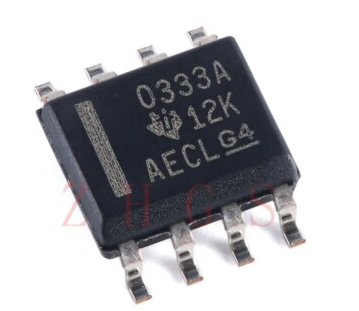
Overview of OPA333 Zero-Drift Op Amp
The OPA333 is a precision operational amplifier that is primarily used in applications demanding high accuracy, stability over time and temperature, and low power consumption. This precision operational amplifier is known for its high-precision, zero-drift operational amplifier, and high stability.
What Makes OPA333 Different?
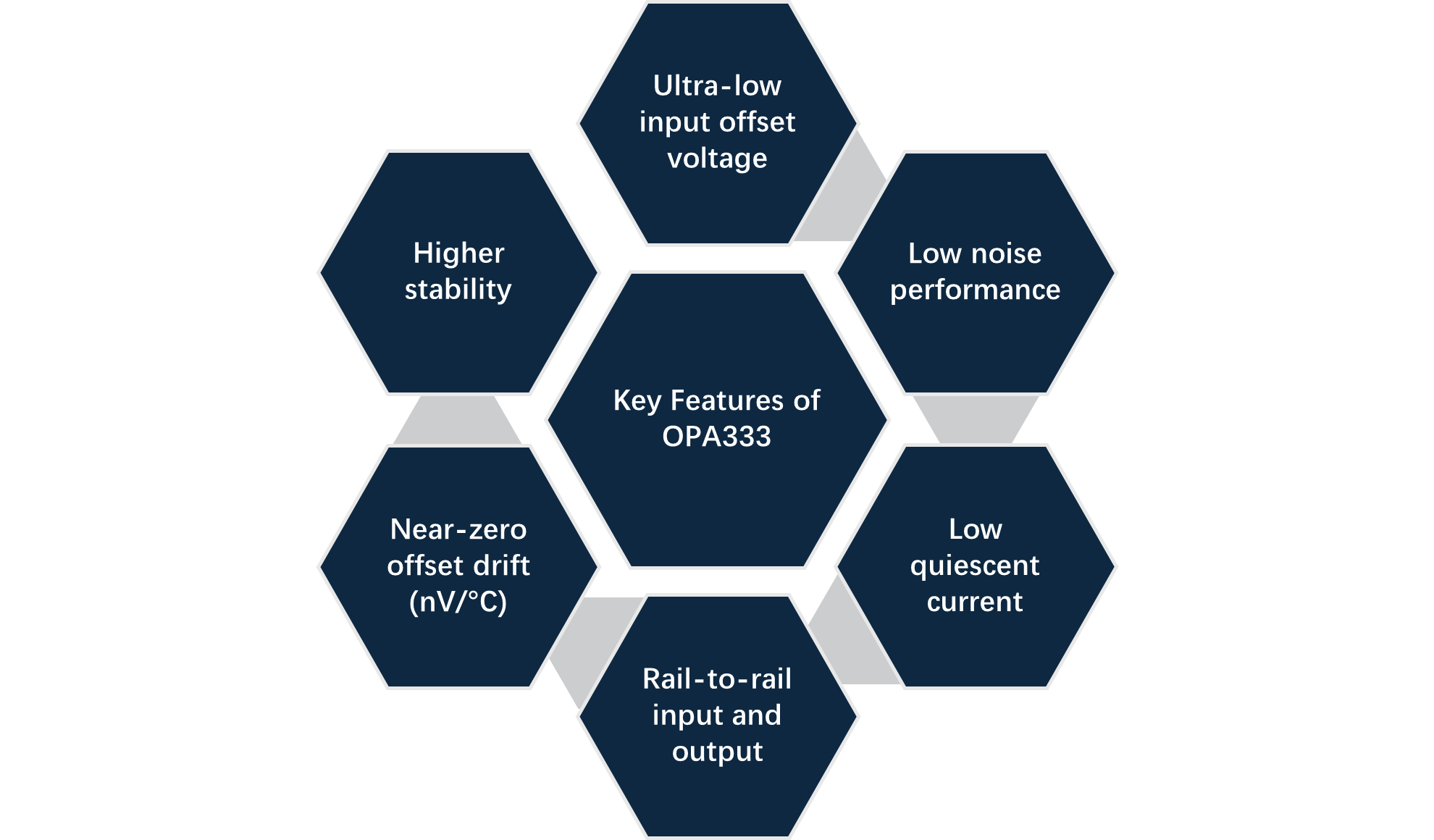
Traditional op-amps can introduce small DC errors that change with temperature, aging, and time, leading to inaccurate measurements, especially in low-level signal applications. OPA333 solve these issues by cancelling offset voltage internally, maintaining near-zero drift across temperature variations, and provide consistent accuracy.
Typical Applications
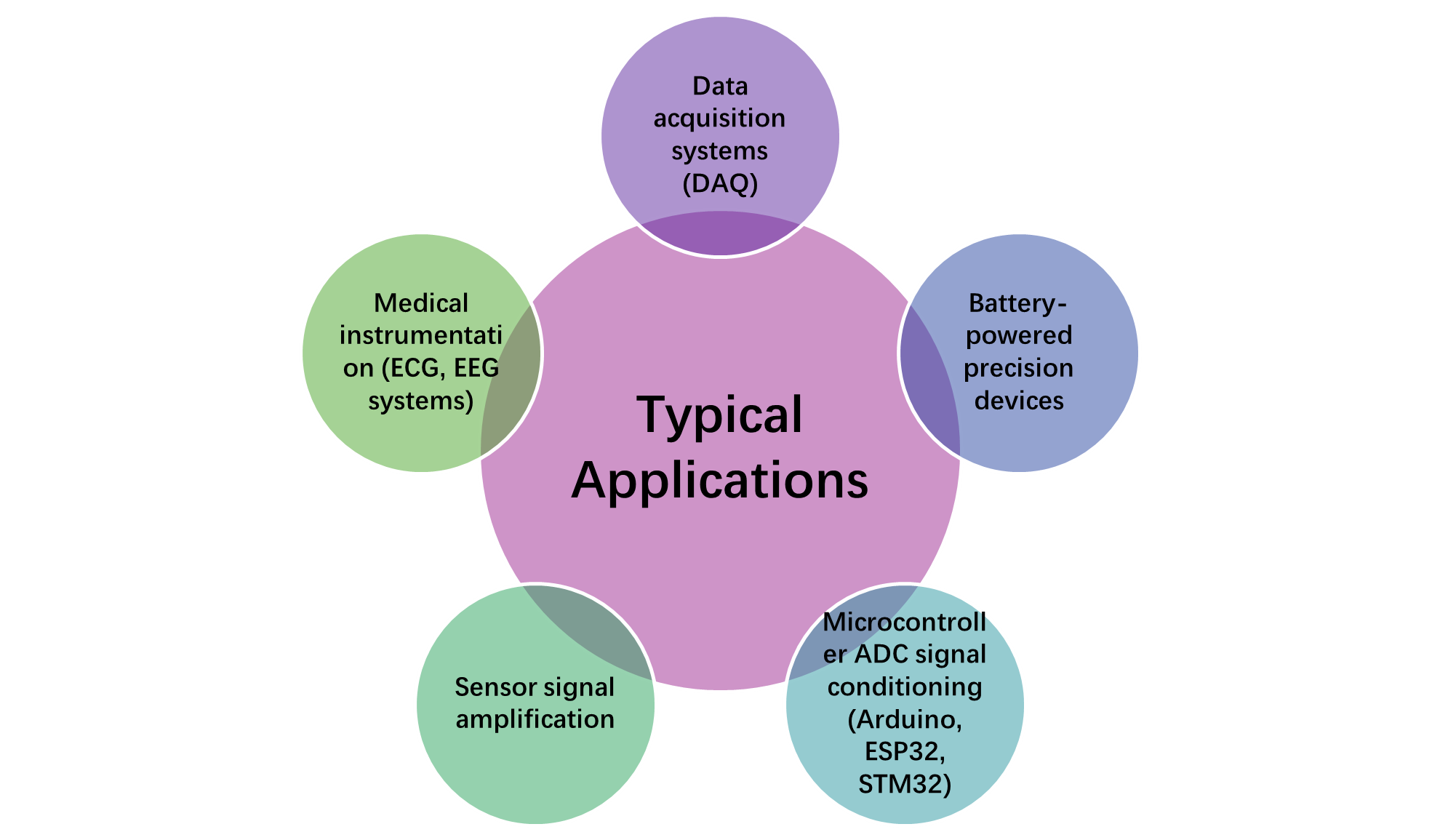
Due to the high precision and stability, the OPA333 operational amplifier is widely used for range of applications which includes;
OPA333 Pinout and Function Description
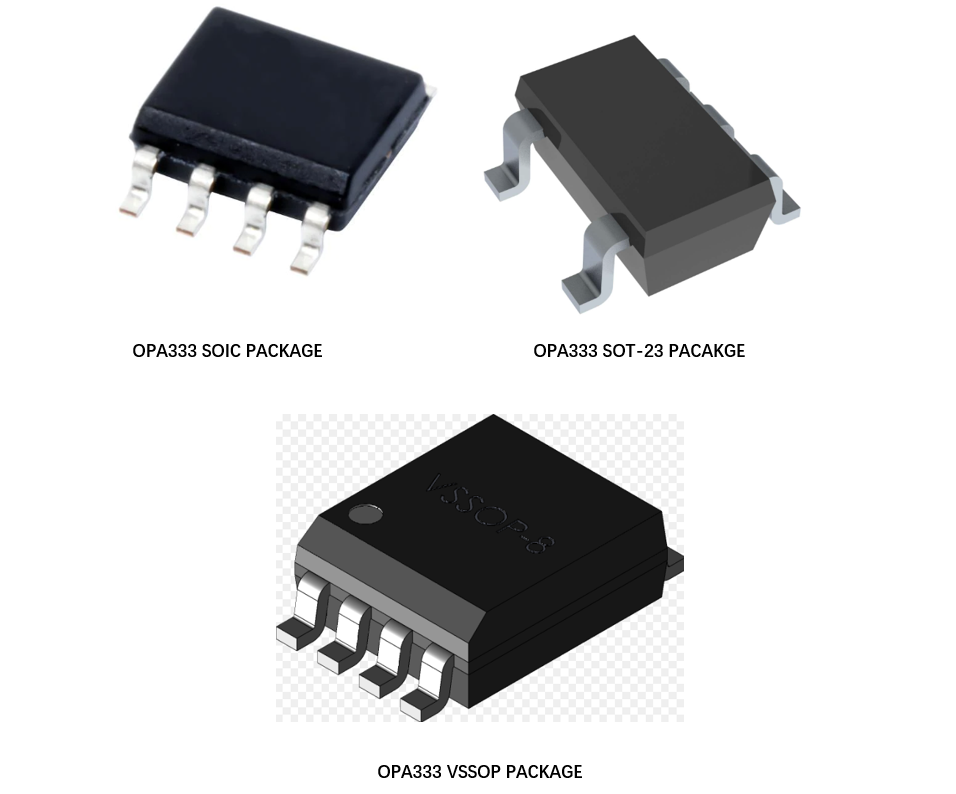
Before diving into the practical and application design with OPA333 operational amplifier, it is important to understand the pin configuration of the OPA333 precision operational amplifier. Because, it is is essential for designing stable, low-noise, and high-precision analog circuits. The OPA333 is typically available in SOT-23-5 and VSSOP-8 packages, but the most commonly used version in embedded designs is the 5-pin configuration.
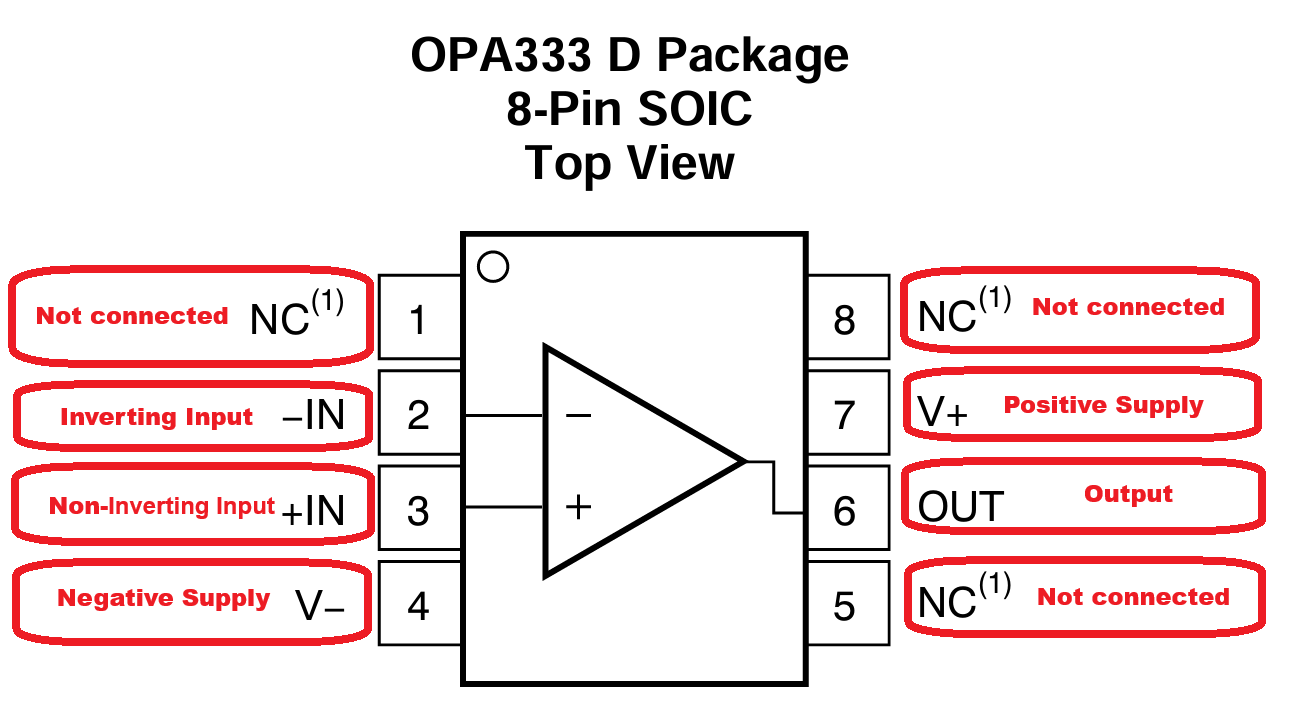
There are various packages of the OPA333 operational amplifier available. However, the choice depends on the design application, thermal design considerations, space, and mechanical constraints.

Key Specifications of OPA333
To fully understand why the OPA333 precision operational amplifier is widely used in ultra-precision analog designs, it’s important to look at its detailed specifications. The table below provides a comprehensive list of key specifications typically required in designing any application. However, detailed and in-depth key technical specifications can be found in the OPA333 datasheet.
Why Engineers Prefer OPA333 For Precision Applications
In most precision-dependent design applications, OPA333 has become the designer’s go-to choice due to zero offset error, extremely low noise, minimum temperature drift, and long-term stability. Instead of relying on complex calibration or software correction, OPA333 provides hardware-level accuracy, making it ideal for real-world measurement systems.
Compared to commonly used amplifiers like the LM358 operational amplifier, LM741 operational amplifier, and even improved low-power devices such as TLV2372 operational amplifier, the OPA333 offers significantly higher accuracy without requiring calibration, making it ideal for modern embedded and precision systems.
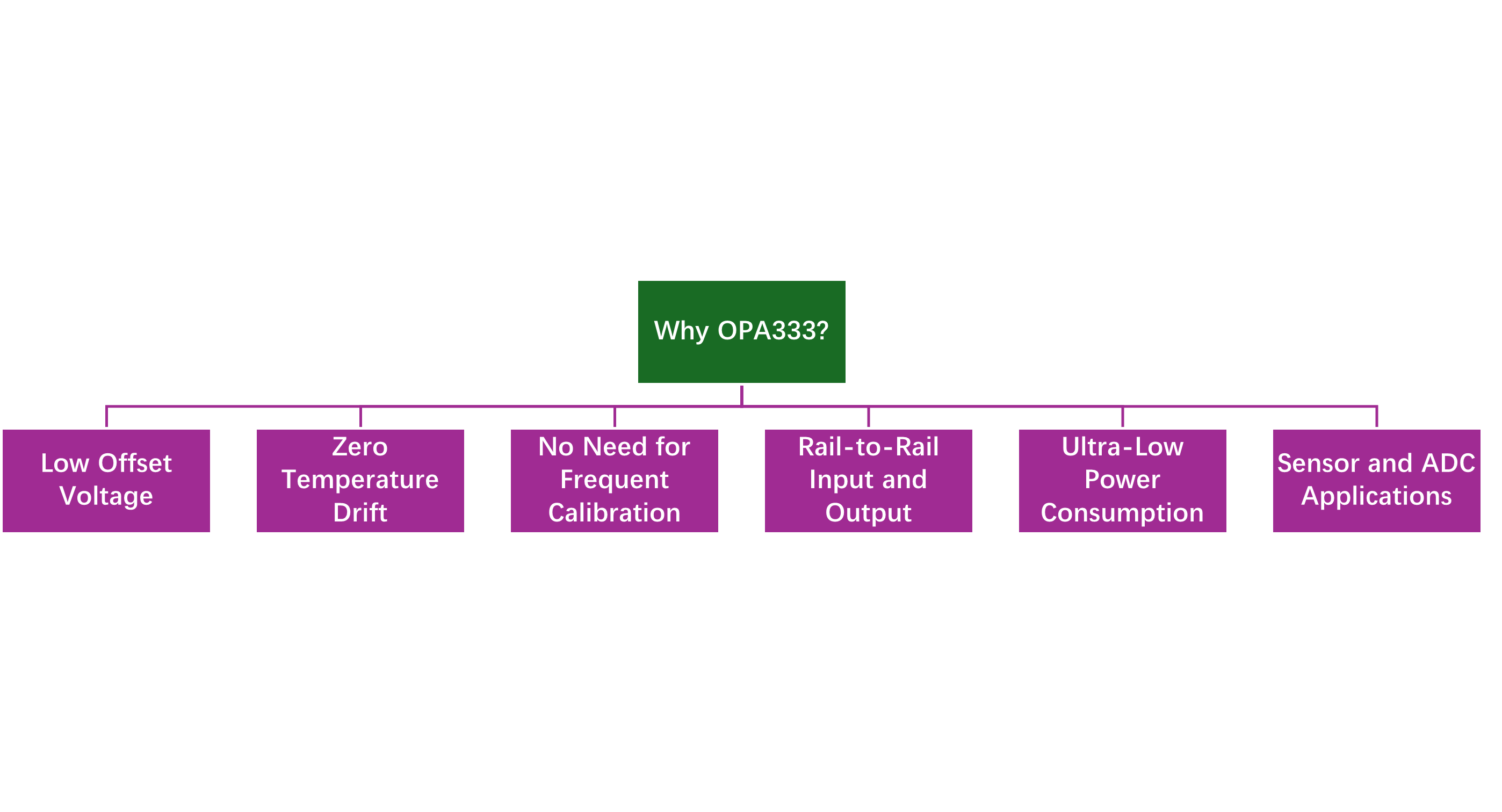
This section will explore some of the prime reasons why most engineers use OPA333 in their designs, which helps the engineers to utilize the OPA333 in their design application with confidence.
Ultra-Low Offset Voltage
Unlike general-purpose op-amps such as the LM358 operational amplifier, which can have millivolt-level offset, the OPA333 operates in the microvolt range, allowing accurate amplification of extremely small signals. This is essential in applications like sensor interfaces, biomedical signals, and instrumentation, where even tiny errors can lead to incorrect results.
Near-Zero Temperature Drift
Traditional op-amps change behavior with temperature, causing measurement errors over time. OPA333 eliminates this issue with zero-drift technology, ensuring consistent performance across temperature variations without recalibration.
No Need for Frequent Calibration
Because offset and drift are continuously corrected internally, engineers don’t need to implement manual trimming or periodic calibration, saving both development time and maintenance cost.
Rail-to-Rail Input and Output
Unlike older op-amps such as the LM741 operational amplifier, which require higher supply voltages and have limited output swing, the OPA333 supports rail-to-rail input and output, making it ideal for 3.3V and 5V microcontroller-based systems.
Ultra-Low Power Consumption
With very low quiescent current, OPA333 is ideal for battery-powered and portable devices, enabling long operating life without sacrificing precision.
Ideal for Sensor and ADC Applications
Engineers widely use OPA333 to amplify weak sensor signals (temperature, pressure, strain gauges), improve ADC resolution in microcontrollers (Arduino, ESP32, STM32), and build accurate data acquisition systems.
Typical OPA333 Circuit Design
The OPA333 precision operational amplifier is widely used in practical circuits where ultra-low offset, low noise, and high accuracy are required. Unlike general-purpose op-amps such as the LM358 operational amplifier or the LM741 operational amplifier, the OPA333 excels in microvolt-level signal amplification, making it ideal for sensor interfacing and precision measurement systems. This section will cover the basic circuit design with OPA333, which you can replicate in your designs as well, with adjustments as per your application requirements.
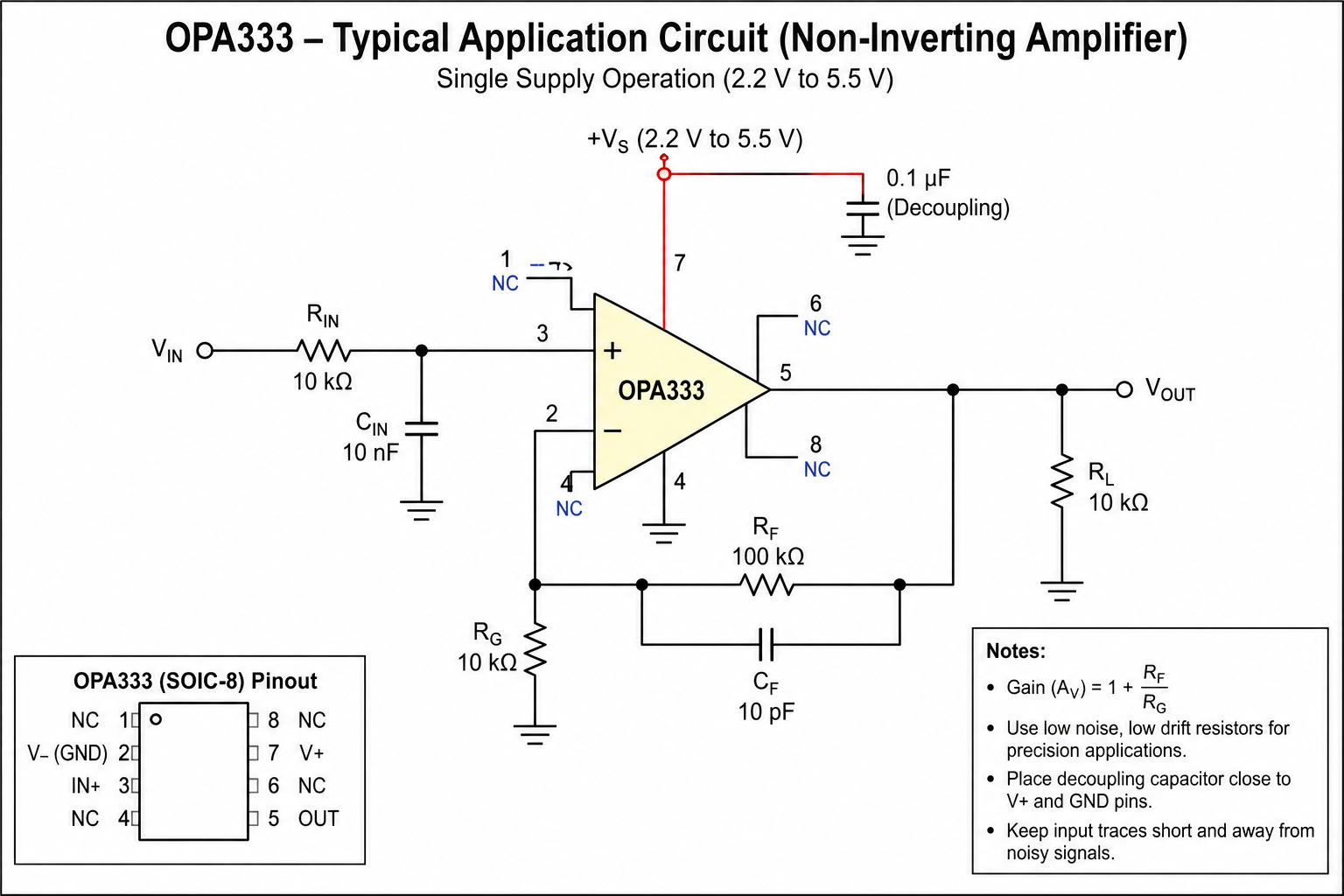
The circuit design with OPA333 shows a precision non-inverting amplifier circuit, a zero-drift operational amplifier designed for ultra-high accuracy, very low offset voltage, and extremely stable DC performance. In this design, the input signal (VIN) is applied to the non-inverting input (Pin 3) of the OPA333. The output is fed back through a resistor network, which defines the gain of the amplifier.
Input Stage
The input signal passes through a small input resistor (RIN) and an optional capacitor (CIN). The capacitor is used to filter the high-frequency noise, protecting the input from transients, and stabilizing sensor signals. The gain is controlled using two resistors known as Rf (Feedback resistor) and Rg (Gain resistor). The gain can be calculated using the equation;
Output Stage
The output (Pin 5) delivers the amplified signal to the load. A load resistor (RL) may be connected depending on the application. Because the OPA333 is a rail-to-rail output op-amp, it can swing very close to the supply rails, making it ideal for low-voltage systems.
The op-amp is powered through V+ (Pin7) and V- (pin2/GND). A 0.1 µF decoupling capacitor is placed close to the power pins to reduce noise, improve transient response, and stabilize the supply rail.
OPA333 Interface with Microcontrollers (Arduino / ESP32)
In modern embedded systems, accurate analog signal measurement is often limited by the ADC resolution and input noise of microcontrollers. This is where the OPA333 precision operational amplifier plays a critical role. By acting as a precision signal conditioning stage, it significantly improves how microcontrollers like the Arduino Uno microcontroller board and the ESP32 microcontroller process low-level analog signals.
Why Interface OPA333 with Microcontrollers?
Microcontrollers typically have limitations such as Limited ADC resolution, noise sensitivity on analog input pins, and an inability to directly read microvolt-level signals. Therefore, OPA333 resolves this by Amplifying weak sensor signals into a usable voltage range, removing offset and drift before ADC conversion, and improving overall measurement accuracy.
Basic Interface
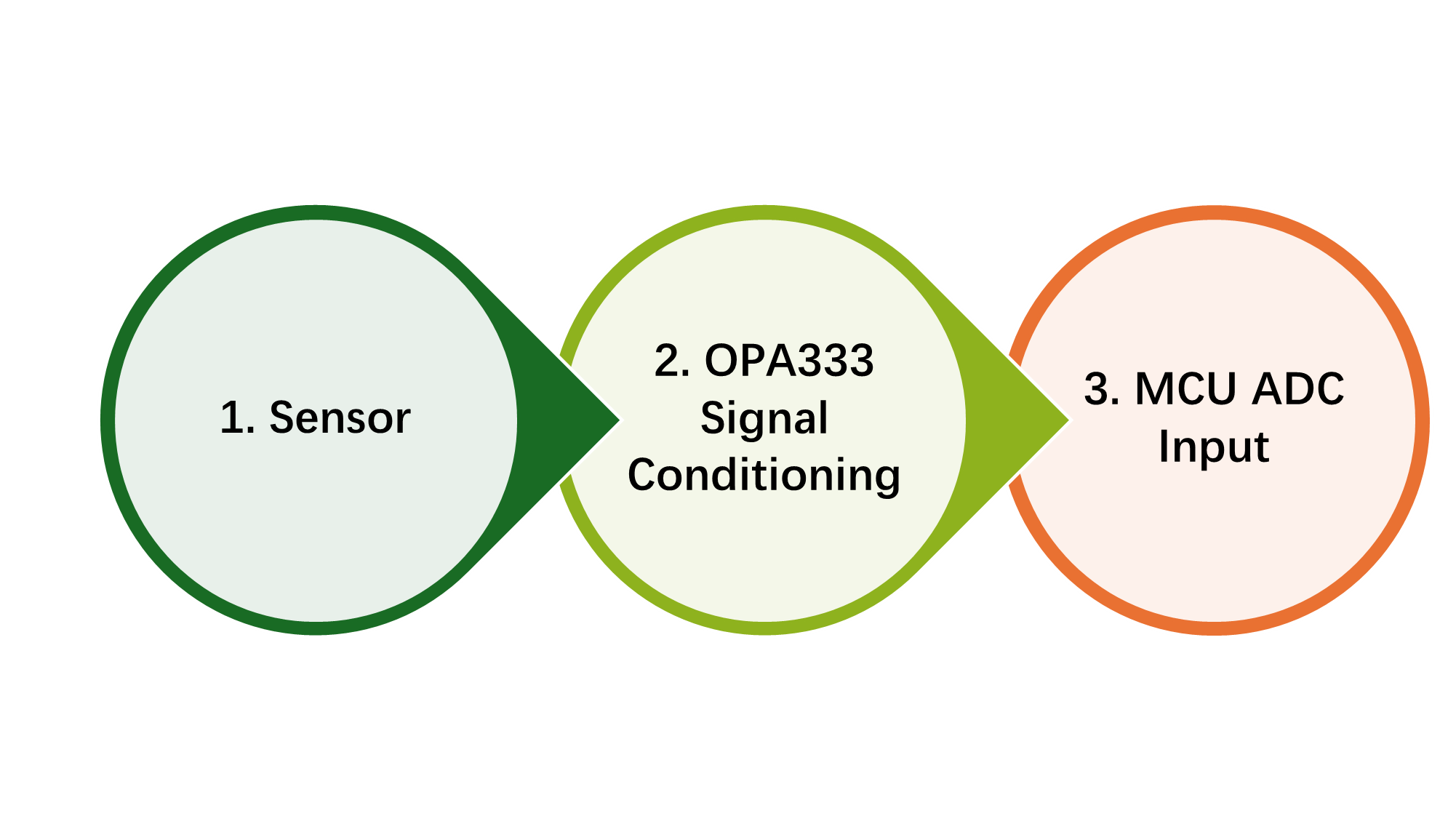
The basic interface of the OPA333 operational amplifier with the microcontroller, such as the STM32 or ESP32 controller, is shown in the figure below. The Sensor produces a low-level analog signal (mV or µV range), OPA333 amplifies and stabilizes the signal, and the Microcontroller reads a clean, scaled voltage via ADC.
Common Design Mistakes and Troubleshooting
Even though the OPA333 precision operational amplifier is designed for high accuracy and stability, real-world performance heavily depends on circuit design, PCB layout, and proper biasing techniques. Many engineers initially face issues not because of the IC itself, but due to common analog design mistakes that introduce noise, offset errors, or instability. This section explores the most frequent problems and how to fix them in practical designs.
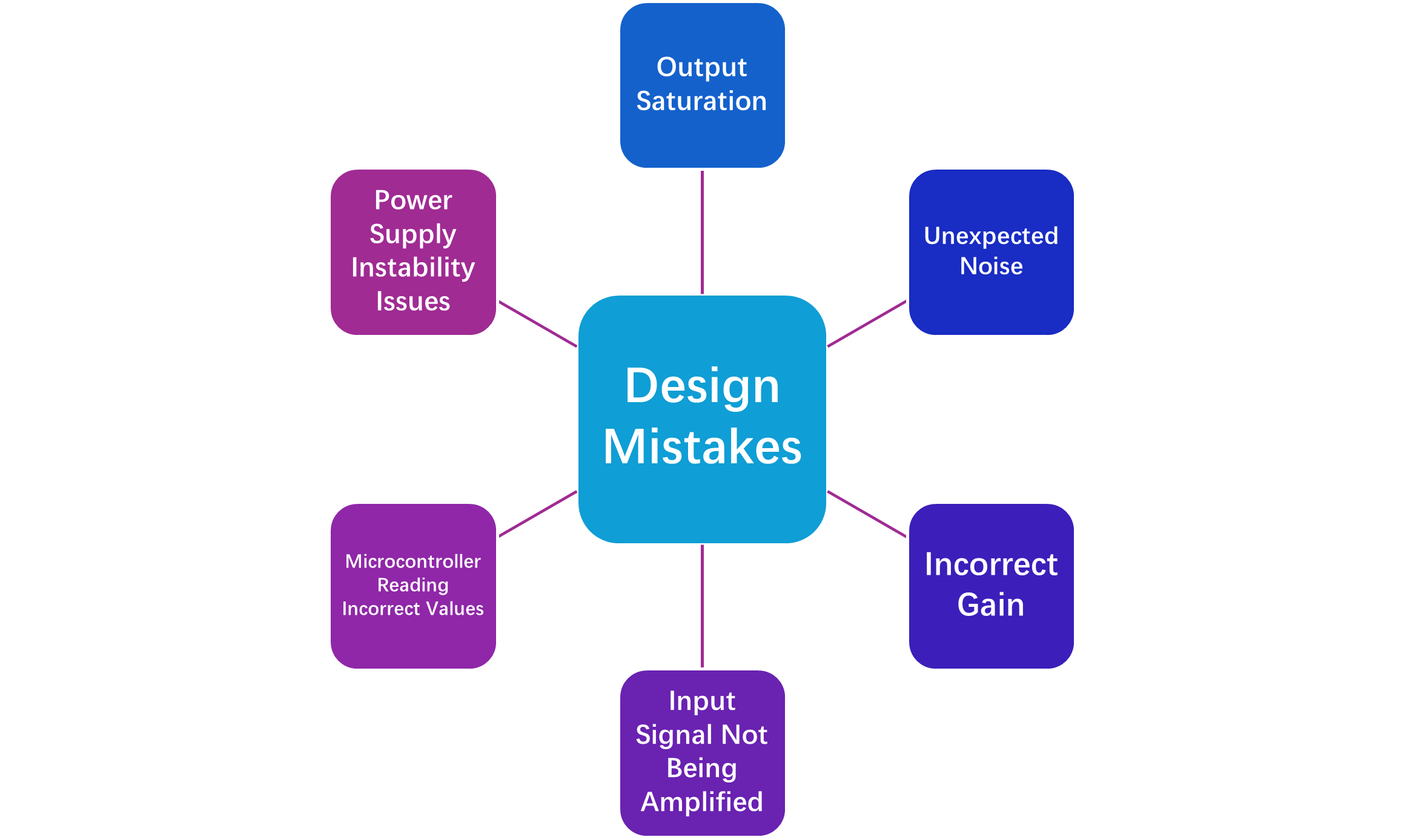
Output Saturation (Rail Clipping Issue)
Sometimes Output is stuck at 0V or supply rail (Vcc). The most common causes of such an issues are Input voltage exceeds common-mode range, Gain too high in feedback network, and output load too heavy.
To troubleshoot such issue is to ensure input stays within rail-to-rail range, reduce amplifier gain, and use proper load resistance
Unexpected Noise in Output Signal
Another comon issue is noise in the output signal. This issue mostly due to long PCB traces acting as antennas, missing decoupling capacitors, and nearby switching noise (DC-DC converters, motors).
The most obvious way to rectify this isseu it to add 0.1µF + 10µF decoupling capacitors near power pins, keep analog traces short and away from digital lines, and use proper grounding.
Incorrect Gain
Sometimes incorrect gain causes output voltage to not match the expected amplification. The most obvious reason for such issue is wrong resistor values in feedback loop, poor resistor tolerance (±5% or worse), and miswired inverting/non-inverting inputs.
One can resolve this issue by ensuring to use precision resistors, verify the gain calculation using the inverting and non inverting gain formula.
Input Signal Not Being Amplified Properly
It has been seen that sometimes no change happen in output despite varying input signal. This is due to floating input terminals, broken feedback loop, and input out of common-mode range.
The solution for such issues are never leave inputs floating, verify feedback connection continuity, and ensure input voltage is within valid operating range.
Microcontroller Reading Incorrect Values
The most frequently occurring problem is the microcontroller not reading the incorrect values. The most common causes for this are no signal conditioning before ADC, OPA333 output exceeding ADC reference range, and noise coupling into the ADC pin.
One can avoid such problems by using OPA333 to scale signal properly before ADC, add RC filter if needed, and ensure correct reference voltage in MCU
Typical Applications of OPA333
The OPA333 precision operational amplifier is widely used in systems where high accuracy, ultra-low offset, and long-term stability are more important than speed. Its zero-drift architecture makes it especially suitable for low-frequency, high-precision analog signal conditioning across industrial, medical, and embedded applications.
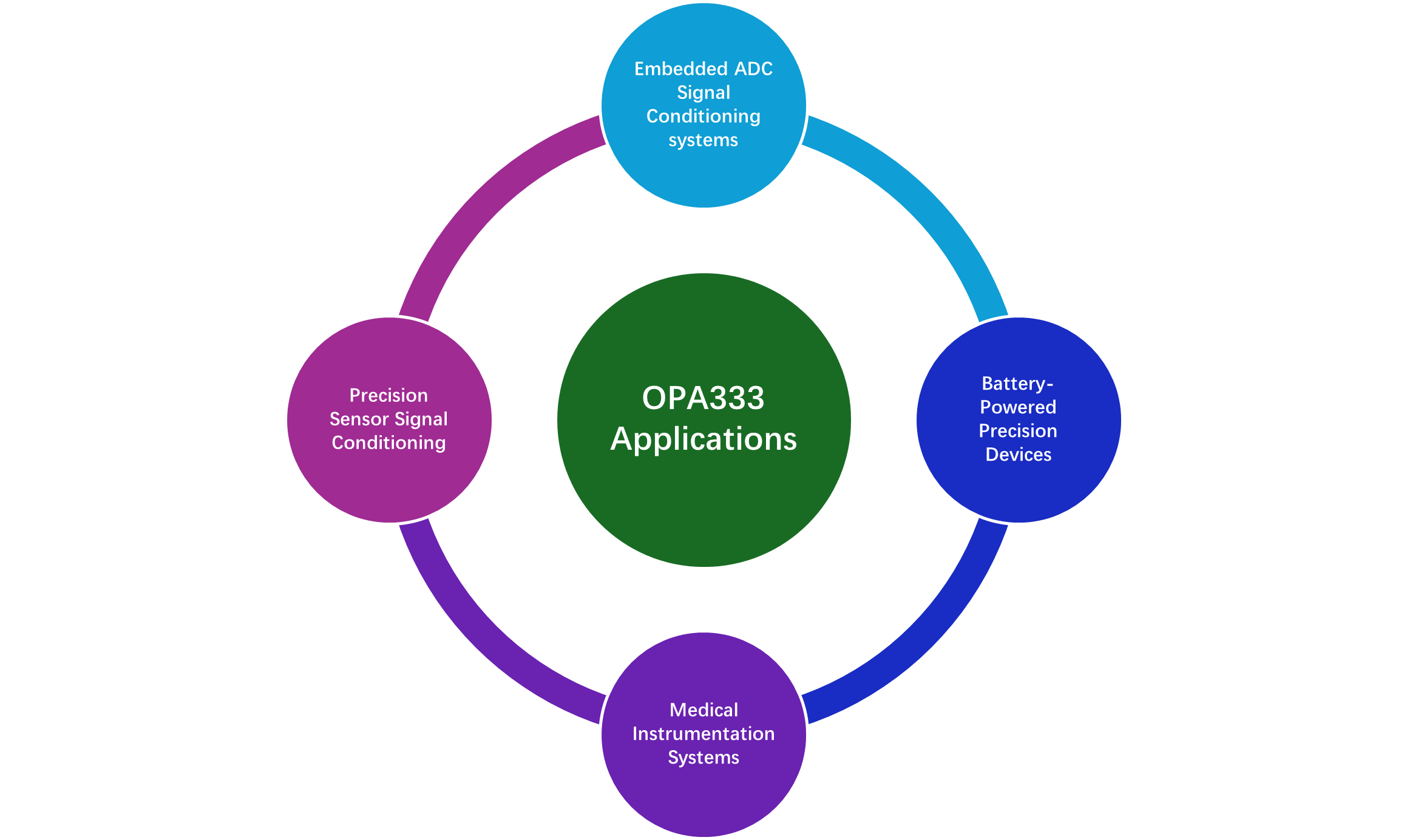
Precision Sensor Signal Conditioning
OPA333 is commonly used to replace general-purpose op-amps such as LM358 in sensor front-end circuits. Therefore, they are mostly used in Temperature sensors (RTD, thermistors), Pressure and strain gauge systems, and Low-voltage analog signal amplification.
Medical Instrumentation Systems
OPA333 also used in biomedical systems and are very popular choice among biomedical engineers. Mostly used in ECG signal amplification, EEG monitoring systems, and portable health devices.
Embedded ADC Signal Conditioning systems
In microcontroller-based systems using the ESP32 microcontroller and the Arduino Uno microcontroller board, ADC accuracy is often limited. Therefore, OPA333 is used to scale weak sensor signals into the ADC range, improve resolution and measurement stability, and reduce noise before digital conversion.
Battery-Powered Precision Devices
Older op-amps like LM741 are not suitable for low-voltage systems. OPA333 operational amplifiers are used in Handheld measurement tools, battery-powered sensors, and low-power IoT devices
Alternatives to OPA333
While the OPA333 precision operational amplifier is one of the most widely used zero-drift op-amps for ultra-precision measurement systems, engineers often compare it with other alternatives depending on requirements such as cost, noise performance, bandwidth, and power consumption. Commonly considered options include general-purpose amplifiers like the LM358 operational amplifier and LM741 operational amplifier, as well as precision and low-drift devices such as AD8628 precision operational amplifier, LTC2050 zero-drift operational amplifier, MCP6V01 zero-drift op amp, and low-power alternatives like TLV2372 operational amplifier. Each of these ICs offers a different balance between accuracy, speed, and power efficiency, making them suitable for specific application scenarios.
Conclusion
In conclusion, achieving stable and accurate analog measurements is no longer optional; it is a fundamental requirement in sensor systems, industrial automation, medical instrumentation, and embedded IoT devices. Traditional operational amplifiers, such as the LM358 operational amplifier and the LM741 operational amplifier, often fall short due to offset voltage, temperature drift, and noise limitations, especially when dealing with microvolt-level signals.
This is where the OPA333 precision operational amplifier stands out as a true precision solution. With its zero-drift architecture, ultra-low offset voltage, and excellent long-term stability, it eliminates the need for frequent calibration and ensures consistent performance across temperature and time variations. Whether it is used for sensor signal conditioning, ADC interfacing with microcontrollers like Arduino Uno microcontroller board or ESP32 microcontroller, or building low-noise measurement systems, the OPA333 provides a reliable and efficient analog front-end solution.
Frequently Asked Questions (FAQ)
Even with OPA333, noise usually comes from poor PCB design, not the IC itself. Common causes include long analog traces, missing decoupling capacitors, or nearby switching noise from DC-DC converters or microcontrollers. Always place a 0.1µF capacitor close to the supply pins and keep input traces short and isolated.
In most precision applications, yes. The LM358 operational amplifier can be replaced by OPA333 for better accuracy, lower offset, and zero drift. However, LM358 may still be preferred in very low-cost or non-precision analog circuits where accuracy is not critical.
This usually happens due to Incorrect feedback resistor configuration, input not properly connected,
output saturation due to incorrect gain, and the sensor signal is too small or not within the input range
Yes, and it is actually one of its best use cases. It works as a signal conditioning stage before ADC conversion in systems like Arduino Uno microcontroller board and ESP32 microcontroller, improving resolution and reducing noise in measurements.
No. OPA333 is designed for low-frequency precision applications, not high-speed signal processing. For high-speed needs, alternatives like TLV2372 operational amplifier or other high-bandwidth op-amps are better choices.

COMMENTS