
One of the most important sensors that will make your engine run well is a mass air flow sensor. It measures the amount of air entering the engine and sends that information to the car’s engine computer (ECU).
The ECU then uses this data to supply the right amount of fuel for efficient combustion.
The impacts of this sensor may manifest themselves in a short period when the sensor begins to malfunction
Common symptoms include rough idling, poor acceleration, poor fuel economy, hesitation, and even a check engine light.
This is why it is important to know what a MAF sensor is to diagnose and to perform regular maintenance.
In this guide, we will describe what a mass air flow sensor is, how it functions, what the most frequent warning signs appear, and when it is reasonable to clean or replace it.
We will also discuss how to clean a mass air flow sensor, how to test a mass air flow sensor, and what to know before using a mass air flow sensor cleaner.
What Is a Mass Air Flow Sensor?
One of the most important sensors of a modern engine is a mass air flow sensor, or MAF sensor. Its task is to determine the quantity of air flowing into the engine to enable the ECU provide the appropriate quantity of fuel.
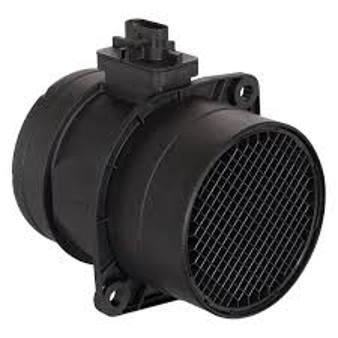
The balance is crucial. When excessive or insufficient fuel reaches the engine, it impairs performance, reduces fuel economy, and increases emissions.
When someone asks what is a MAF sensor or what is MAF sensor in car, the easy answer is the following: it is the sensor that assists the engine in comprehending how much air it is drawing in prior to combustion.
In the absence of the correct airflow data, the engine computer must make an educated guess. That may result in harsh running, stuttering, and bad overall driveability.
Readers who want to explore actual parts can also browse Flywing Tech’s Flow Sensors catalog for air and mass air flow sensor listings.
Mass Air Flow Sensor Function
What does the airflow sensor do, you might be asking, it assists the ECU in maintaining the proper air-fuel ratio in varying driving situations.
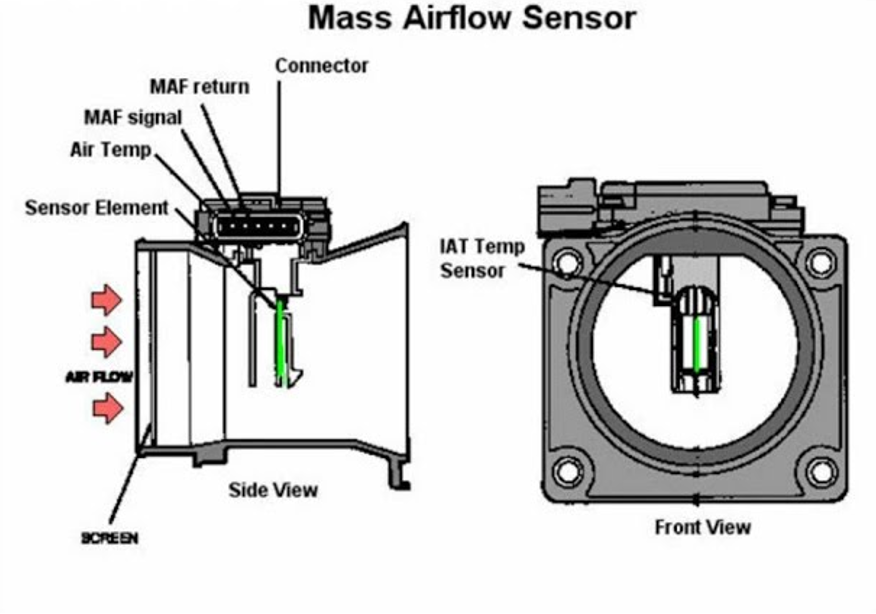
As you accelerate, you get additional air into the engine. The mass air flow sensor notices that increase and informs the ECU to inject additional fuel.
The ECU also reduces fuel delivery when airflow is low.
This continuous adjustment keeps the engine running smoothly. It also aids in enhancing throttle response, fuel economy and emissions control.
That is why even the slightest malfunction of an air sensor car system can lead to the apparent performance issues.
In most vehicles, the mass air flow sensor is located between the air filter box and the throttle body. It is typically fitted in the intake tube, where it is able to gauge the air flowing into the engine.
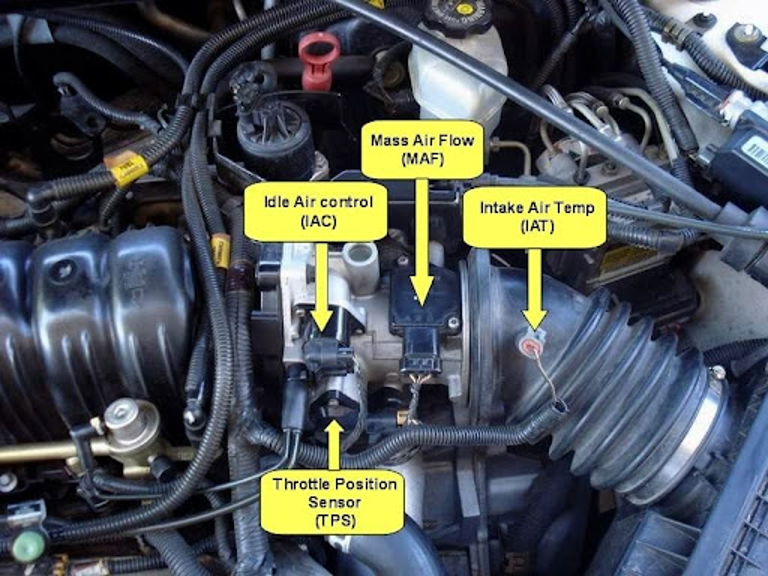
This point enables the sensor to detect filtered incoming air before it flows into the combustion chambers.
It also shows that intake leaks, dirty filters, or contamination in this area can reduce the sensor’s accuracy.
Most cars make the sensor easy to identify because it has an electrical connector inserted into a small housing in the air intake duct.
On the component side, manufacturers package parts like the Omron D6F-01A1-110 mass air flow sensor as compact airflow sensing modules for easy installation and measurement.
How a Mass Air Flow Sensor Works
The next question is now how the sensor measures airflow, now that we understand its role.
A mass air flow sensor operates by measuring the mass of the air entering, and not the volume of the air entering. That is important since the density of air varies with temperature, altitude and pressure.
By measuring air mass more accurately, the ECU can determine the precise amount of fuel to deliver. This assists the engine to have a stable combustion under various weather and driving conditions.
Most automotive MAF sensors use a heated sensing element. As air flows past it, the element cools down. The sensor then measures the amount of energy required to keep a target temperature.
That change becomes a signal that the ECU utilizes to calculate fuel delivery.
If you want to examine real component examples, the Omron D6F-20A6-000 and Sensirion ASF1430 demonstrate how manufacturers package different mass air flow sensor designs for airflow measurement.

Hot Wire MAF Sensor
Most common MAF designs use the hot-wire principle, where incoming air cools a heated element and the sensor adjusts current to maintain temperature.
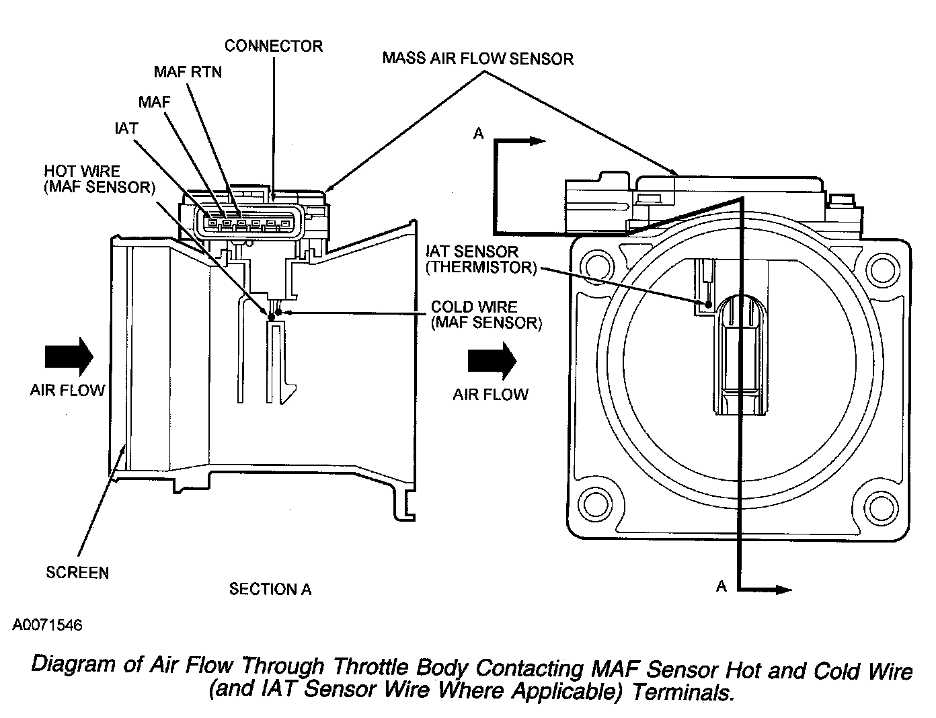
A hot wire MAF sensor employs a wire of very thin size which is heated with electricity. Air cools the wire as it goes past it.
The greater the amount of air passing through the intake, the greater the cooling. The sensor modulates the electrical current to maintain the temperature of the wire at a constant level.
The resultant change is the airflow reading. This design responds quickly and measures precisely, which is why manufacturers commonly use it in passenger cars.
The negative thing is that the wire is fragile. Dirt, oil residue, or rough handling can affect its performance.
Hot Film MAF Sensor
A hot film MAF sensor operates on the same principle, except that it utilizes a thin film or resistor element rather than a fine exposed wire.
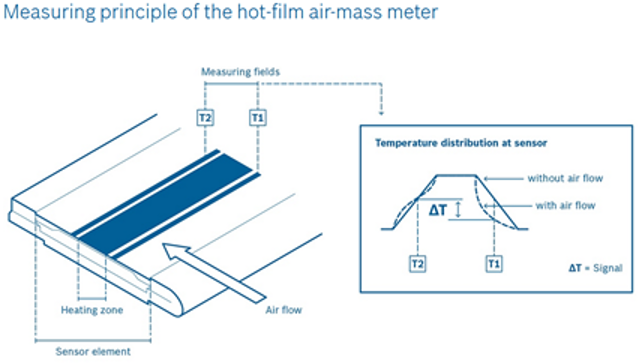
This design is usually smaller and in other instances more robust. It continues to use the cooling effect of incoming air to determine airflow.
On the part of the driver, both types are the same in their work. The sensing element’s construction inside the sensor housing is what primarily differs.
Common Mass Air Flow Sensor Symptoms
When a mass air flow sensor begins to provide faulty data, the ECU is no longer able to control the delivery of fuel. It is at this point that the symptoms start to appear.
There are mild mass air flow sensor symptoms in some cases. The others may get so serious to an extent that they interfere with day to day driving. A dirty sensor usually causes gradual problems before the issue becomes noticeable.
The following are the most frequent indications to observe.
Rough Idle
One of the most common mass air flow sensor symptoms is a rough or unstable idle.
When the airflow sensor provides incorrect readings, the ECU cannot maintain the right mixture at low engine speed. That may cause the engine to feel jostling, unbalanced, or on the verge of stalling when the car is at rest.
Poor Acceleration
The malfunctioning MAF sensor may cause the engine to feel weak when you press the accelerator.
This is because the ECU relies on the airflow information to enhance the fuel supply during load. When that data is incorrect, throttle response can be sluggish and the car can be slow to accelerate.
Check Engine Light
The ECU typically displays the check engine light when it records missing, irregular, or uncharacteristic airflow readings.
This doesn’t necessarily mean the sensor is faulty, but it does indicate that the airflow signal is unreliable. P0100-P0104 trouble codes often point to MAF sensor issues.
Stalling or Hesitation
When the sensor reading is unstable, the engine may stutter when you change the throttle or even at idle.
This occurs because the ECU can no longer adjust the air-fuel mixture appropriately in real time. You may experience the issue as a stumble, a break, or a loss of power.
Reduced Fuel Economy
Poor mass air flow sensor condition may also decrease fuel economy.
In case the ECU receives inaccurate airflow data, it can inject either excessively or insufficiently. In the long run, it results in inefficient burning and additional visits to the gas station.
Hard Starting
A faulty sensor may cause the engine to be harder to start, particularly when the air-fuel mixture is too far out during cranking.
The engine can be slow to start, or it can start and run badly during the initial few seconds.
What Causes a Mass Air Flow Sensor to Fail?
Once you identify the symptoms, the next step is to determine what is causing the problem in the first place.
A mass air flow sensor may fail due to contamination, electrical, age, and intake related problems. Often the sensor is not fully dead. It is merely the misreading of airflow.
One of the most prevalent causes is the accumulation of dirt. Dust, oil vapor, and debris may coat the sensing element and affect its proper operation.
A dirty or poor quality air filter can worsen this issue. Over-oiled aftermarket filters leave residue on the sensor, distorting readings over time.
Another significant cause is wiring problems. Loose connectors, damaged wires, corrosion, or voltage problems can interrupt the signal and cause the same symptoms as a faulty sensor.
Also contributing factors are moisture, heat, vibration and overall wear. The MAF sensor is susceptible to aging, just like any other engine component.
How to Clean a Mass Air Flow Sensor
When the issue is due to dirt or residue, but not internal damage, cleaning the sensor can be useful to restore normal operation.
This is the reason why most owners will be looking on how to clean mass air flow sensor problems before going directly to replacement. Cleaning is an inexpensive and easy initial step in the right situation.
Nevertheless, it is not one of the aspects that you should treat lightly. The sensing part is sensitive, and the improper procedure can destroy it.
When Should You Clean Your MAF Sensor
The best thing to do is to clean the sensor when it is dirty but still working.
As an example, cleaning can be a good option in case you have mild problems in the area of drivability, visible contamination, or codes related to the airflow. You should also change a heavily clogged air filter and check the intake system as good preventive measures.
If the sensor has internal damage or electrical problems, cleaning will not resolve the issue.
Tools for Mass Air Flow Sensor Cleaning
You should clean a MAF sensor with a special sensor cleaner, a screwdriver or bit set (if the sensor is removable), and basic safety equipment such as gloves and eye protection.
The cleaner itself is the most important item. An appropriate sensor cleaner evaporates quickly and is formulated for sensitive sensor elements.
That makes it much safer than using general-purpose sprays.
Step-by-Step Cleaning Process
- Begin by switching off the engine and allow it to cool.
- Find the mass air flow sensor in the intake tube and unplug the electrical connector. Take out the sensor where it is possible in your vehicle design.
- Spray mass air flow sensor cleaner at a short distance over the sensing element. Do not handle the wire or film, do not scrub it.
- Allow the cleaner to dry thoroughly and then re-install the sensor. After everything is in order, turn on the engine and see whether the quality of idle and throttle response are better.
Best Mass Air Flow Sensor Cleaner to Use
Not all sprays are suitable to this task.
The best option is a dedicated mass air flow sensor cleaner since it is made to remove light contamination without leaving any residue or damaging the sensor element.
That is important as even a thin residual film can influence airflow measurements and cause the same issues that you were attempting to resolve.
CRC Mass Air Flow Sensor Cleaner
Yes, one of the more well-known products of this purpose is CRC mass air flow sensor cleaner.
It is widely employed due to the fact that it is designed to work with MAF sensors and evaporates rapidly. This keyword is more appropriate in the article as an example of an appropriate cleaner, but not the central theme.
The larger aspect is to apply a cleaner marked for MAF sensors and not any automotive spray.
Cleaners to Avoid for Mass Air Flow Sensors
Do not use brake cleaner, carb cleaner, degreasers and other harsh solvents that are not recommended to clean the sensor.
These products have the ability to destroy coatings, plastics or even the sensing element. Although the sensor may still seem to be functioning afterwards, the readings may not be correct anymore.
How to Test a Mass Air Flow Sensor
It is prudent to verify the problem before purchasing a new part.
Many individuals ask how to check or test a mass air flow sensor because they may confuse the symptoms with vacuum leaks, dirty throttle bodies, cracks in the intake hose, or wiring issues.
Testing can isolate a bad sensor and an associated intake problem.
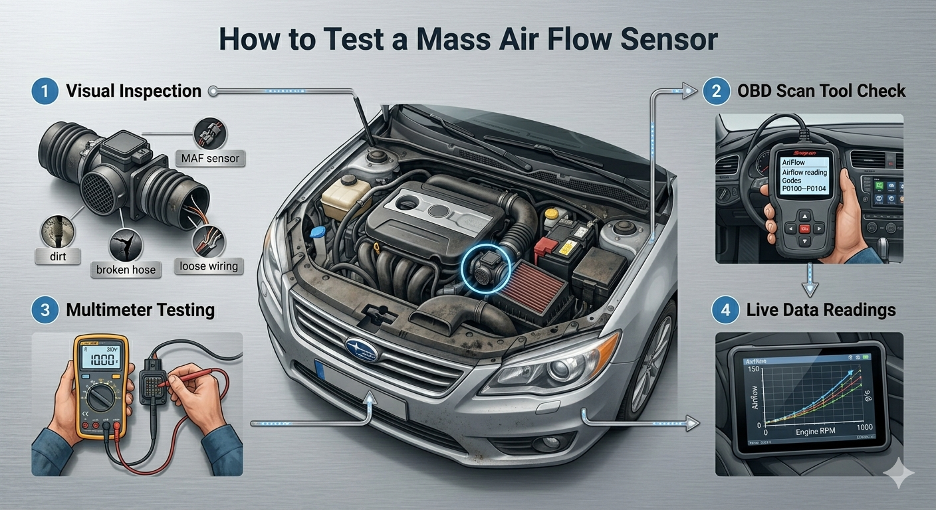
Visual Inspection
Start with the basics.
Check sensor body, connector, and intake duct of dirt, oil contamination, broken clips, broken hose, or loose wiring. The sensor may also cause the appearance of symptoms identical to MAF sensor failure by damaging the intake hose after the sensor.
This is why you should perform the visual inspection first.
OBD Scan Tool Check
One of the most helpful methods to test a mass air flow sensor is a scan tool.
Check for stored codes such as P0100, P0101, P0102, P0103, or P0104. Then look at live airflow data while the engine is idling and while revving.
When the readings are not realistic, frozen or not in line with the engine load, the sensor might be dirty or faulty.
Multimeter Testing
You can use a multimeter to check power, ground, and occasionally signal output depending on the sensor design.
This is a good step to take when you want to know whether the sensor is being fed properly and to check whether the wiring is not broken. Voltage values are different in different vehicles, so it is advisable to compare the readings with a service manual.
The use of a generic number is not always consistent when using various models.
Live Data Readings
The most practical real-life test is often live data.
A healthy sensor must display airflow values that vary in a smooth manner with the increase in engine speed. In case the reading is erratic, implausibly low, or fails to respond to throttle input, the MAF sensor could be the problem.
Nevertheless, scan data is to be interpreted in combination with fuel trims, intake condition, and any indications of vacuum leaks.
When to Replace a Mass Air Flow Sensor
In most instances, cleaning can be used to solve the problem, but not all.
The replacement is normally required in cases where cleaning fails to enhance performance, the signal is not stable, or the sensor is internally damaged electrically.
It is also reasonable to replace the sensor when the sensor housing is broken or the connector terminals are severely corroded.
Cleaning Signs
In case symptoms recur shortly after cleaning, or the codes associated with airflow are still on, the issue might lie deeper than on the surface.
This is also true when the live data continues to appear incorrect even after cleaning the sensor and verifying the wiring. Replacement is often a more viable solution at that time.
Sensor Lifespan
No standard lifespan of each MAF sensor exists.
Others last a long time without difficulty. Others fail sooner due to the inefficiency of air filtration, excessive contamination, engine vibration, or frequent exposure to oil and dust.
Generally, sensors have a longer life with a well-maintained intake system and a timely replacement of air filter.
Replacement Cost
The price of mass air flow sensor replacement is based on the vehicle, the sensor design, and whether you are using OEM or aftermarket components.
The sensor is cheap and readily available on certain vehicles. On others the part is more a part of the intake assembly and is more expensive.
Labor is not generally very high and hence many owners do the replacement themselves once they have been properly diagnosed.
How to Replace a Mass Air Flow Sensor
After the sensor has been tested to be bad, it is typically easily replaced.
Since the sensor is located in the intake system, it can be easily reached using simple hand tools. The specific procedure depends on the vehicle, but the general steps are similar.
Tools Needed
The majority of jobs can be performed with a screwdriver, socket set or security bit, depending on the sensor location.
Gloves and a clean working area also come in handy to ensure that dirt does not get into the intake in the process.
Steps
Switch off the engine and leave it to cool down.
Unscrew or unclip the electrical connector off the old sensor, and then unscrew or unclip the screws or clips attaching it. Install the new sensor facing the same way as the previous one.
Re-attach the harness, and ensure the intake tube is properly sealed before restarting the engine.
After installation, check idle quality, throttle response, and any warning lights.
ECU Reset After Mass Air Flow Sensor Replacement
The ECU will automatically adapt to a new mass air flow sensor in most vehicles.
Even in case there was a fault code stored it is always good to clear it using a scan tool. Idle relearn or short drive cycle may also be beneficial to some vehicles.
The model-specific service information is never in vain to see whether the engine continues to act strangely after replacement.
Mass Air Flow Sensor vs MAP Sensor
A mass air flow sensor and a MAP sensor both assist the ECU to know the load on the engine, but in different ways.
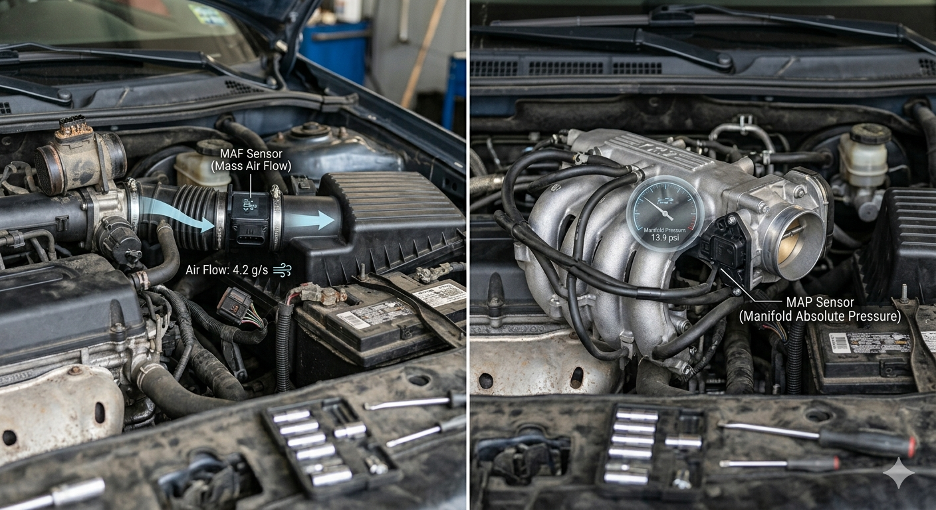
The quantity of air entering the engine is directly measured by a mass air flow sensor.
A MAP sensor is used to measure pressure in the intake manifold and the ECU approximates the amount of air which is flowing out of the intake manifold as well as the temperature and engine speed.
There are those that use one and those that use both.
This is important in the diagnosis process since the symptoms may be similar, but the source of the fault may not be identical.
Direct airflow measurement is impacted by a MAF issue. MAP issue has an impact on the calculation of pressure-based load.
Being aware of the difference can prevent the replacement of the incorrect part.
Final Thoughts
A mass air flow sensor may be small, but it plays a major role in engine performance. It helps maintain smooth idling, better acceleration, improved fuel economy, and cleaner emissions by measuring incoming air and allowing the ECU to deliver the right amount of fuel.
When it starts to fail, the symptoms are hard to miss. Common mass air flow sensor symptoms include rough idle, hesitation, poor throttle response, and a check engine light.
The good part is that not every issue means replacement. In many cases, you can restore performance by learning how to clean a mass air flow sensor and using the right mass air flow sensor cleaner.
However, cleaning does not always solve the problem. If readings remain unstable, fault codes return, or drivability issues continue, a mass air flow sensor replacement is often the better long-term fix.
In the end, knowing how to inspect, clean, and test a MAF sensor helps you catch issues early and avoid unnecessary costs.
Whether you are troubleshooting or simply understanding what the airflow sensor does, this knowledge helps keep your engine running properly.
If you are comparing parts for a repair, prototype, or design project, you can also check Flywing Tech’s flow sensor product range for available air and mass air flow sensor options.
FAQs About Mass Air Flow Sensors
What is a MAF sensor in a car?
A MAF sensor in an automobile measures the quantity of air entering the engine to enable the ECU to compute the appropriate quantity of fuel to inject.
What does the airflow sensor do?
Airflow sensor monitors the entry of air and assists in maintaining the correct proportion of air and fuel to ensure smooth combustion, improved fuel economy, and reduced emissions.
What are the symptoms of a bad mass air flow sensor?
Symptoms are rough idle, hesitation, poor acceleration, low fuel economy, hard starting, and check engine light.
What is the best way to clean a mass air flow sensor?
Clean the sensor with a special mass air flow sensor cleaner, spray the sensing element without touching it and allow the sensor to dry completely before replacing it.
How to test a mass air flow sensor at home?
Begin by visually inspecting and proceed with a scan tool to verify codes and live airflow data. A multimeter can also be used to check power, ground and signal integrity.
What is the procedure to test a mass air flow sensor without changing it?
You can verify it by examining it against contamination, scanning against airflow-related codes, comparing live data readings, and eliminating intake leaks or wiring problems.
Is it possible to drive with a faulty MAF sensor?
The car can continue running but performance, fuel economy and emissions can be affected. In more severe instances, stalling or hesitation may cause unsafe driving.


COMMENTS