
1.0. Introduction
Optical dust sensors are becoming more common in our everyday lives, especially as awareness about environmental pollution and the need for cleaner air has grown in recent years.
The number of people facing poor air quality keeps increasing. According to a report provided by the First street Foundation, more than 20% of U.S residents today experience poor air quality. That number could reach as high as 50% by 2054.The world health organisation (WHO) has recently issued a warning that PM 2.5 caused by wildfires – already a major health hazard – is likely to become more intense and frequent in the coming years.
Given these alarming trends, air quality sensors are emerging as a significant tool for real-time air quality monitoring. With smarter technology making its way into different domains such as healthcare, robotics and home automation, the demand for advanced sensor technology in air pollution control becomes ever more critical. The air quality detectors must be compact, reliable and accurate enough to detect difference between density of different airborne particles.
In this guide, we’ll discuss two main types of optical dust sensors in detail. You’ll learn how they differ in power consumption, detection capabilities, accuracy and reliability.
We’ll also share case studies related to deployment of these sensors in real-world applications and help you decide which one fits your next project best.
2.0. What are optical dust sensors?
The optical dust sensors are advanced air quality monitoring instruments that utilize light scattering technology to detect airborne particulate matter such as dust, sand, smoke, and pollen particles, providing real-time data for assessing environmental cleanliness, improving air pollution control, and enhancing quality of life.
2.1. Types of optical dust sensors
Two major types of optical dust sensors are available in market nowadays namely infrared dust sensors and laser dust sensors as shown in Figure 1.
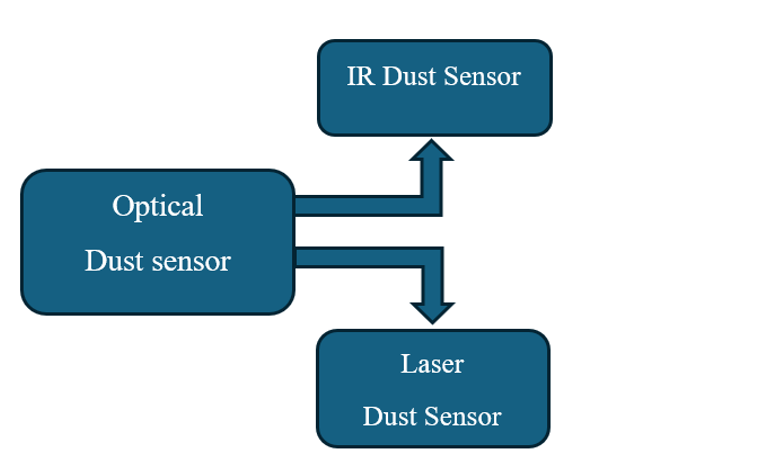
Figure 1. Types of Optical dust sensor
Infrared optical sensors
- Use infrared light to detect fine dust particles.
- Cost-effective, but less precise dust sensors.
- cannot provide reliable detection of dust particles smaller than PM 2.5.
Laser dust sensors
- Use a focused and stable laser light source to sense dust particles.
- Highly accurate
- Fast response time
- capable of providing digital readings of PM1.0, PM 2.5, and P.M 10 concentrations.
3.0. Component spotlight and deep dives
GP2Y1010AU0F optical dust sensor manufactured by SHARP corporation is an infrared dust detector that comes with an infrared light emitting diode(IRED), and phototransistor (PD). This compact module can sense indoor dust, and cigarette smoke particles, making it ideal for automatic functioning of air purifier.
3.1. Key Attributes of GP2Y1010AU0F dust sensor
- Compact moduleqw
- dimensions are 46.0 mm×30.0 mm× 17.6 mm.
- Can sense difference between smoke and indoor dust through pulse pattern difference of O/P voltage.
- Built-in microcomputer available.
- Provide O/p Voltage readings in Analog form.
- Compatible with Arduino and Raspberry Pi
- RoHS compliant
- can sense minimum recognizable dust size of 0.5µm, but reliability starts getting affected if the size is less than 1 µm.
Table 2. Technical Specifications
| GP2Y1010AU0F | |
| Supply voltage | 4.50- 5.50 Vdc |
| Supply current | 20.0mA max. |
| Min. Recognizable dust size | 0.50µm |
| Output interface | Analog |
| Range of dust density | Up to 579.9 µg/m3 approx. |
| Output at no dust condition | 0 to 1.50 Vdc |
| Sensitivity | 0.5(+/-0.15 Vdc) per variation of 100 µg/m3 |
| Accuracy | +/- 30.0% |
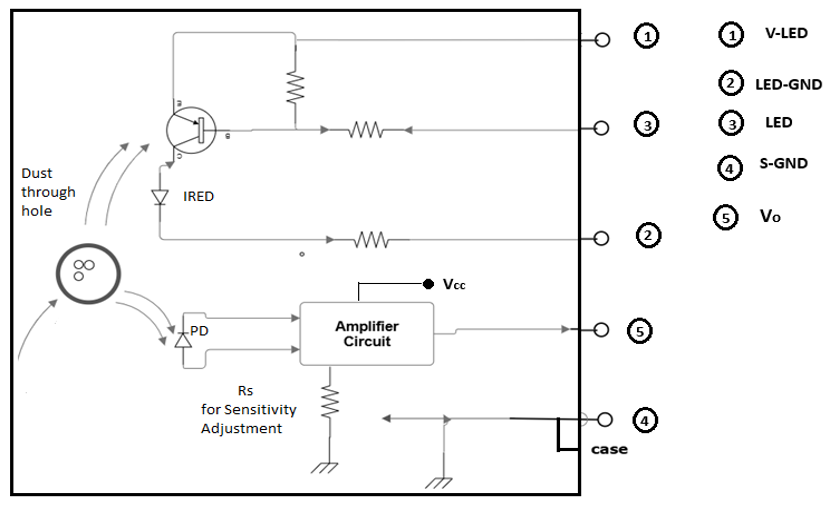
Figure 2. Internal Schematic of GP2Y1010AU0F dust sensor
3.2. How optical dust sensor GP2Y1010AU0F works?
GP2Y1010AU0F dust sensor works on the principle of light scattering as mentioned before. In this section, we’ll explain this procedure in detail.
The versatile module comes with a photo diode(PD) that acts as a Receiver. The infrared light emitting diode (IRED) used as a Transmitter. Both transmitter and Receiver are diagonally arranged near the airflow path in the sensors as shown in internal schematic of GP2Y1010AU0F(Figure 2). The air enters inside the sensor through an air inlet valve where transmitter radiates the airborne particles and the scattered infrared light converted into a signal using photodiode receiver. This signal is further amplified through an amplifier circuit. This amplified signal is processed further to obtain the particle concentration. The intensity of light will be higher if the airborne particles will be present in the air. The Analog voltage output at the sensor Vout pin varies because of detected light intensity.
3.3. Calibration Procedure for GP2Y1010AU0F
In this guide, key steps are explained in detail to calibrate this device. The calibration procedure is necessary to ensure accurate readings.
Step 1. Materials required
- GP2Y1010AU0F dust sensor
- Microcontroller (Arduino, ESP32, STM32)
- 150ohm resistor
- 220uF capacitor
- Clean air environment
- Reference lab calibrated particle counter
Step.2 Hardware Setup
Connect the sensor as per sharp recommended circuit in Figure 3. Full datasheet available on this link.
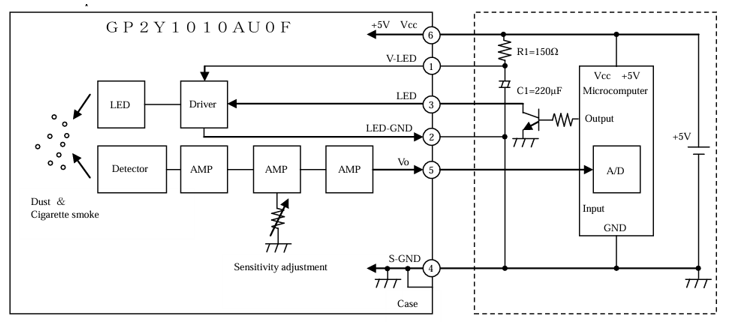
Figure 3. SHARP recommended System connection
The LED should be operated under the input conditions specified by SHARP electro-optical characteristics chart.
Table 3. Recommended input conditions for LED input terminal.
| Parameter | Symbol | Value |
| Pulse Cycle | T | 9 – 11 msec |
| Pulse Width | Pw | 0.30 – 0.34 msec |
| Operating Source voltage | Vcc | 4.50 – 5.5 volts |
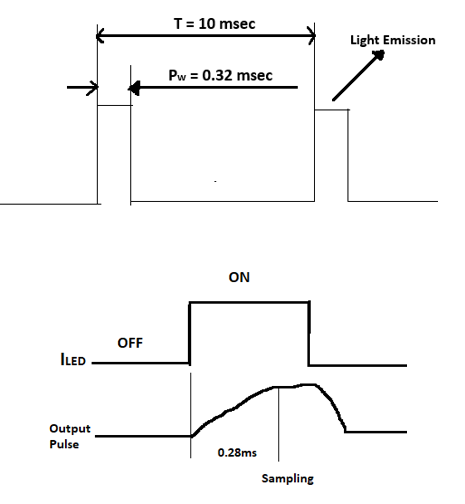
Figure 4. Sampling Timing of Output pulse
Step 3. Signal Timing
Measuring the signal at a specific time is a key step in this procedure. To get reliable dust concentration readings, it is essential to read analog signal at a correct time.
- Turn the IRED ON for a brief time period in a 10 ms pulse cycle to take measurements.
- The specified output value(Analog o/p pin 3) is calculated 0.28msec after IRED goes high. Therefore, it is suggested that microcomputer should read output reading 0.28msec after the IRED emission also. This wait before sampling analog voltage is necessary to stabilize infrared light scattering.
- Reduce heating by keeping the diode off between pulses.
Step 4. Zero-point calibration
In this step, you set-up the Baseline or zero-point Calibration.
- Estimate zero dust baseline in clean air by sampling Vo overtime and find the minimum value. Set this value as your Voc baseline (Voc = min (Vo)).
- If a small Voc value appears later, update Voc. This is your zero-dust baseline. The typical clean air voltage is 0.9 V-1.1 V
Step 5. Dust Calibration and coding
Use a reference lab equipment to calculate known dust concentration in a dusty environment.
- Record o/p voltage (Vo) of GP2y1010AU0F.
- Voc denotes the baseline offset from stray light when zero dust is available.
- Use this equation ∆V = Vo – Voc to find the actual signal proportional to concentration of dust.
- There is a linear relationship between ∆V and dust density according to datasheet.
- Calibration Factor = known dust concentration/∆V .
- Apply above formula in your microcontroller code.
- Corelate ∆V to the reference PM2.5 value. Use multiple data points to drive linear relationship between ∆V and dust density.
Step 6. Re-calibration
- Repeat this procedure again as values of Voc and slope may drift with use and aging of sensor.
4.0. Main factors for selecting best dust sensor
In this section, crucial factors driving the decision to make a right choice between IR dust sensor GP2Y1010AU0F and laser dust sensor are discussed.
Table 4: Main factors for selecting an optical dust sensor.
| Selection criteria | IR dust sensor
GP2Y1010AU0F
|
Laser dust sensor
|
| Detection
technology |
Detection through infrared light scattering | Utilize precise laser light scattering
|
| Sensing range of dust size | Limited, Unable to detect finer dust particles like PM2.5 , PM 1.0 | PM 1.0, PM 2.5, PM10 |
| Degradation | Long lifetime due to less heat generation | Faster degradation |
| Applications | Best suited for Indoor air quality monitoring.
Best economical choice where high precision is not required such as educational facilities, office buildings etc. |
Ideal for industrial, high-tech facilities where highly precise sensing of dust particles required.
SPS-30 can be perfect fit in the next-gen smart devices.
|
| Power consumption | Consumes only 20 mA maximum that makes it suitable for integrating with home appliances | High power consumption |
| Output readings | Less accurate
and Provide linear Analog output readings.
|
Accurate and provide digital output |
| Internal cleaning | Internal cleaning is possible | Automatic internal cleaning for SPS-30 |
5.0. Case studies: Deployment of best optical dust sensor in Air Pollution Control
Air quality sensors have a variety of applications across multiple sectors.
Indoor Air quality Monitoring
The GP2Y1010AU0F is well-suited for indoor air quality monitoring due to its ability to detect dust particles as small as 1 µm. It offers low current consumption of around 20 mA, making it ideal for indoor environment. Its compact size also allows easy integration into portable systems commonly used in indoor locations.
Hospitals and health-care units
Laser sensors including SPS-30, and SM-UART-04L are highly beneficial in environments like health care units, where cleanliness is critical. Dust can significantly affect the performance of sensitive equipment, and using the right sensor can help mitigate this issue effectively.
Automation industries
In the industrial sector, where operations run continuously, laser dust sensors are a suitable fit. Laser sensors offer highly accurate detection, which is crucial for minimizing delays and maintaining system efficiency. However, GP2Y1010AU0F ability to distinguish between smoke and dust particles also prove its usefulness in automation and robotics. A literature study on possible applications of GP2Y1010AU0F was conducted which proves its sensitivity and reliability in automation sector.
Educational Projects and research centers
The GP2Y1010AU0F is ideal for educational research projects. A research study was also conducted recently to study the behavior of GP2Y1010AU0F pulse-by-pulse. Its ability to measure airborne dust levels makes it an asset for scientists developing innovative environmental monitoring solutions.
Conclusion
Whether working on a science project or looking for a best air quality module for any indoor, outdoor setting – choosing the right optical dust sensor can make a huge difference in your life.
Furthermore, understanding dust sensor types, their merits and demerits can help researchers and tech enthusiasts develop accurate, smarter and more reliable electronics.
If you are looking for high quality and affordable dust sensors to support your next project, explore Fly-wing Technology’s dust sensor list. With the technical specifications, you can find exactly what you demand.
Frequently Asked Questions
Sensitivity and Reliability
Q: Is GP2Y1010AU0F sensitive to ultra-fine dust particles?
A: It is not very sensitive to extremely fine dust particles because it can not reliably sense tiny dust particles with size <1 um.
Q: Is properly calibration necessary for GP2Y1010AU0F?
A: Yes, the proper calibration is the key to accurate readings of this optical dust sensor. Mapping of Analog voltage output to actual dust concentration (typically in ug/m3) for proper calibration of this device is necessary because it does not directly provide PM 2.5, PM 10 readings.
Common Mistakes and Solution
Q: What are problems associated with mounting method of GP2Y1010AU0F?
A: Outer light entering the printed-side hole, especially through dirt particles, can affect the output of this air quality sensor. To resolve this issue, please locate the printed side of the sensor facing to inside of the application prevent any impact of outer light.
Q: Can entry of dust particles in inner section of this sensor can impact its performance?
A: The adherence of dust particles to the inner part of the sensor can influence its performance . To avoid this situation, the sensor should be mounted to the application in such a way that the outlet of connector mounted on detector turns to a downward direction.
String dust particles must be kept out of the sensor’s interior. A course mesh filter installation in front of dust through hole is effective for withholding big dust particles.
Q: Can noise generate impact the performance of infrared dust sensor and Laser sensor
A: There is a case that optical dust sensor can not be placed close to a noise generator. It may fluctuate its readings and can impact the performance due to the inductive noise caused by noise generator.
Cleaning and maintenance
Q: Is internal cleaning possible for avoiding adherence of dust particles to the inside area of the IR sensor?
A: Internal cleaning through vacuum cleaner is possible and preferable for avoiding false sensor output through adherence of dust in inner section of the sensor.
Q: What are the precautions related to GP2Y1010AU0F device maintenance.
A: Do not disassemble this dust sensor. It may not work properly after reassembling and performance can vary after dissembling the device.
