
Introduction
Modern electronic systems rely heavily on non-volatile memory to store firmware, configuration settings, calibration data, event logs, and critical operational information, even when power is removed. Whether you are designing an IoT device, industrial controller, automotive module, smart meter, or embedded consumer product, choosing the correct memory technology can directly impact system reliability, endurance, power consumption, and long-term performance.
The most popular non-volatile memory technologies used by designers and industries worldwide are SPI Flash, EEPROM, and FRAM. They differ significantly in storage architecture, write endurance, speed, erase behavior, interface complexity, and cost. That’s where most of the engineers and designers make mistakes while selecting the right memory IC for their specific application.
However, no need to worry because Flywing Tech has you back. This article will cover all the essential material that is necessary to understand the basics of memory ICs and how one can select the right memory IC for their design application.
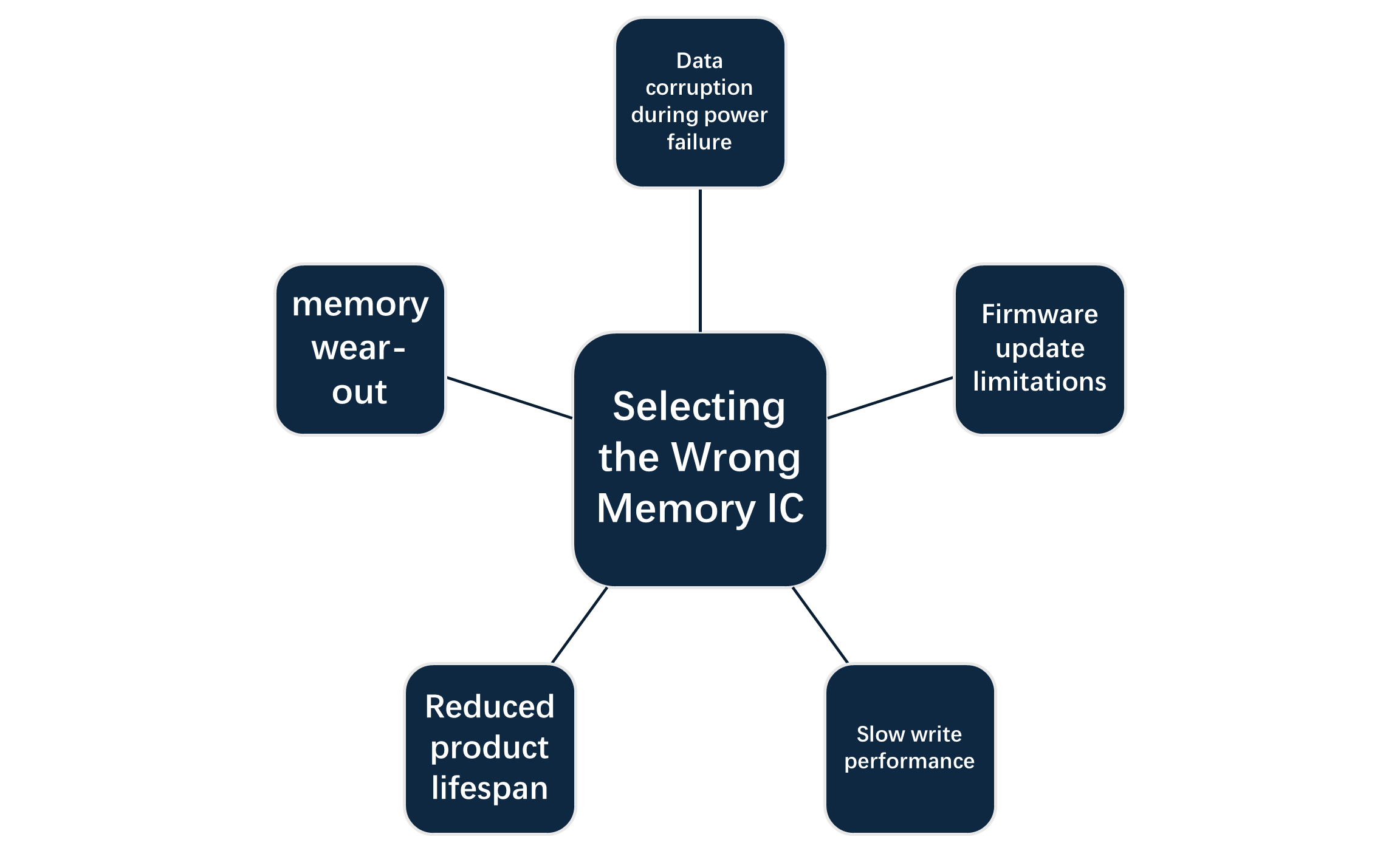
Selecting the right Memory IC is a key design consideration because choosing the wrong one will lead to various design issues.
Overview of Non-Volatile Memory Types (SPI Flash, EEPROM, FRAM)
In modern embedded systems, non-volatile memory is a fundamental building block that ensures critical data is retained even when power is completely removed. Unlike volatile memory such as RAM, which loses all stored information once the system shuts down, non-volatile memory preserves data permanently, making it essential for reliable electronic design.
When engineers evaluate SPI Flash vs EEPROM vs FRAM, they are essentially comparing three widely used non-volatile memory technologies, each optimized for different performance needs. These memory types are commonly found in microcontrollers, IoT devices, industrial controllers, automotive electronics, and consumer products.
SPI Flash Memory
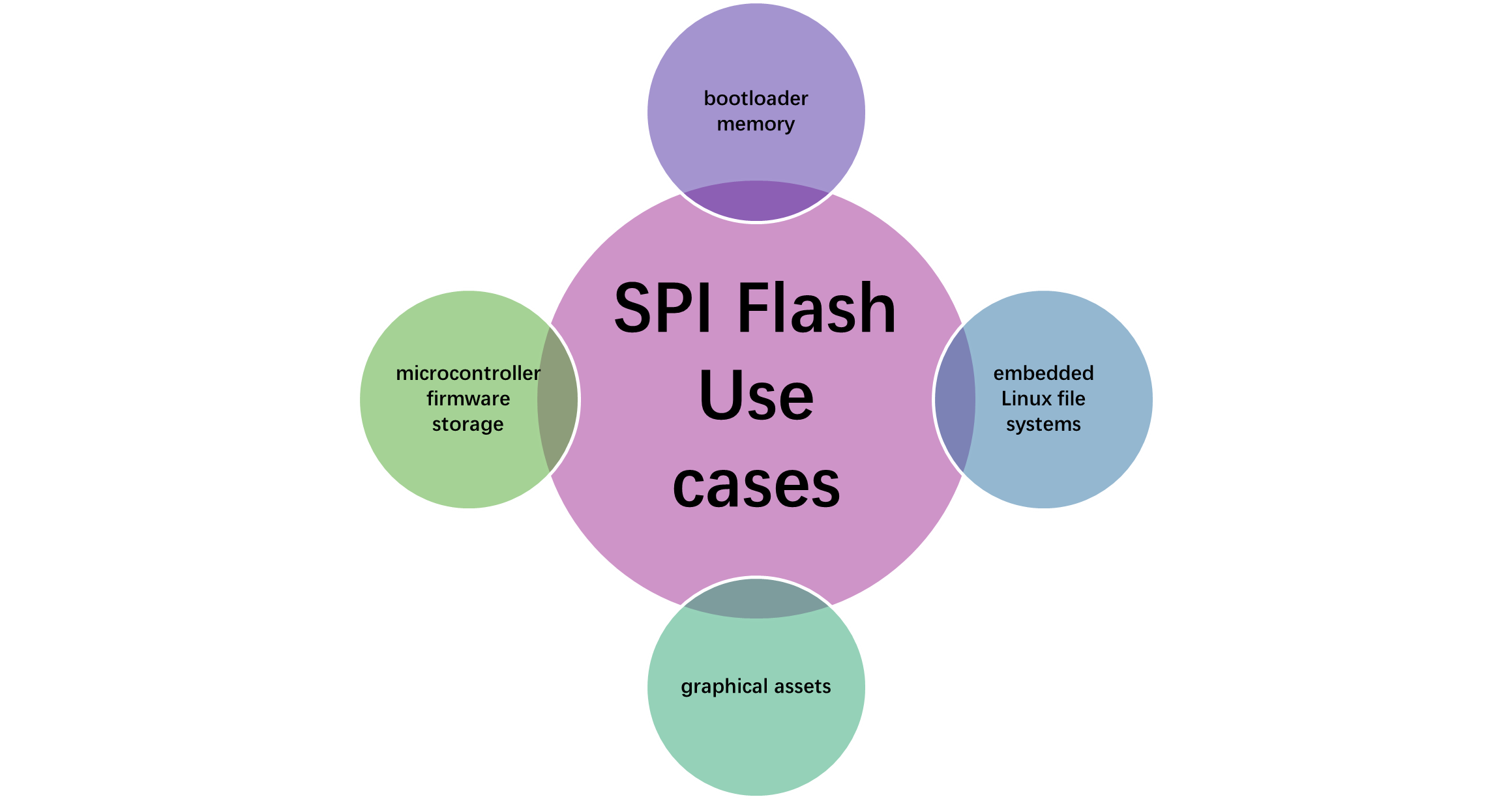
SPI Flash is designed for storing large amounts of data efficiently. It is commonly used for firmware storage, bootloaders, and application code in embedded systems. Its key strength lies in high storage density and low cost per bit, making it the default choice for systems requiring megabytes to gigabytes of non-volatile storage. However, SPI Flash operates on sector-based erase cycles, which makes small, frequent updates less efficient.
Common ICs such as Winbond W25Q64JV, GigaDevice GD25Q128CSIG, and Macronix MX25L12833F are widely used in embedded systems because they offer large storage capacity with fast SPI/QSPI interface support.
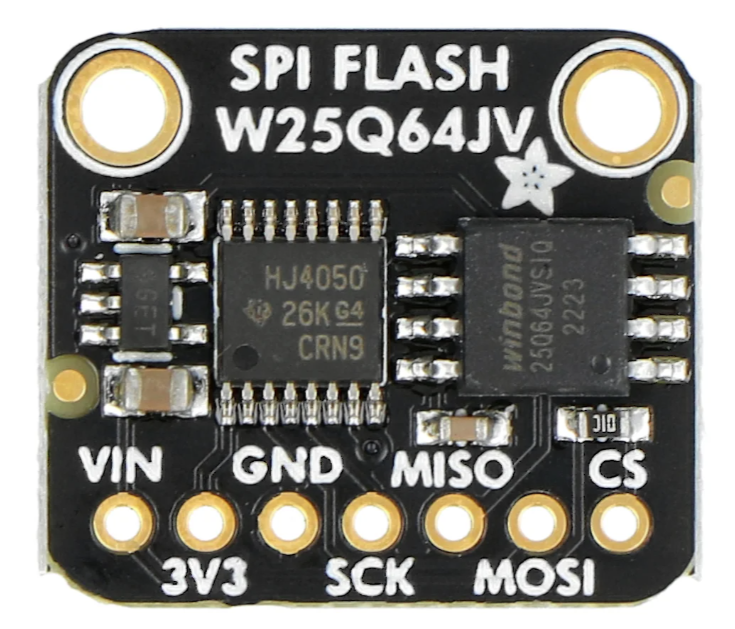
EEPROM
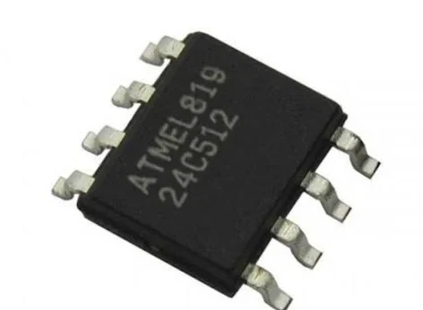
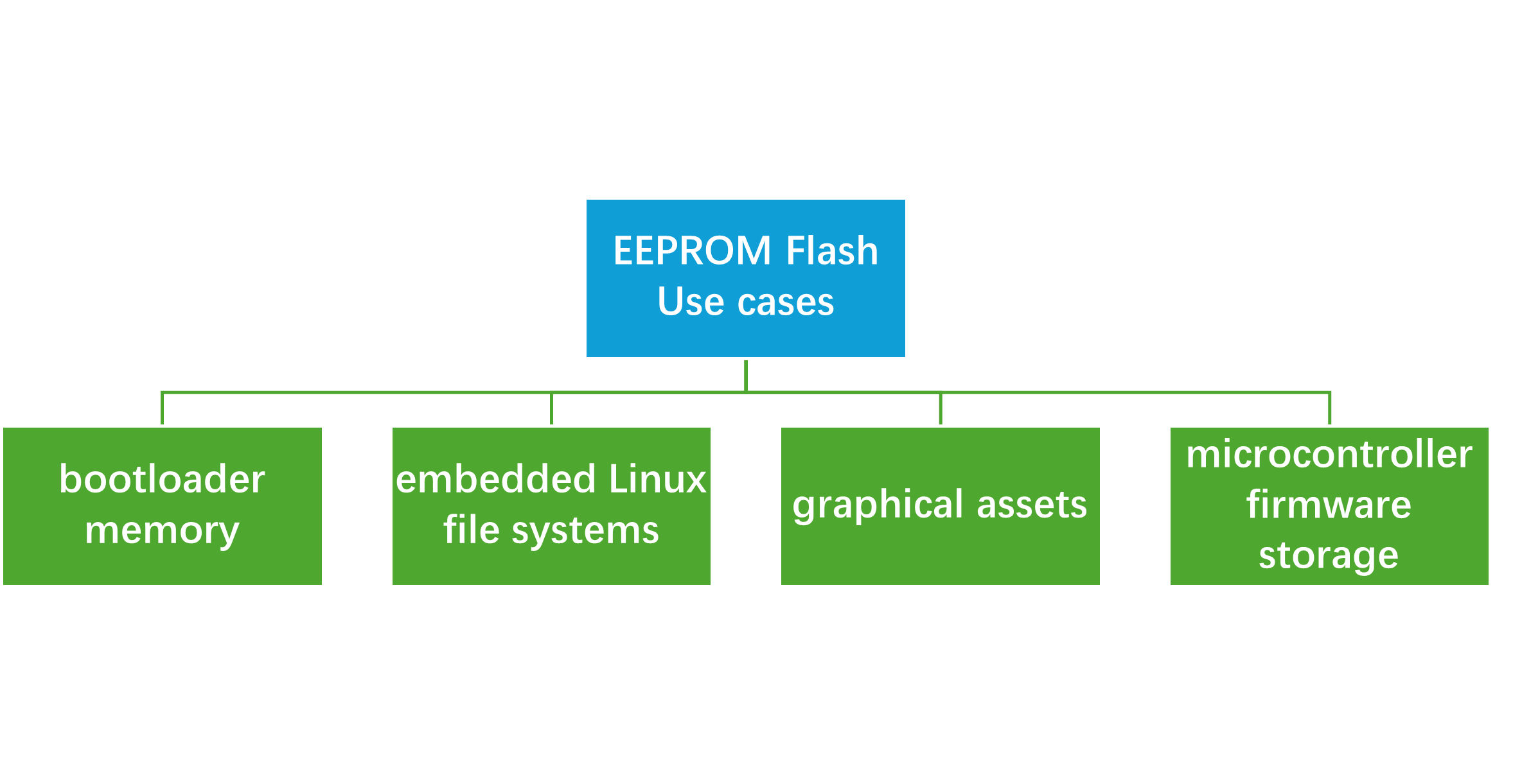
EEPROM is optimized for small-scale, frequently updated data storage. It allows byte-level read and write operations, which makes it ideal for storing configuration parameters, calibration values, and system settings. While EEPROM is simple to integrate and highly reliable for low-write applications, it has limited write endurance and slower write performance compared to newer memory technologies.
Popular ICs such as Microchip 24LC256, AT24C512, and ST M24C64 are widely used because they allow direct byte-wise read and write operations without complex memory management.
FRAM
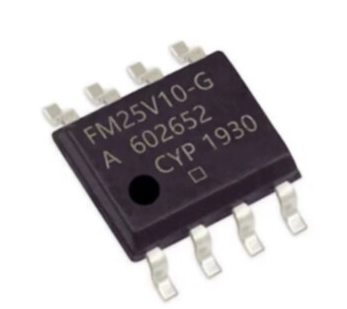
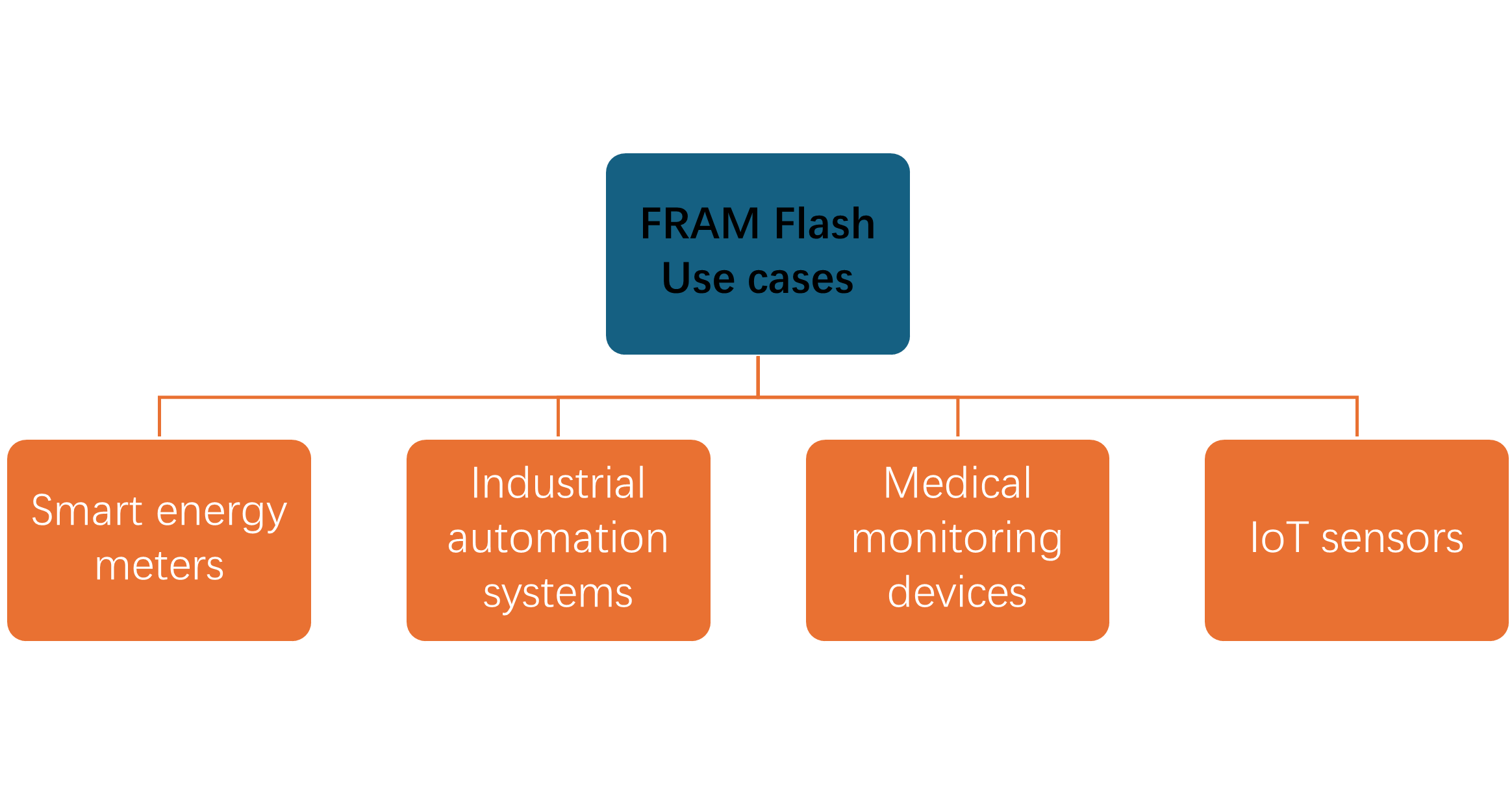
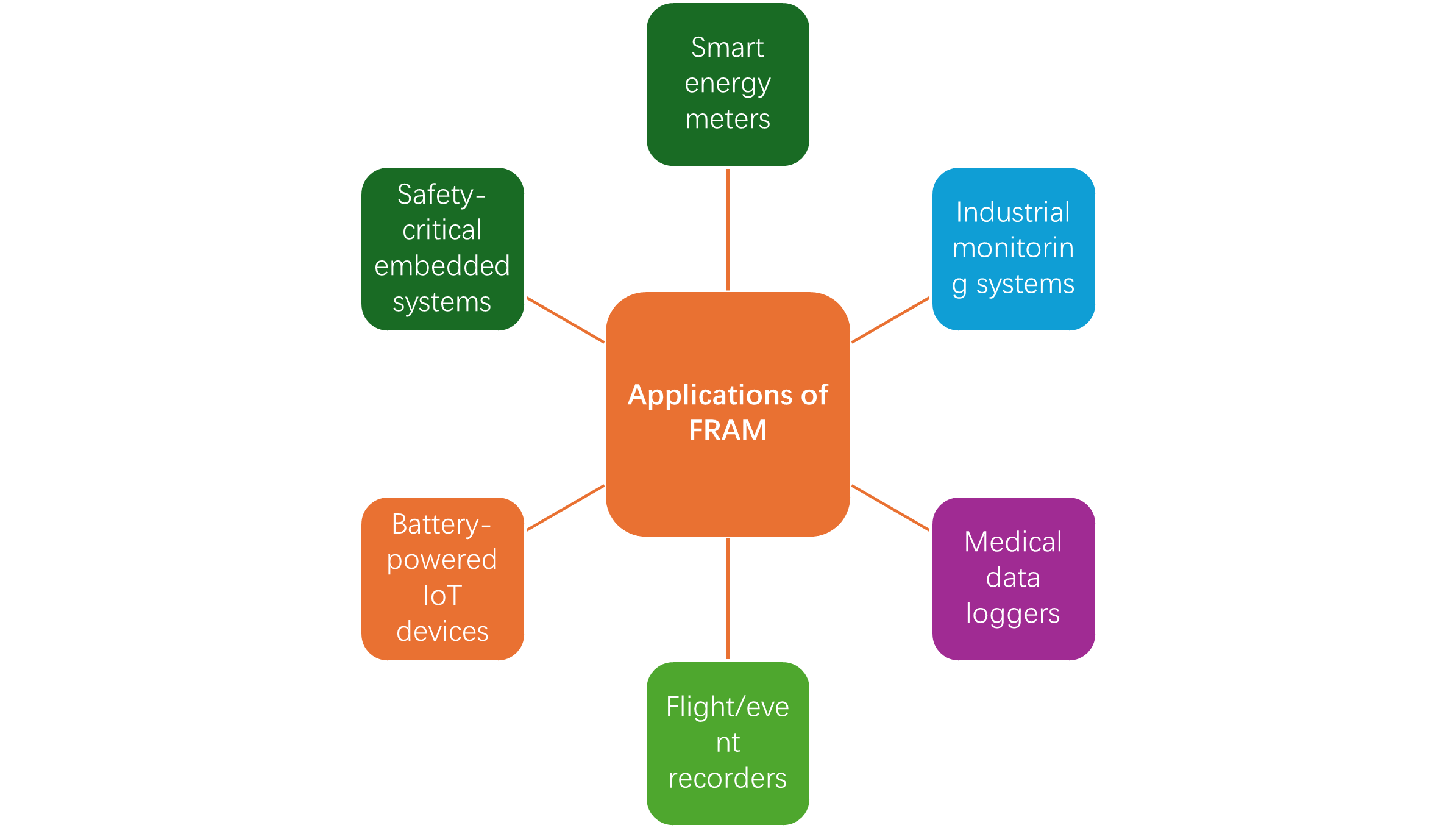
FRAM is an advanced non-volatile memory technology that combines the speed of SRAM with persistent data storage. It offers extremely high write endurance and does not require erase cycles, allowing instant write operations. This makes FRAM ideal for applications involving continuous data logging, real-time sensor updates, and systems where frequent writes are required under strict power constraints.
ICs such as Fujitsu MB85RS64, Texas Instruments FM25V10, and Infineon CY15B104Q are widely used in applications that require extremely high write endurance and instant write capability.
What is SPI Flash Memory
In simple definition, SPI Flash memory is a type of non-volatile storage that uses the Serial Peripheral Interface (SPI) to store large amounts of digital data such as firmware, bootloaders, and application code. It is one of the most widely used memory types in embedded systems due to its high storage density and low cost per bit.
Common SPI Flash ICs such as the Winbond W25Q64JV, GigaDevice GD25Q128CSIG, and Macronix MX25L12833F are frequently used in microcontroller platforms like ESP32 and STM32. These devices typically support SPI or Quad-SPI (QSPI) communication, enabling fast sequential read operations that are ideal for executing firmware directly from external memory.
What is EEPROM?
EEPROM (Electrically Erasable Programmable Read-Only Memory) is a non-volatile memory type designed for storing small amounts of frequently accessed data that must be preserved even when power is removed. Unlike Flash memory, EEPROM allows byte-level read and write operations, making it ideal for configuration and parameter storage.
Popular EEPROM ICs such as the Microchip 24LC256, Microchip 24LC512, and ST M24C64 are widely used in embedded systems due to their simplicity and reliability. These devices typically communicate over I2C or SPI interfaces, making them easy to integrate with most microcontrollers.

What is FRAM?
FRAM (Ferroelectric Random Access Memory) is an advanced non-volatile memory technology that combines the speed of SRAM with the data retention capability of traditional non-volatile memory. It is designed for applications that require extremely high write endurance and instant data storage without delay.
Common FRAM ICs such as the Fujitsu MB85RS64, Texas Instruments FM25V10, and Infineon CY15B104Q are widely used in high-reliability embedded systems. These devices support fast SPI or I2C communication and allow data to be written directly without any erase cycle, which significantly improves performance in real-time systems.
Unlike SPI Flash and EEPROM, FRAM offers extremely high write endurance and very low power consumption. This makes it ideal for systems that continuously log data or operate under strict power constraints.
SPI Flash vs EEPROM vs FRAM
When designing embedded systems, selecting the right non-volatile memory is a critical architectural decision. The choice between SPI Flash Vs EEPROM Vs and FRAM directly impacts system performance, endurance, power consumption, and long-term reliability. Although all three technologies store data without power, they behave very differently under real-world operating conditions.
Key Differences Engineers Must Understand
When analyzing SPI Flash vs EEPROM vs FRAM, engineers are not just comparing memory specifications—they are evaluating how each memory behaves inside a real embedded system under constraints like write frequency, power failure risk, firmware complexity, and endurance limits. These differences directly impact system reliability, cost, and long-term performance.
Memory Architecture and Write Behavior
SPI Flash memory such as Winbond W25Q64JV uses a sector-based erase-and-write architecture, meaning data must be erased in blocks before new data can be written. This makes it highly efficient for firmware storage but inefficient for frequent small updates.
In contrast, EEPROM devices like Microchip 24LC256 support byte-level read and write operations, allowing direct modification of small data values without affecting surrounding memory locations.
FRAM devices such as Texas Instruments FM25V10 go one step further by eliminating erase cycles completely, offering true RAM-like behavior with persistent storage.
Write Endurance and Long-Term Reliability
Write endurance is one of the most critical factors in memory IC comparison:
Memory Endurance Comparison (Write Cycles)
EEPROM and SPI Flash can fail prematurely in high-write systems, while FRAM is practically immune to wear-out in typical embedded applications.
Firmware Complexity and System Design Overhead
SPI Flash increases firmware complexity because it often requires:
⚙️ SPI Flash Firmware Requirements
EEPROM reduces complexity significantly and can be used with simple read/write drivers.
FRAM eliminates most memory management overhead entirely, behaving like persistent RAM.
Power Loss Behavior and Data Integrity
Power failure behavior is a critical differentiator in embedded systems:
⚡ Power Loss & Data Integrity Comparison
Cost vs Performance
💰 Memory Cost vs Application Comparison
When to Use SPI Flash, EEPROM, and FRAM in Embedded Systems
One of the most important decisions in embedded hardware design is selecting the correct non-volatile memory technology for the application. While many engineers compare SPI Flash vs EEPROM vs FRAM based only on datasheet specifications, the real selection process depends on how the memory behaves under actual operating conditions, such as write frequency, storage size, power stability, firmware complexity, and long-term endurance requirements.
When to Use SPI Flash Memory
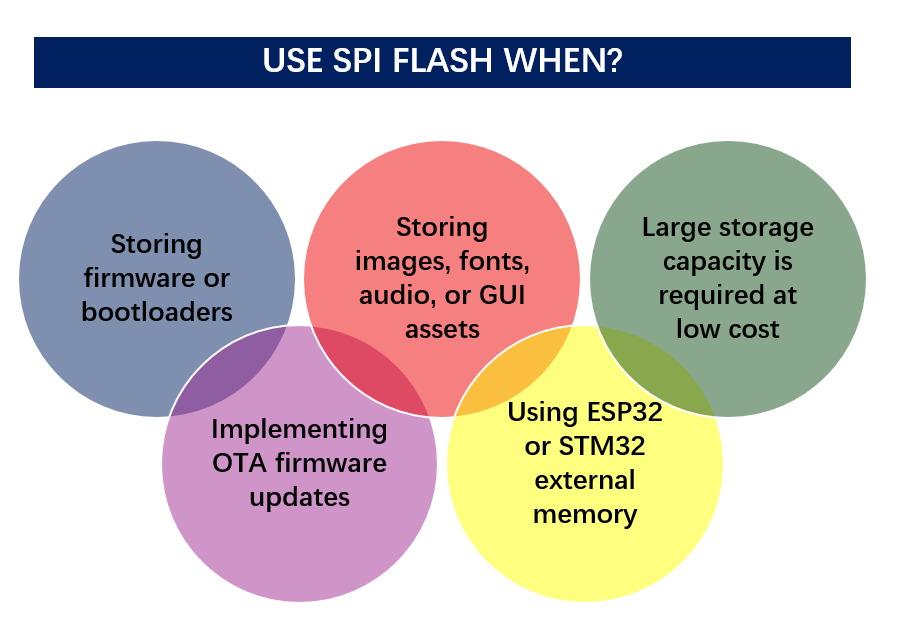
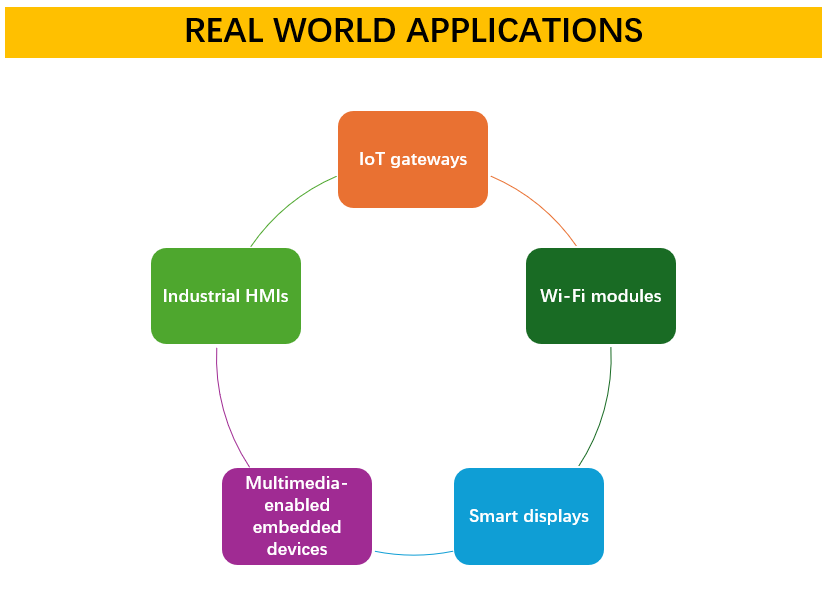
SPI Flash memory is the best choice when an embedded system requires large-capacity, low-cost non-volatile storage. ICs such as Winbond W25Q64JV, GigaDevice GD25Q128CSIG, and Macronix MX25L12833F are widely used in modern microcontroller and embedded Linux platforms because they offer high storage density with fast SPI/QSPI read performance. SPI Flash is ideal for systems where data is written occasionally but read frequently.
When to Use EEPROM
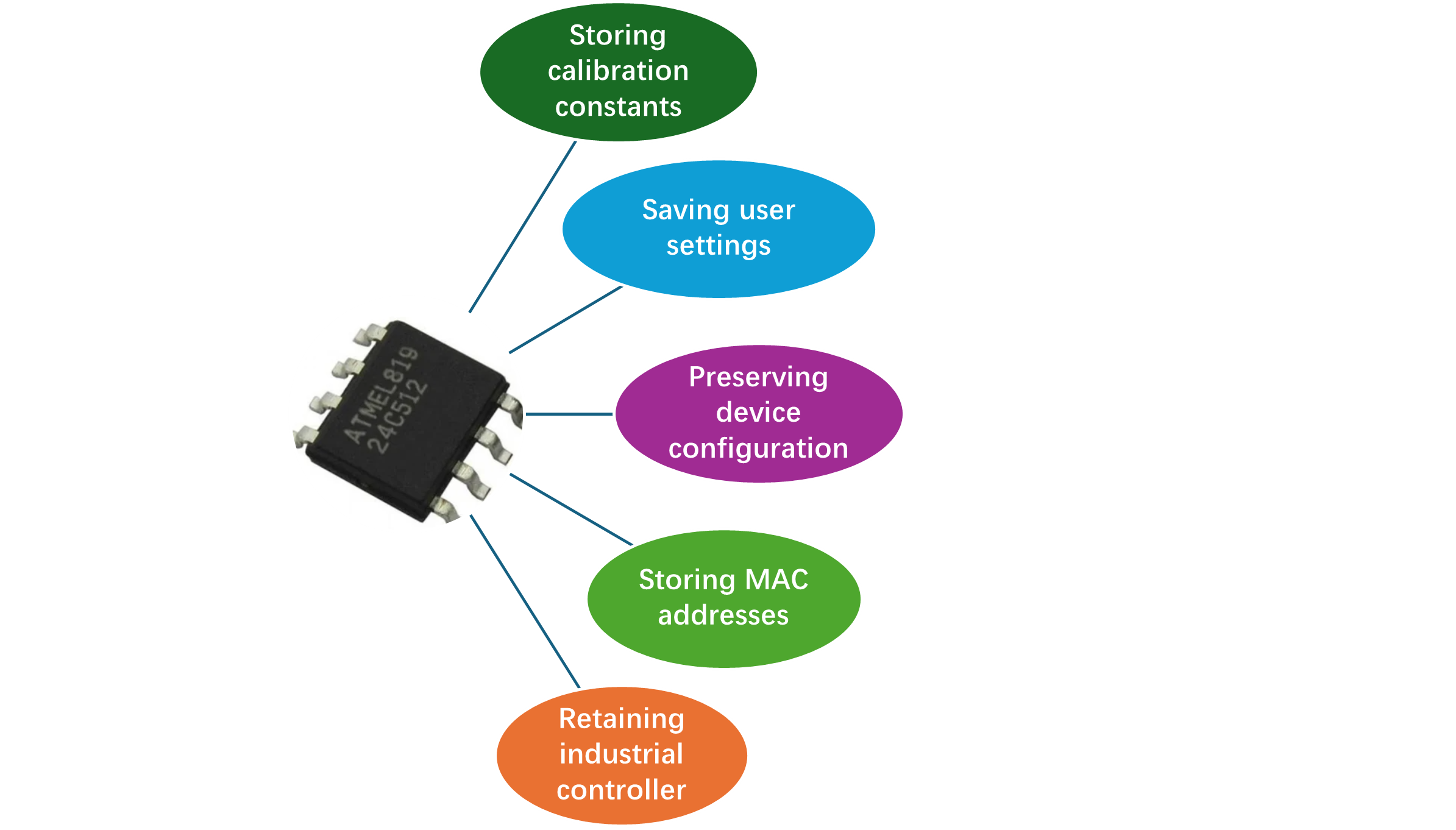
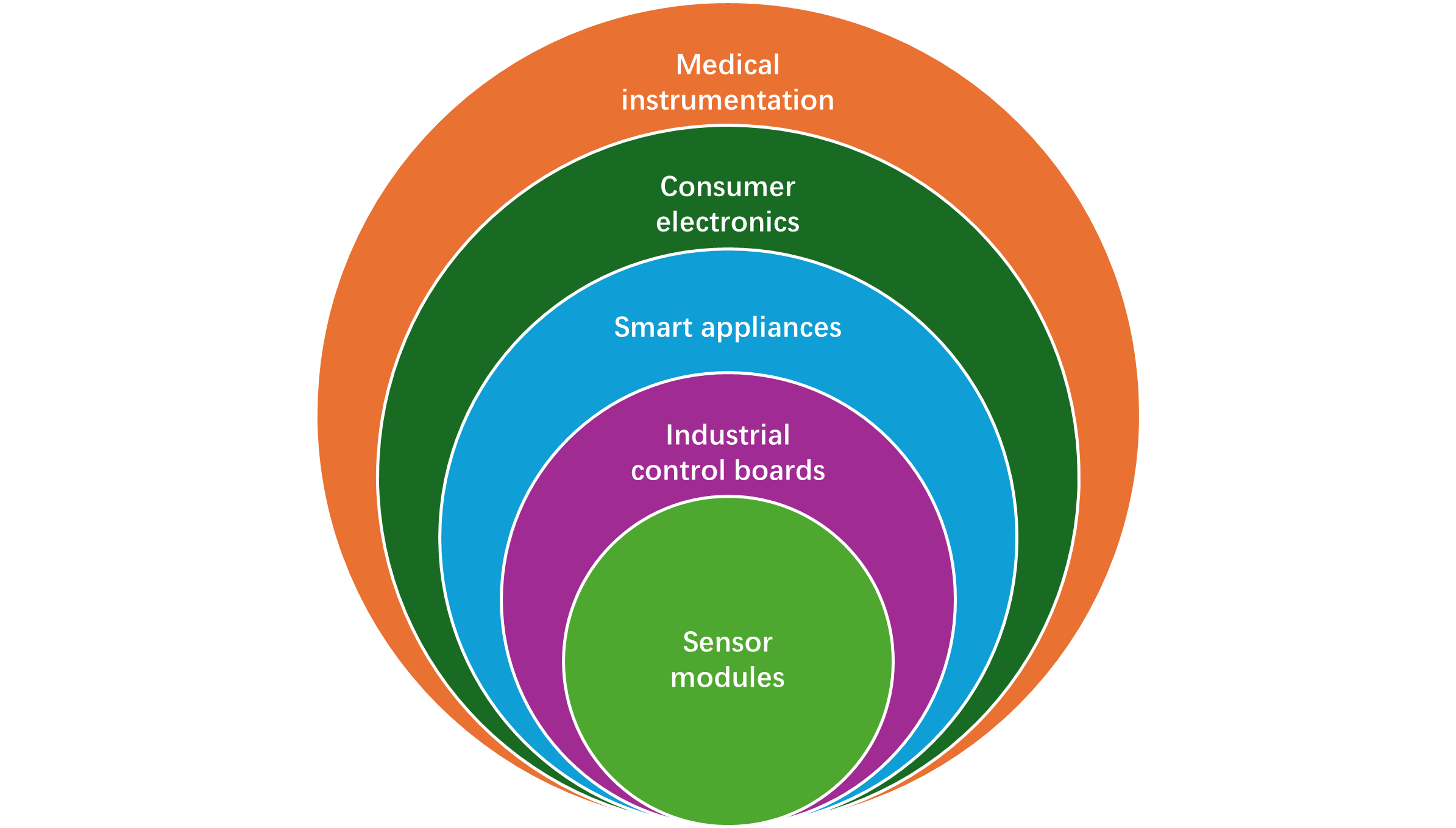
EEPROM is the preferred choice for storing small amounts of configuration or parameter data that change occasionally but must remain preserved after power loss. Popular EEPROM ICs such as Microchip 24LC256, Microchip 24LC512, and ST M24C64 are commonly used because they support direct byte-level read and write operations without requiring complex memory management.
When to Use FRAM
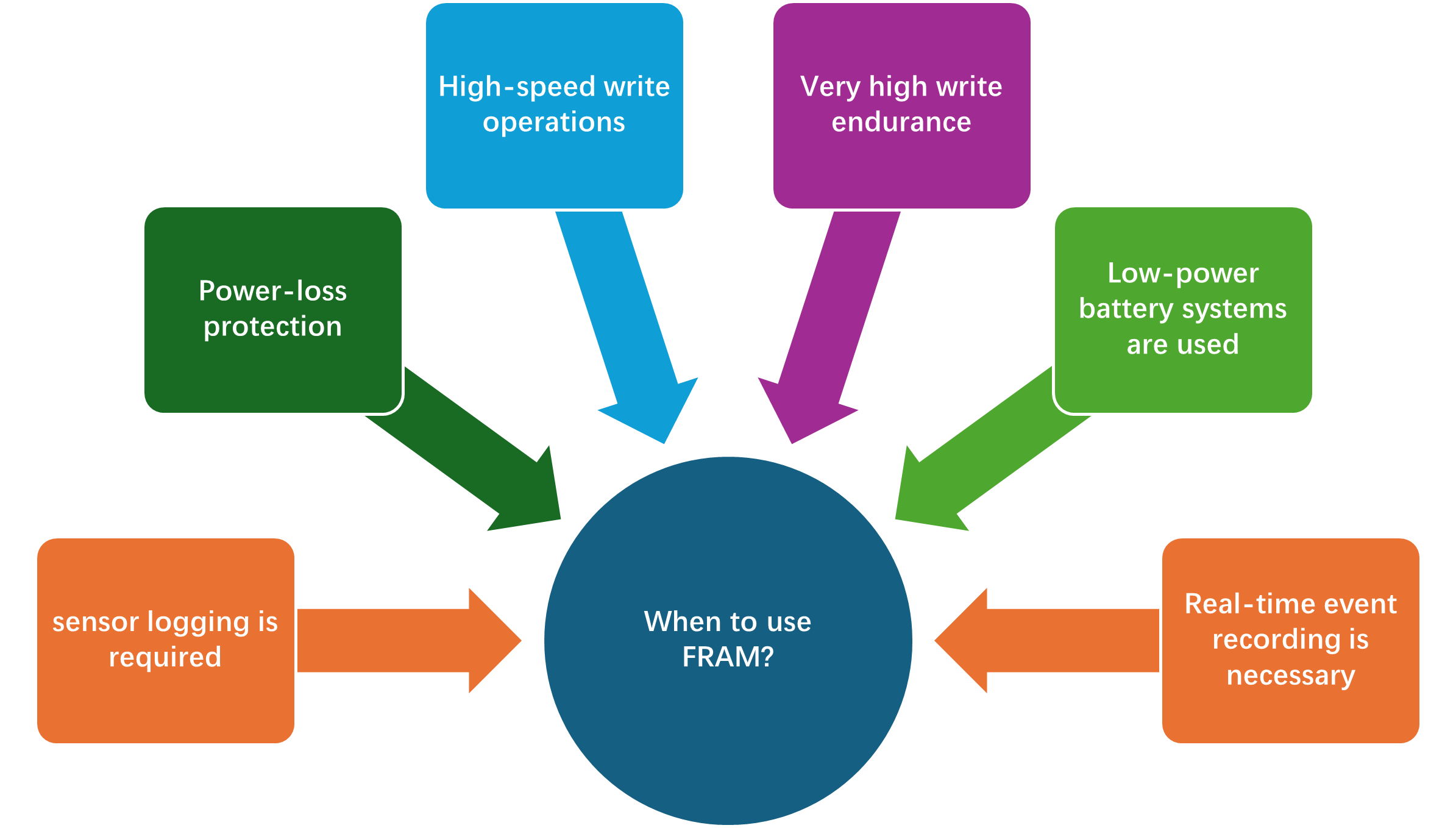
FRAM is the ideal solution for systems that require extremely high write endurance, ultra-fast write speed, and maximum data reliability. Memory ICs such as Fujitsu MB85RS64, Texas Instruments FM25V10, and Infineon CY15B104Q are specifically designed for applications involving continuous writes and power-sensitive operation. Unlike SPI Flash and EEPROM, FRAM does not require erase cycles, allowing data to be written instantly with minimal power consumption and virtually no wear concerns.
Microcontroller Interface circuits with SPI, EEPROM, FRAM ICs
Interfacing non-volatile memory ICs with microcontrollers is a fundamental part of embedded hardware design. Whether using SPI Flash, EEPROM, or FRAM, the interface circuitry directly affects communication reliability, signal integrity, power stability, and long-term system performance.
Modern microcontrollers such as ESP32, STM32, RP2040, AVR, and PIC devices commonly communicate with external memory ICs through SPI or I2C interfaces. However, each memory type has different electrical and firmware considerations that engineers must understand before integrating them into a production design.
This section explains the practical hardware interface circuits used with popular memory ICs of SPI Flash Vs EEPROM, and FRAM, such as Winbond W25Q64JV, Microchip 24LC256, and Fujitsu MB85RS64.
SPI Flash Interface Circuit
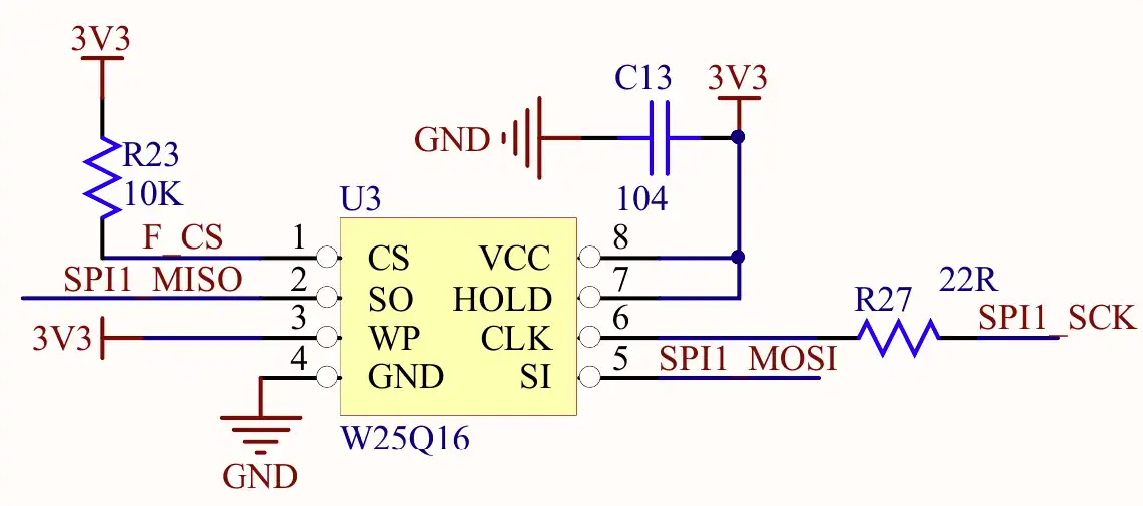
SPI Flash memories such as Winbond W25Q64JV and GigaDevice GD25Q128CSIG are typically connected to microcontrollers using the SPI or Quad-SPI interface.
Typical SPI Flash Connections
Important Design Recommendations
When interfacing SPI Flash:
- Place a 100nF decoupling capacitor close to the IC power pins
- Keep SPI traces short to reduce signal integrity issues
- Add pull-up resistors to WP and HOLD pins if unused
- Use controlled impedance routing for high-speed QSPI designs
EEPROM Interface Circuit
EEPROM devices such as Microchip 24LC256 and ST M24C64 commonly use the I2C interface because of its simplicity and low pin count.
FRAM Interface Circuit
FRAM devices such as Fujitsu MB85RS64 and Texas Instruments FM25V10 are available in both SPI and I2C variants and are typically interfaced similarly to EEPROM or SPI Flash.
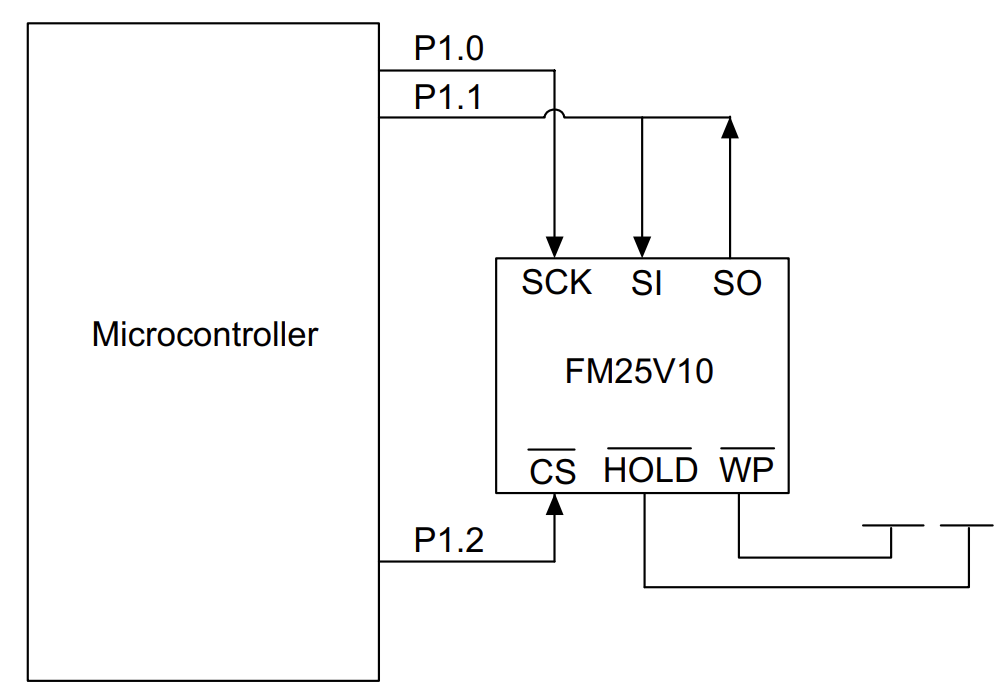
SPI vs I2C Memory Interfaces in Embedded Systems
Alternatives and Variants of Memory ICs
In embedded system design, non-volatile memory is not limited to a single device choice. Instead, engineers select from multiple variants of SPI Flash vs EEPROM, and FRAM ICs depending on required storage capacity, endurance, interface compatibility, voltage levels, and cost targets. These variants often perform the same core function but differ significantly in speed, reliability, and system integration behavior.
For example, SPI Flash memory variants such as Winbond W25Q64JV, Macronix MX25L12833F, and GigaDevice GD25Q128CSIG are widely used for firmware and bulk data storage. EEPROM variants like Microchip 24LC256, ST M24C64, and Atmel AT24C02 are preferred for configuration and calibration storage. Similarly, FRAM variants including Fujitsu MB85RS64, Texas Instruments FM25V10, and Infineon CY15B104Q are used in high-speed, high-endurance data logging applications.
Conclusion
To sum up, choosing between SPI Flash vs EEPROM vs FRAM is ultimately a system-level design decision, not just a component selection. Each memory technology serves a distinct role in embedded systems, and the right choice depends on how data is stored, updated, and protected throughout the product lifecycle.
Understanding when and how to use each memory type allows engineers to design systems that are not only functionally correct but also optimized for performance, reliability, and long-term stability in real-world conditions.
Frequently Asked Questions (FAQ)
SPI Flash (Winbond W25Q64JV) is used for ESP32 firmware storage, EEPROM (Microchip 24LC256) is used for configuration data, and FRAM (Texas Instruments FM25V10) is used for high-speed, high-endurance sensor logging.
From an interface perspective, SPI Flash uses the SPI protocol with sector-based erase and page programming, while EEPROM, such as the Microchip 24LC256, supports byte-level write operations over I2C or SPI for finer data control.
Because SPI Flash provides high-density storage at low cost and Fast sequential read performance
For EEPROM ICs, typical I2C pull-up resistors are around 4.7 kΩ, while for high-speed I2C operation (400 kHz–1 MHz), values between 2.2 kΩ and 3.3 kΩ are commonly used.
Yes, but requires proper chip select (CS) isolation

COMMENTS