
If you’ve worked on any connected hardware project in the last few years, there’s a good chance you’ve come across Espressif’s microcontrollers. Two names come up again and again: ESP32 and ESP8266. These compact, low-cost chips have powered everything from smart home devices to industrial sensors and they’re still going strong in 2025. So why is ESP32 vs ESP8266 still a relevant comparison?
It comes down to simplicity vs. capability. The ESP8266, launched back in 2014, was a breakthrough for low-cost Wi-Fi integration. It’s still a go-to choice for basic IoT nodes where budget and power consumption are key.
Meanwhile, the ESP32, introduced in 2016, added Bluetooth, dual-core processing, more memory, and a whole suite of peripherals that make it ideal for more complex or scalable applications.
In this article, we’ll help you make the right choice by breaking down:
- The core differences between the ESP32 vs ESP8266
- Their technical specs, wireless capabilities, and power consumption
- Real-world use cases for each
- Pricing and sourcing tips
- A case study showing how one project evolved from ESP8266 to ESP32
By the end, you’ll know exactly which chip to select from ESP32 vs ESP8266 and why.
ESP32 vs ESP8266 Background
Espressif changed the face of low-cost IoT in 2014 with the ESP8266, a compact, single-core Wi-Fi-enabled MCU that enabled the development of connected devices for just a few dollars.
Two years later, the ESP32 arrived with dual-core performance and built-in Bluetooth, expanding possibilities for more advanced IoT projects.
Even today, the ESP32 vs ESP8266 comparison remains relevant because it’s ultimately a choice between simplicity and capability.
A closely related chip, the ESP8285, offers nearly identical performance to the ESP8266 but includes 1 MB of embedded flash memory. This makes it especially useful for space-constrained designs or environments where external flash is undesirable.
The ESP8285 also supports higher temperature ranges and runs the same firmware as the ESP8266, providing a straightforward upgrade path. Since the success of the original ESP32, Espressif has released several specialized variants to meet different use cases and performance needs:
ESP8266
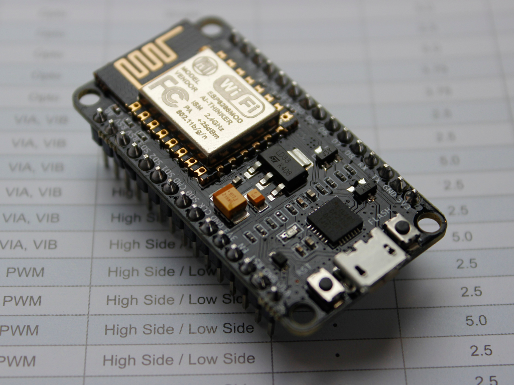
The ESP8266 is Espressif’s original low-cost Wi-Fi microcontroller that made IoT accessible to everyone. It integrates a 32-bit CPU, Wi-Fi radio, and TCP/IP stack in one compact package, ideal for simple connected devices like smart plugs, sensors, and switches. Programmable via Arduino IDE, MicroPython, or Lua, it remains popular for its simplicity, low power use, and vast community support — perfect for Wi-Fi–only projects on a budget.
ESP32-S2
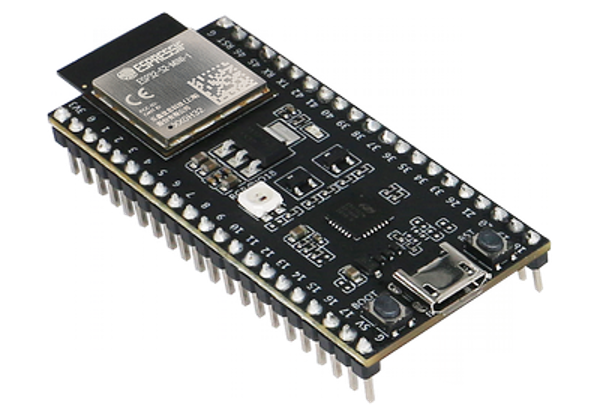
The ESP32-S2 focuses on secure Wi-Fi connectivity with a single LX7 core, native USB-OTG, and up to 43 GPIO pins. It’s designed for devices that need direct USB communication or high I/O flexibility but not Bluetooth. With built-in encryption and secure boot features, it’s ideal for secure data loggers, smart meters, or USB peripherals that demand reliability and protection.
ESP32-S3
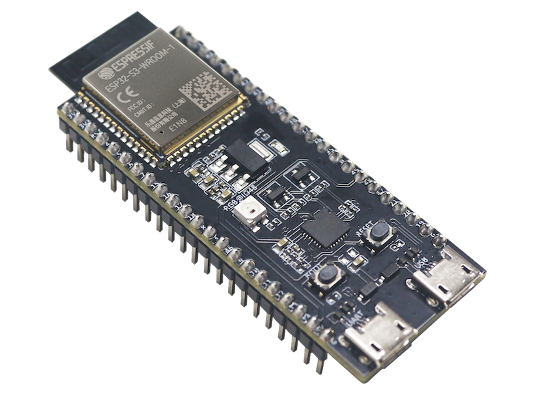
The ESP32-S3 is a dual-core LX7 chip built for AI and multimedia. It supports Bluetooth 5 LE, LCD and camera interfaces, and vector acceleration for basic machine learning tasks. It’s perfect for smart displays, voice assistants, or vision-based devices that combine Wi-Fi connectivity with on-device intelligence.
ESP32-C3
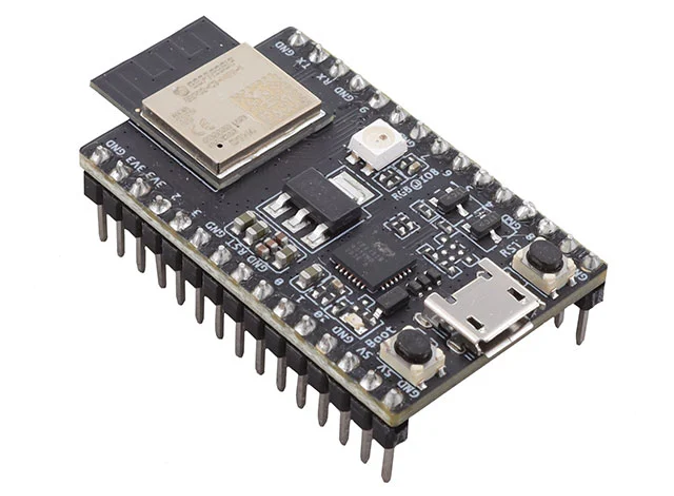
Powered by a single-core RISC-V processor, the ESP32-C3 combines Wi-Fi 4 and Bluetooth 5.0 LE in a compact, energy-efficient package. It offers improved security, modern power control, and compatibility with many ESP8266 pinouts, making it a drop-in upgrade for legacy designs. The C3 suits battery-powered nodes, BLE beacons, and secure IoT sensors.
ESP32-C6

The ESP32-C6 is Espressif’s most advanced chip yet, featuring Wi-Fi 6, Bluetooth 5.3, and an 802.15.4 radio for Thread and Zigbee. It’s fully Matter-ready, enabling future-proof smart home and industrial networks. With its RISC-V core and low-power operation, it delivers excellent performance for dense, multi-protocol IoT systems.
Both the ESP8266 and ESP32 families benefit from a mature and well-supported software ecosystem.
Developers can work with Espressif’s ESP-IDF framework, the ESP8266 RTOS SDK, or community-driven platforms like Arduino Core and MicroPython.
Libraries, tutorials, and active forums ensure that even newcomers can get started quickly, while professionals have the depth needed for production-grade design.
ESP32 vs ESP8266 Specifications
The table below breaks down the core specs of the ESP8266 and the ESP32 (ESP-WROOM-32 module), two of the most widely adopted Wi-Fi SoCs in the industry.
| Feature | ESP8266 (ESP-12F) | ESP32 (ESP-WROOM-32) |
| CPU | 1× 32-bit Tensilica L106 @ 80–160 MHz | 2× 32-bit Tensilica LX6 @ up to 240 MHz (dual-core) |
| RAM | ~160 KB (64 KB instruction + 96 KB data) | 520 KB internal SRAM + 8 KB RTC fast memory |
| Flash Storage | External SPI flash up to 16 MB (commonly 4 MB) | External SPI flash up to 16 MB (typical: 4–8 MB) |
| Wi-Fi | 2.4 GHz 802.11 b/g/n (HT20, ~72 Mbps PHY) | 2.4 GHz 802.11 b/g/n (HT40 support, up to 150 Mbps) |
| Bluetooth | None | Yes — Bluetooth v4.2 (Classic + BLE) |
| GPIO Pins | 17 total (~11 usable, due to flash/boot pin constraints) | 34 total (~30 usable, supports multiplexing) |
| Analog Inputs | 1× ADC (10-bit) | Up to 18× ADC channels (12-bit SAR) |
| Analog Outputs | None | 2× DAC (8-bit) |
| Other Peripherals | UART, SPI, I²C, PWM, basic I²S (limited) | All ESP8266 interfaces plus: I²S, CAN (TWAI), touch, SDIO, etc. |
| Hardware Security | Basic WPA/WPA2; no secure boot or crypto acceleration | AES-256, SHA-2, RSA, ECC, Secure Boot, Flash Encryption |
| Deep Sleep Current | ~20 µA (RTC retention only) | ~5–10 µA (ULP co-processor active) |
| Active Wi-Fi Current | ~70–170 mA (during TX) | ~160–260 mA (varies with CPU/radio load) |
| Module Price (Bulk) | ~$1.5–$2.5 (ESP-12F) | ~$2–$3 (ESP32-WROOM); dev kits ~$8–$12 |
The ESP32 surpasses the ESP8266 in nearly every category, offering a dual-core processor, more RAM, built-in Bluetooth, and a richer set of I/O options.
It supports up to 18 ADC channels, two DACs, and advanced interfaces like CAN bus, capacitive touch, and I²S making it ideal for multimedia, industrial, or sensor-heavy projects.
Security is another strong point: the ESP32 includes hardware encryption, secure boot, and flash protection, features absent on the ESP8266.
Wireless & Connectivity
Wireless capability is central to the ESP32 vs ESP8266 comparison. Both chips deliver reliable Wi-Fi, but Bluetooth support—and how each handles simultaneous connections—sets them apart in real-world applications.
Wi-Fi Support (802.11 b/g/n on 2.4 GHz)
When it comes to ESP8266 vs ESP32, both include an integrated 2.4 GHz IEEE 802.11 b/g/n Wi-Fi radio, suitable for most IoT environments.
Neither supports 5 GHz bands (like 802.11ac or Wi-Fi 6)—you’re limited to 2.4 GHz, which is expected at this price point and common in low-power designs.
- The ESP8266 supports HT20 with a max PHY rate of ~72 Mbps.
- The ESP32, thanks to updated Wi-Fi hardware, supports HT40, allowing up to 150 Mbps under ideal conditions.
In practice, both chips easily handle typical IoT workloads—like sending sensor data or controlling devices over HTTP or MQTT.
However, the ESP32’s higher bandwidth and dual-core processor provide noticeably faster firmware updates, data transfers, and OTA capabilities—particularly important in devices with more complex software stacks.
Both support WPA2 security natively, and newer SDKs can enable WPA3, making them secure enough for commercial deployments.
However, they only support IPv4 and have no built-in Ethernet or 5 GHz support—external solutions are needed if those are requirements.
Bluetooth: ESP32 Only
Here’s where the gap widens. The ESP8266 has no Bluetooth support—zero. If your design involves BLE beacons, smartphone pairing, or wireless audio, it’s off the table.
The ESP32, on the other hand, comes with built-in Bluetooth v4.2, supporting both Classic and Bluetooth Low Energy (BLE) modes. This opens up a world of applications, including:
- BLE sensors or beacons
- Wearables or mobile-connected devices
- Bluetooth speakers and wireless audio
- BLE mesh networks or provisioning via smartphone
It’s true that ESP32’s Bluetooth 4.2 doesn’t offer the extended range or advanced throughput of Bluetooth 5, but it’s enough for most BLE use cases in 2025.
For projects that do require newer Bluetooth features, ESP32-C3, S3, and C6 variants support BLE 5.0 and 5.3, and even Thread/Zigbee via 802.15.4 (ESP32-C6).
These newer variants point toward Espressif’s commitment to multi-protocol connectivity—especially important in emerging ecosystems like Matter.
If you need any Bluetooth functionality, whether BLE or Classic, you must go with the ESP32 family. The ESP8266 is strictly a Wi-Fi–only solution.
Network Protocols and Operation Modes
Both chips support full TCP/IP stacks, including HTTP, MQTT, WebSocket, and TLS via the Espressif SDKs (ESP-IDF and Arduino core). They can operate in:
- Station (STA) mode: connect to existing Wi-Fi networks
- Soft AP mode: act as a Wi-Fi hotspot
- Mixed mode: run STA and AP simultaneously (e.g., gateway setups)
The ESP32, with its dual-core architecture, handles heavier network traffic and coexistent wireless operations (like Wi-Fi + BLE running concurrently) far better. Espressif’s firmware optimizations allow efficient scheduling of packets between protocols—something the single-core ESP8266 often struggles with under load.
Power Efficiency & Battery Use
For battery-powered IoT devices, power consumption isn’t just a spec—it directly affects runtime, component selection, and user experience. When comparing ESP32 vs ESP8266, both offer solid low-power capabilities, but their approaches and efficiencies vary depending on the scenario.
Deep Sleep: Long-Term Battery Life Mode
Both the ESP8266 and ESP32 support deep sleep, where the main CPU and Wi-Fi radio are completely shut down. Only an RTC timer remains active to trigger future wake-ups.
- ESP8266 deep-sleep current: ~20 µA (with RTC memory retention)
- ESP32 deep-sleep current: ~5–10 µA, thanks to its built-in ULP (Ultra Low Power) co-processor
This ULP core is a major edge for the ESP32. It allows the chip to stay in deep sleep while periodically reading sensors or checking GPIO states—without waking the main processor. For ultra-low-duty-cycle devices (e.g., a sensor that wakes every 30 minutes), this can extend battery life by months or even years.
For lowest standby current and deep sleep with smart sensor checking, ESP32 is more efficient.
Light Sleep & Modem-Sleep: Connected But Idle
In scenarios where the device stays connected to Wi-Fi (like waiting for incoming messages), modem-sleep and light-sleep modes help reduce power between transmissions.
- ESP8266: ~0.4–2 mA in light/modem-sleep
- ESP32: ~0.8–3 mA in similar modes
While the ESP8266 has slightly lower draw in this range, it also has quirks—such as failing to reliably enter light sleep under certain SDK conditions.
The ESP32 provides more flexible and reliable control, including adjustable listen intervals for beacon traffic.
Both chips can idle under 3 mA when connected; ESP8266 may edge out in current, but ESP32 wins on control and reliability.
Active Wi-Fi Use: Performance vs Draw
When the radio is actively sending or receiving, current consumption spikes:
- ESP8266: ~70–170 mA
- ESP32: ~160–260+ mA (higher if Bluetooth is also on)
At first glance, the ESP8266 seems more efficient here. But it’s not that simple. The ESP32 can complete tasks faster due to its faster CPU and PHY rate, meaning it spends less time awake.
In addition, hardware-accelerated features (like TLS encryption or Bluetooth advertisements) offload work and reduce CPU time.
In longer transmissions or heavy workloads, the ESP32 may use more current—but also does more.
ESP8266 is slightly better for short, infrequent bursts. ESP32 is better for complex or faster tasks that benefit from performance-per-watt.
Imagine a weather sensor that wakes every 5 minutes, reads temperature, and sends data over Wi-Fi:
- On ESP8266, it wakes, connects, transmits, and sleeps again—efficient and fast, but requires full wake each time.
- On ESP32, the ULP core could read the temperature without fully waking. If nothing changes, it doesn’t even transmit, saving energy and bandwidth.
For more advanced use cases like BLE-based wearables, environmental monitors, or multi-sensor nodes, the ESP32 enables richer functionality with careful power tuning.
Peripherals & I/O
When it comes to hardware flexibility, the ESP32 is on another level compared to the ESP8266. One of the biggest deciding factors between these two chips is how many devices, sensors, or outputs you need to connect—and how easily you can do it.
Let’s break it down.
GPIO Count and Flexibility
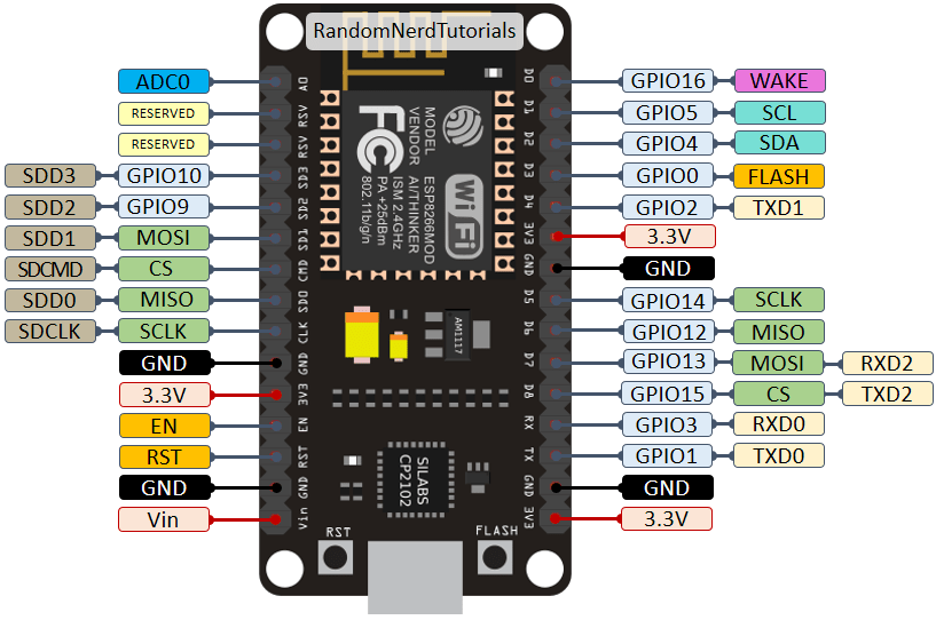
The ESP8266 gives you up to 17 GPIO pins on paper, but in reality, modules like the ESP-12F or NodeMCU make only about 11 of them easily usable. That’s because several pins are tied up with flash memory or boot configuration, leaving limited room to connect multiple sensors or actuators.
In contrast, the ESP32—especially in its WROOM-32 module—offers 34 GPIOs, with around 30 usable for general I/O. And thanks to its built-in GPIO matrix, the ESP32 allows you to remap functions like UART, I²C, or PWM to almost any pin. This is a game-changer if you’re designing complex circuits or trying to maximize board layout flexibility.
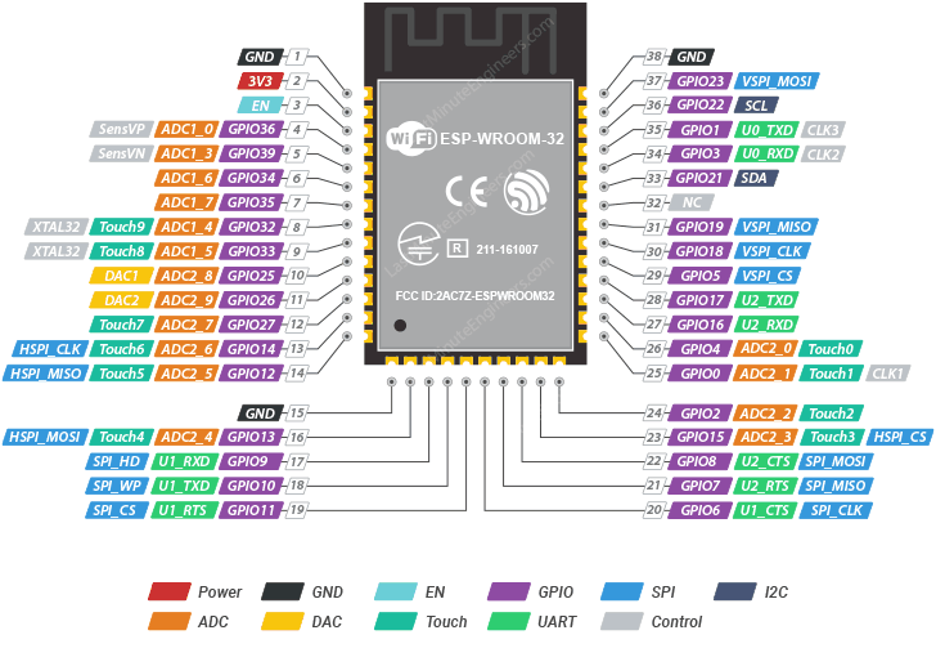
In real-world terms, that means your ESP32-based board can handle multiple sensors, drive a display, control relays, and still have spare pins left—all without needing shift registers or I/O expanders.
Analog Inputs, DACs, and Touch Sensing
The ESP8266 has just one analog input: a 10-bit ADC channel. It’s fine for reading a single sensor or monitoring battery voltage, but that’s it. No DAC, and definitely no native touch input.
The ESP32 takes analog to the next level. You get up to 18 channels of 12-bit ADCs, two DAC outputs (8-bit each), and even capacitive touch support built right into several GPIOs.
This makes it much easier to design interactive projects.
You can read multiple analog sensors, create smooth analog audio output, or even build a touch interface with no extra hardware. It’s like getting a whole new toolbox built into the chip.
Communication Interfaces: More of Everything
Both chips support the standard serial protocols—UART, SPI, and I²C—but the ESP32 gives you a lot more breathing room.
The ESP8266 provides 2 UARTs, though one is usually tied to flashing and debugging. It also supports one SPI and one I²C controller, which may be enough for basic projects.
With the ESP32, you get three UARTs, two SPI buses, and two I²C controllers, all hardware-based. And if that’s not enough, you can still bit-bang more using software.
On top of that, the ESP32 includes two full-featured I²S interfaces. These are ideal for audio input/output or fast parallel communication with peripherals like shift registers or camera modules.
Some ESP32 variants, like the ESP32-S3, even support direct camera integration and AI acceleration—something the ESP8266 simply can’t do.

Industrial and USB Peripherals
The ESP32 includes a CAN bus controller (branded as TWAI), letting it connect to industrial machines or automotive systems when paired with an external transceiver. The ESP8266 doesn’t support CAN at all.
Some ESP32 variants, like the S2 and S3, also come with native USB-OTG support. This means your microcontroller can behave like a USB device—mass storage, HID, MIDI, etc.—with no extra ICs. That’s a huge win for plug-and-play projects.
PWM, Remote Control, and Parallel Output
While the ESP8266 supports basic PWM and can bit-bang protocols like WS2812 LEDs or infrared, it doesn’t do well under pressure. Wi-Fi interrupts can throw off timing, making things glitchy.
The ESP32 solves this with a Remote Control (RMT) peripheral that handles precise timing in hardware. Whether you’re driving NeoPixels, sending IR commands, or generating custom waveforms, the RMT peripheral keeps things smooth—even while Wi-Fi is running.
You also get 16 hardware PWM channels on the ESP32, compared to the limited (and less reliable) options on the ESP8266. And thanks to its parallel output support and GPIO matrix, the ESP32 can directly drive displays, LED strips, or communication buses that would overwhelm the ESP8266.
Pricing & Availability
One of the biggest reasons the ESP32 vs ESP8266 conversation is still alive in 2025? These chips remain some of the best value-for-money microcontrollers on the market.
Whether you’re sourcing components for a production run or prototyping a DIY project, both options are incredibly affordable and readily available.
Module Prices: Big Features, Small Price Tags
At the raw module level, these chips are almost shockingly inexpensive. The ESP8266—especially in the popular ESP-12F format with 4 MB flash—usually runs between $1.50 to $2.50 in volume. Even in small quantities, it’s rare to see prices above $3.
The ESP32, specifically the ESP32-WROOM-32 module, is priced just a notch higher. Volume pricing typically falls in the $2 to $4 range, while one-off purchases can land around $5 to $7 depending on the distributor.
Flywing Tech stocks a range of ESP8266 and ESP32 radio modules perfect for DIY and OEM IoT. For example, the Olimex MOD-WIFI-ESP8266 is a through-hole Wi-Fi module (ESP8266 core) available for ~$3.31. Seeed’s 317060016 is another ESP8266-based Wi-Fi module at ~$6.12.
On the ESP32 side, Flywing offers official Espressif modules: the ESP32-WROOM-32U (32Mb Wi-Fi/BLE module) is only $2.15, and the Olimex ESP-WROOM-32 (Wi-Fi/BLE module) is $5.64.
Dev Boards: Fully Loaded for a Few Dollars More
Most engineers and hobbyists work with dev boards, not raw modules. Fortunately, both chips come in development board formats that are still impressively budget-friendly.
An ESP8266 NodeMCU board typically costs $4–6, and the compact Wemos D1 Mini version comes in even lower at $3–5. These boards are USB-programmable out of the box, making them great for beginners or mass deployment in low-cost devices.
On the ESP32 side, popular dev boards like the ESP32-DevKitC or NodeMCU-32S are in the $8–12 range.
Some come with extra features like onboard OLED displays, sensors, or camera headers but even the fully featured options remain extremely affordable. That means you can outfit an entire classroom or sensor network for under $100, with room to spare.
Flywing carries ready-to-use development boards that integrate ESP chips with USB and power circuits. For instance, the official ESP32-DevKitC-32D board (pictured above) is USB-powered and priced around $10.91.
These boards expose all GPIO pins and allow programming via Arduino IDE or ESP-IDF. Such boards are ideal for prototyping: readers who enjoyed the ESP32 discussion can click through to buy a DevKitC board and start building immediately.
Availability: Easy to Source in 2025
Both chips are still manufactured in huge quantities, and they’re easy to find through major distributors. Espressif continues to produce the ESP8266 due to persistent demand, and the module status remains “Active” on Flywing’s own inventory.
As for the ESP32, it’s now a broad family with several variants (S2, S3, C3, C6), but the original WROOM-32 modules are still the go-to for many designs—and they’re in stock by the thousands.
Even after the global component shortages of 2021–2022, the supply of ESP modules has remained stable and reliable through 2025.
Long-Term Lifecycle and Ecosystem
Espressif has publicly committed to continuing support for both chip families, though the ESP8266 is now treated more as a legacy product. It’s still widely used in ultra-low-cost gadgets, educational kits, and projects that don’t need Bluetooth or complex I/O.
Meanwhile, the ESP32 family is expanding rapidly, with new variants dropping nearly every year. The good news? Espressif does a great job maintaining backward compatibility—so moving from an ESP32-WROOM to a newer C3 or S3 often requires minimal code changes.
Market research also supports this trend. The ESP8266 market segment is still growing in some verticals, especially where BOM cost is critical. But for future-proof designs, most engineers are moving toward ESP32 variants for the flexibility and protocol support they offer.
ESP32 vs ESP8266Use-Case Comparison
Choosing between the ESP8266 and ESP32 isn’t just about specs on a datasheet—it’s about how those specs align with your real-world project needs.
Below, we walk through five common use cases and explain which chip makes more sense in each context.

Battery-Powered Wi-Fi Sensor Nodes
Let’s say you’re building a remote environmental sensor that uploads data every hour via Wi-Fi and runs on a pair of AA batteries. In this scenario, the ESP8266 is often the best fit.
It has a slightly lower active current draw, and thanks to deep sleep functionality, it can achieve excellent battery life—often several months on a standard lithium cell.
However, if your sensor also needs Bluetooth Low Energy (BLE) support (for local smartphone pairing or broadcasting presence), the ESP32-C3 offers a similar power profile with modern BLE 5.0 support. While it’s a bit more complex to set up, the ESP32-C3 lets you expand into mobile-connected use cases without major power tradeoffs.
Bottom line: For simple, Wi-Fi-only battery nodes, stick with ESP8266. For BLE or extra security, upgrade to an ESP32 variant like the C3.
Smart Home Devices with Audio or Advanced I/O
Designing a voice-enabled smart hub, streaming audio device, or a multi-sensor home automation gateway?
Here, the ESP32 clearly outshines the ESP8266. With its dual-core processor, I²S audio support, and larger RAM pool, the ESP32 can handle real-time audio tasks like voice recognition or music playback while simultaneously managing Wi-Fi and peripheral inputs.
The ESP8266 simply doesn’t have the horsepower or I/O bandwidth for audio streaming or advanced multitasking.
And if your application involves Bluetooth device control (think smart bulbs, locks, or wearables), then the ESP8266 is a non-starter.
BLE Wearables and Beacons
Looking to build a BLE fitness tracker or low-power wearable that syncs with a smartphone? The ESP8266 can’t help you here—it has no Bluetooth support.
Your only real option is an ESP32 or one of its newer BLE-optimized variants like the ESP32-C3 or ESP32-S3.
These chips were designed with BLE in mind, offering long battery life and reliable BLE advertising or GATT communication.
They also support deep sleep and have hardware acceleration for encryption tasks, which helps minimize energy usage during short wake-ups.
Whether it’s a smart badge, fitness wearable, or BLE beacon, the ESP32 gives you the features and low-power profile that ESP8266 simply doesn’t have.
Industrial or Automotive Control Systems
If you’re working on an industrial gateway, a car telemetry logger, or a machine interface that needs CAN bus, multiple UARTs, or robust real-time control—go with the ESP32.
Only the ESP32 features a built-in CAN controller (TWAI), making it suitable for automotive and industrial automation systems.
It also offers significantly more GPIOs and peripherals like watchdog timers, RTCs, and improved analog support, all of which are crucial for industrial-grade reliability.
The ESP8266 just isn’t built for this kind of environment. Its limited I/O and lack of industrial interfaces make it better suited to lightweight IoT tasks like basic telemetry or cloud relays.
Education, Prototyping & Learning Projects
Both the ESP8266 and ESP32 shine in classrooms, hobby kits, and early prototyping.
If the goal is to introduce students to microcontrollers, networking, and basic IoT logic, the ESP8266 (especially in NodeMCU or Wemos D1 Mini form) is a fantastic, low-cost starting point.
It’s simple to program using the Arduino IDE and has countless tutorials and examples online.
For more advanced courses or for students ready to tackle Bluetooth, real-time operating systems (FreeRTOS), or higher-speed peripherals—the ESP32 is the natural next step.
It’s used widely in university IoT labs and commercial prototypes for good reason.
In educational settings, many instructors use both: the ESP8266 for teaching core concepts, and the ESP32 for more advanced labs involving mobile apps, audio, or secure networking.
Case Study: Upgrading a Smart Sensor from ESP8266 to ESP32
To really understand the ESP32 vs ESP8266 decision, it helps to see it in action.
This example follows a smart home environmental sensor that originally ran on an ESP8266 before being upgraded to an ESP32. It shows exactly where the ESP8266 excels and where the ESP32 starts to make a difference.
The Original Design
The first version of the device was a simple, battery-powered temperature and humidity sensor using the ESP-12F (ESP8266) module.
It read data from a DHT22 sensor and uploaded the readings to a cloud server every hour.
Between uploads, it entered deep sleep mode to save power, running for several months on a single 3000 mAh 18650 Li-ion battery.
At that stage, the ESP8266 was the perfect choice. It was affordable, easy to program, and stable for lightweight Wi-Fi tasks.
But as the project grew, new needs emerged — local smartphone control, faster firmware updates, and extra sensors for light and air quality.
The ESP8266 began showing its limits: not enough GPIO pins, tight memory, no Bluetooth, and sluggish OTA updates that sometimes failed.
The Upgrade
When the design switched to the ESP32-WROOM-32, the improvements were immediate.
The biggest change was Bluetooth Low Energy (BLE) support. With BLE onboard, the sensor could now send data directly to a smartphone or nearby smart home hub.
Even if Wi-Fi dropped, users could still check temperature and humidity over BLE.
It also opened the door to new features — like presence detection and local app pairing — without adding any external modules.
The ESP32’s dual-core CPU and larger RAM gave the team breathing room. They added an air-quality sensor, ambient light sensor, and a small OLED display to show readings locally.
The two cores allowed parallel processing: one managed Wi-Fi and OTA updates while the other handled sensors and UI. On the ESP8266, multitasking like this would have caused slowdowns or resets.
OTA Updates
Firmware updates became dramatically faster. On the ESP8266, an OTA update could take over a minute to complete.
With the ESP32, thanks to a faster CPU, improved flash speed, and up to 150 Mbps Wi-Fi throughput, updates now took only 15–20 seconds.
This made development smoother and end-user updates far less frustrating.
Power Efficiency
You might assume that the ESP32’s added power would drain the battery faster, but careful design prevented that.
In deep sleep, the ESP32’s ULP (Ultra Low Power) co-processor draws only around 8 µA, compared to about 20 µA on the ESP8266. That means the ESP32 actually sleeps more efficiently.
During active use, the ESP32 consumes more current (~200 mA vs ~150 mA), but it finishes tasks much faster. It can read sensors, send data, and return to deep sleep in less time.
In the real-world test, battery life stayed roughly the same — around six months per charge — and with additional firmware tuning (using the ULP to check sensors without waking the main cores), it could last even longer.
Added Features
The move to ESP32 also made it easy to add new user-facing features:
- A touch-sensitive button to toggle display modes, using the ESP32’s capacitive GPIO pins.
- A PWM-controlled buzzer for alerts and warnings.
- Secure HTTPS communication using the ESP32’s hardware encryption engine, which provided end-to-end security with no noticeable performance hit.
On the ESP8266, each of these upgrades would have required external components or performance trade-offs.
The Outcome: A Smarter, Faster, More Capable Device
The final design was more responsive, secure, and expandable — all for roughly one or two dollars more in component cost.
The ESP32 version gave users direct Bluetooth access, faster updates, and better overall reliability. Developers gained headroom for new features without redesigning the hardware.
This case shows why ESP8266 vs ESP32 isn’t just a technical comparison — it’s a decision about how far you plan to grow. For basic Wi-Fi sensors, the ESP8266 still delivers unbeatable value.
But for anything involving Bluetooth, multiple sensors, or future scalability, the ESP32 turns a simple device into a full-fledged smart system.
Final Thoughts
Choosing between the ESP8266 vs ESP32 ultimately comes down to what your project needs.
If you’re building something simple and Wi-Fi–only like a smart plug, switch, or basic IoT sensor, the ESP8266 remains unbeatable for its low cost, efficiency, and ease of use. It’s compact, stable, and perfect for learning or deploying at scale without breaking the budget.
But when your design calls for Bluetooth connectivity, extra sensors, or higher performance, the ESP32 steps in as the smarter, future-ready option.
With dual cores, advanced security, and variants like the ESP32-C3, S3, and C6, it’s built for modern applications — from wearables and voice assistants to Matter-compatible smart devices.
In short, the ESP8266 is ideal for streamlined, budget-conscious builds, while the ESP32 family gives you the flexibility to grow into more advanced projects. Both continue to thrive thanks to Espressif’s long-term support and strong community around Arduino, ESP-IDF, and MicroPython.
You can explore both families — including ESP8266 modules, ESP32-WROOM boards, and accessories directly at Flywing Tech.
Frequently Asked Questions
Core Comparison: ESP32 vs ESP8266 Key Differences
ESP8266 is Wi-Fi only and optimised for low cost and simplicity. ESP32 adds Bluetooth, more CPU and RAM, richer peripherals, and stronger security. Choose ESP8266 for basic Wi-Fi nodes. Choose ESP32 when you need BLE, more I/O, or headroom.
Classic ESP8266 and ESP32 operate on 2.4 GHz 802.11 b g n only. If you need Wi-Fi 6 or Thread, look at ESP32-C6. For 5 GHz you will need a different platform or an external solution.
It depends on duty cycle. ESP8266 can be very efficient for short wake-send-sleep jobs. ESP32 has a lower deep sleep current and a ULP co-processor that can sample sensors while the main cores sleep. For infrequent updates both can achieve long runtimes. For BLE or heavier workloads ESP32 is usually the better fit.
No. ESP8266 has no Bluetooth. Use an ESP32 family part for BLE or Classic Bluetooth.
Power & Battery Life
Sometimes. If you only need to post a few sensor readings, ESP8266 is cheaper and simpler. If you might add a display, audio, multiple sensors, or secure OTA, ESP32 pays off quickly.
ESP8266 is a great first step for Wi-Fi basics. ESP32 is better once you add BLE, multitasking, or advanced peripherals. Many courses use both.
Development & Peripheral Support
Both work with Arduino Core and PlatformIO. ESP32 also uses ESP-IDF for native development. MicroPython is available for both and is popular for rapid prototyping.
Yes. ESP32 variants support I²S for audio and some boards support camera modules. ESP8266 is limited for these use cases.
ESP32 includes a CAN controller named TWAI. Pair it with a transceiver to access automotive or industrial networks. ESP8266 does not have CAN.
ESP8266 has one 10-bit ADC and no DAC. ESP32 offers multiple 12-bit ADC channels and two DAC outputs. ESP32 also supports capacitive touch inputs.
ESP32 integrates hardware crypto, secure boot, and flash encryption. ESP8266 supports Wi-Fi security but lacks the stronger hardware security features found in ESP32.
Both support OTA. ESP32 typically completes larger updates faster thanks to higher CPU speed and higher Wi-Fi throughput.
