
Introduction
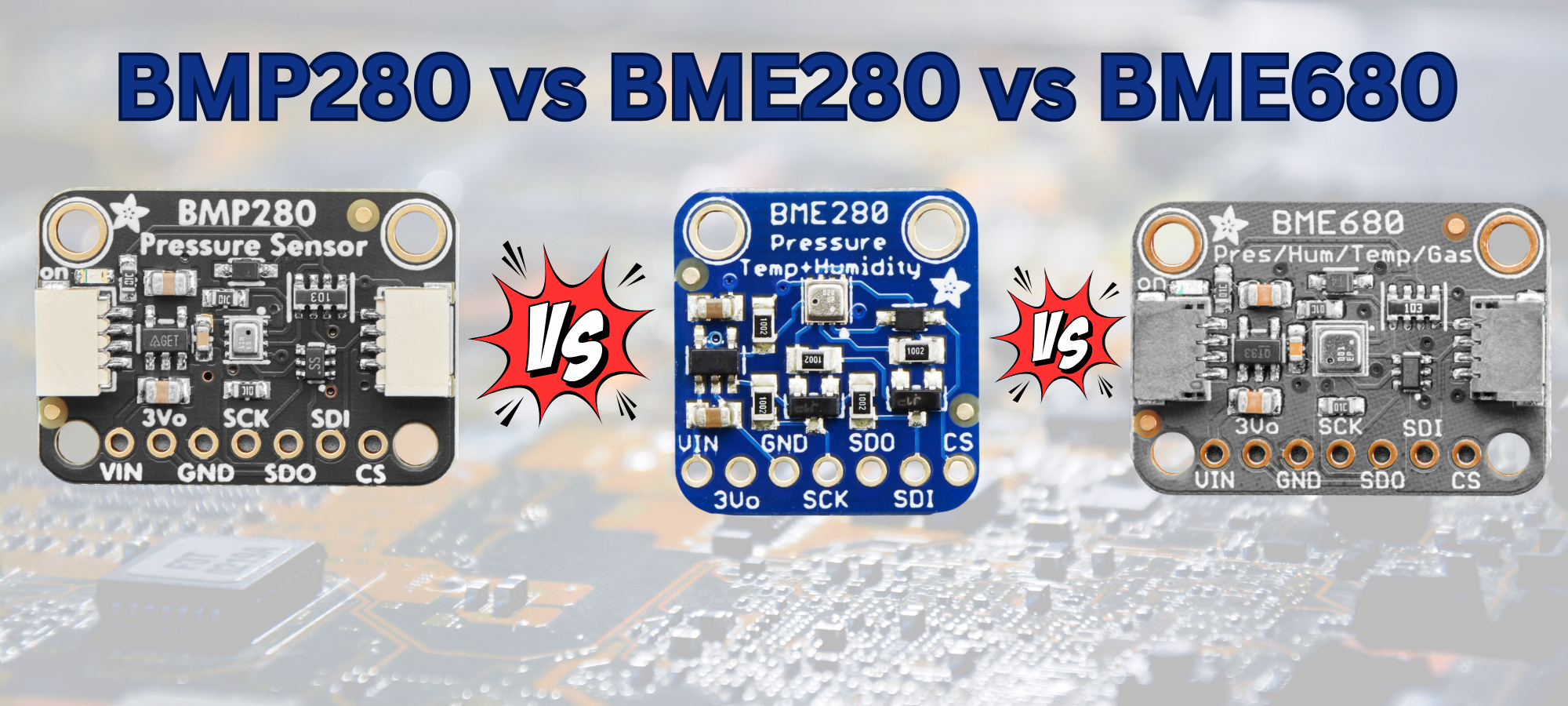
The choice of sensor is an important factor for building an accurate and reliable weather station. Bosch is a unique and highly respected name in sensor technologies and offers three of the most common sensors in this category: BMP280 | BME280 | BME680.
These small, powerful, and very useful barometric sensors are favoured by hobbyists and engineers alike. The sensors are capable of measuring pressure, temperature, humidity, and air quality. Therefore, they are useful in many methods from straightforward DIY projects to serious professional systems.
In this article we will compare and contrast the BMP280 | BME280 | BME680, examining features, differences, pros and cons, and key applications.
Ultimately you will be able to determine which sensor is the best barometric sensor for your planned weather station project of interest, whether it be a project using Arduino and ESP32, or just a smart IoT alternative solution.
What is a Barometric Sensor?
A barometric sensor, also called a barometer sensor, is an electronic device that is used to sense atmospheric pressure. Changes in pressure are directly related to altitude and as the weather changes, so the pressure will change, therefore barometric sensors are used for both environmental monitoring and navigation systems.
In weather applications, barometric sensors will indicate short-term weather changes. For example, an abrupt decline in air pressure usually indicates an impending storm, while increasing pressure indicates a clear weather. This makes them an essential component of both professional and amateur weather stations.
Barometers are used in altitude measurement, which is applicable in drones, GPS correction, and outdoor navigation systems. Since pressure decreases with altitude, the sensors are able to provide very precise measurements of elevation.
New sensors, including the BMP280 | BME280 | BME680, integrate pressure sensing with other capabilities, including temperature, humidity, and gas sensing, and hence are general-purpose for use across industries.
Overview of Bosch BMP280 | BME280 | BME680

Bosch Sensortec is a trusted presence in the sensor industry that provides trustworthy and accurate products that measure the environment. One of Bosch’s more common barometric sensors is called the BMP280 | BME280 | BME680. These sensors offer varying levels of features and capabilities based on individual project needs.
The BMP280 is a highly accurate pressure and temperature sensor. It is small in size, low power, and is used widely for environmental data measurements in (but not limited to) weather stations, drones, and as part of an altitude correction through GPS.
The BME280 is an upgrade to the BMP280 model barometer and temperature sensor, but also measures humidity too. It can be used as part of a full weather monitor or as an earth-bound sensor in numerous smart home automation implementations to measure humidity.
The BME680 goes a step further by integrating a gas sensor along with pressure, temperature, and humidity measurements. This allows it to detect air quality, volatile organic compounds (VOCs), and pollution levels, making it suitable for indoor air monitoring and advanced IoT applications.
These three sensors look similar, but their features set them apart. Choosing the right one depends on whether you only need pressure, or a more complete environmental dataset.
BMP280 Sensor Features and Specifications
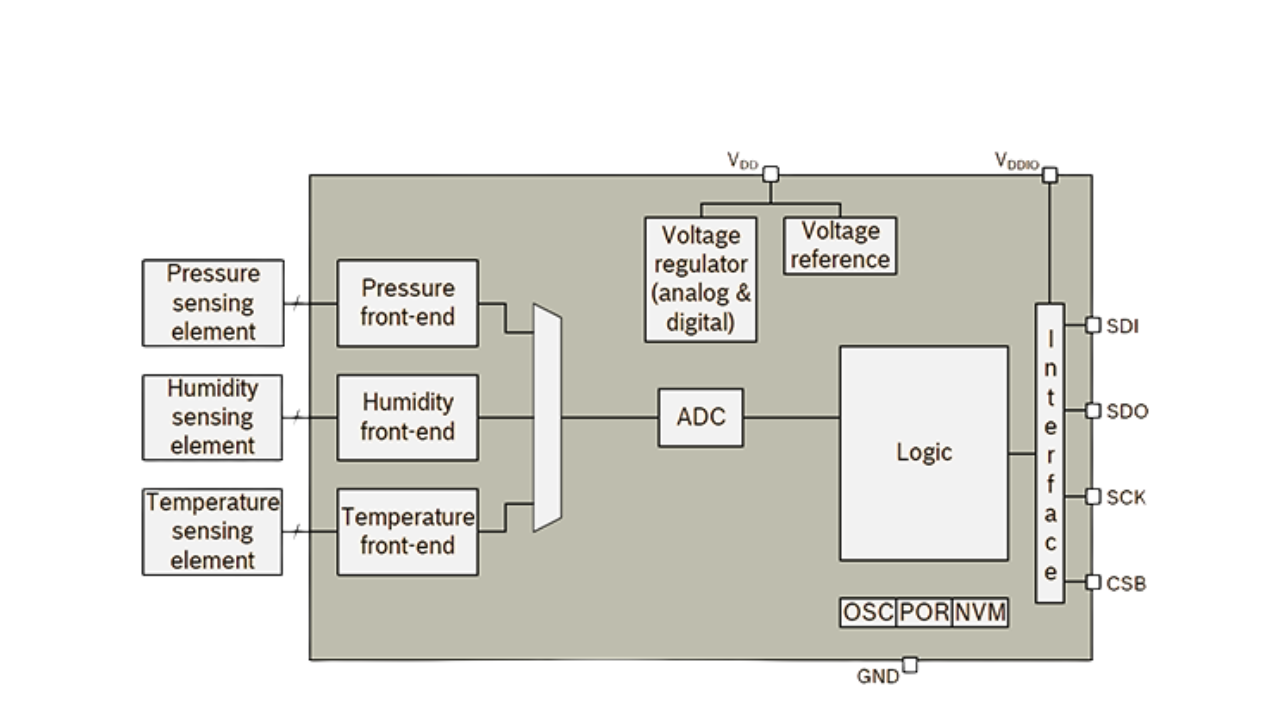
The Bosch BMP280 is a digital temperature and barometric pressure sensor that is accurate and uses very little power. This is why it is very popular in portable devices, drones and weather stations.
One of its main features is high accuracy. The BMP280 provides pressure readings with a normal absolute accuracy of ±1 hPa, which is enough to measure altitude within a few meters. This is all the more important when working on GPS correction and indoor navigation projects.
The operating voltage for the BMP280 is flexible and ranges from 1.71V to 3.6V. It communicates using I²C and SPI interfaces, which is really nice because there are many microcontrollers like Arduino and ESP32 that will accept either I²C or SPI.
Additionally, the BMP280 has a low current consumption (approximately 2.7 µA at 1 Hz sampling), which makes it ideal for battery-powered applications such as wearables or portable weather monitors.
The BMP280 comes in a tiny, LGA (2.0 × 2.5 × 0.95 mm) package which allows designers to design compact circuits. Due to its size, it is does not take much of the board, and it still provides a stable and consistent output in a vast temperature range (-40°C to +85°C).
BME280 Humidity, Pressure & Temperature Sensor
The Bosch BME280 is a very advanced environmental sensor that combines humidity, barometric pressure, and temperature measures, encapsulated in one small module. While it is an upgraded version of BMP280, made for applications where pressure readings alone aren’t enough.
The BME280 shines for two key reasons; the primary of which is its high accuracy. The humidity sensor has a typical accuracy of ±3% relative humidity (RH), and pressure readings are ±1 hPa Which is also a ±1°C accuracy for temperature readings. This supports indoor climate, weather, and IoT forecasting projects.
As well, the BME280 is designed for low power, 3.6 µA at 1 Hz sampling rate, making it very useful with portable and battery-operated devices. It can be used with both I²C and SPI interfaces, ensuring seamless communication with your favourite controller like Arduino, ESP8266 or ESP32.
The BME280 has an operating voltage of 1.71V to 3.6V, which is perfect for today’s low-voltage systems. The size of the BME280 is small and has an LGA package (2.5 × 2.5 × 0.93 mm) that saves PCB space and also operates stability across a wide temperature range (-40 to +85 degrees).
Engineers often use the BME280 smart home, wearable, drones, and environmental monitoring since it can measure three different parameters at the same time, its a good option for engineers who want to use one multi-sensor module.
BME680 Gas and Air Quality Sensor
The BME680 gas sensor is a sophisticated environmental sensor from Bosch that includes more than traditional weather features. Compared to the BMP280 and BME280, the BME680 has a VOC sensor (volatile organic compounds), thermal, humidity, and barometric pressure measurements. The BME680 that can do both air quality measurements as well as weather station measurements.
VOC sensor BME680 measures gases like ethanol, acetone, and other common pollutants found indoors. These readings will allow us to estimate indoor air quality (IAQ) to help identify when a space might need to be ventilated. The BME680 is a very handy sensor to use in smart homes, IoT projects, and HVAC systems where it’s important that indoor occupants feel comfortable and safe.
There’s a lot of flexibility for developers with the BME680. It has both I²C and SPI communication, making it easy to interface it with most microcontroller and single-board computer platforms. Many maker enthusiasts turn to the BME680 for their Raspberry Pi air quality monitoring station build or other compact and reliable indoor monitoring station for the home, office, or school.
Power efficiency is yet another significant advantage of the BME680. With a power consumption of only a few microamps in standby mode, it is a great choice for battery-powered products. Its small size (3.0 × 3.0 × 0.93 mm) offers an equally practical choice for small PCB designs.
The BME680 uniquely combines gas sensing and the additional environmental data allowing developers to design next-generation weather stations and air quality meters that do not simply track pressure and temperature. It is widely recognized as one of the best sensors to choose for projects where health, comfort, and environmental safety are priorities.
BMP280 | BME280 | BME680 – Key Differences
In deciding on the BMP280 | BME280 | BME680, it is best to know the differences between the three sensors, and the differences might be small, but they do all serve a slightly different purpose in terms of applications within weather stations, IoT and Raspberry Pi based applications.
The BMP280 sensor is focused only on barometric pressure and temperature measurement. It is lightweight as well as power efficient and is ideal for altitude being tracked in drones, GPS correction and, simple weather monitoring. It also does not measure humidity or fat gases.
The BME280 sensor is similar to the BMP280 but also has a humidity measurement. Because of this, it is better utilized in indoor climate monitoring, smart thermostats and environmental monitoring in weather stations that are monitoring complete environmental conditions. The BME280 also has very low power consumption making it perfect for wearables, as well as mobile based devices and applications.
On the other hand, the BME680 gas sensor takes environmental sensing to the next level. Not only does it include temperature, humidity, and pressure, but it also includes a VOC sensor for air quality detection. This makes it great for inside air quality monitoring, smart home automations, and Raspberry Pi air quality projects.
To summarize the comparison, the BMP280 is best for basic pressure applications, the BME280 is better for total weather sensor applications, and the BME680 is the most sophisticated sensor for air quality and health-based IoT projects.
Comparison Table: BMP280 | BME280 | BME680
| Feature / Sensor | BMP280 | BME280 | BME680 |
| Measures | Pressure, Temperature | Pressure, Temperature, Humidity | Pressure, Temperature, Humidity, VOC (Gas Sensor) |
| Best For | Altitude tracking, GPS correction, Basic weather | Indoor climate monitoring, Smart thermostats, Weather stations | Air quality monitoring, Smart homes, IoT health projects |
| Power Consumption | Very Low | Low | Moderate |
| Complexity | Simple | Moderate | Advanced |
| Raspberry Pi Use Case | Barometric pressure projects | Full weather station projects | Air quality + weather monitoring |
| Cost | Lowest | Mid-range | Highest |
BMP280 | BME280 | BME680: Choosing the Right Sensor for Your Weather Station
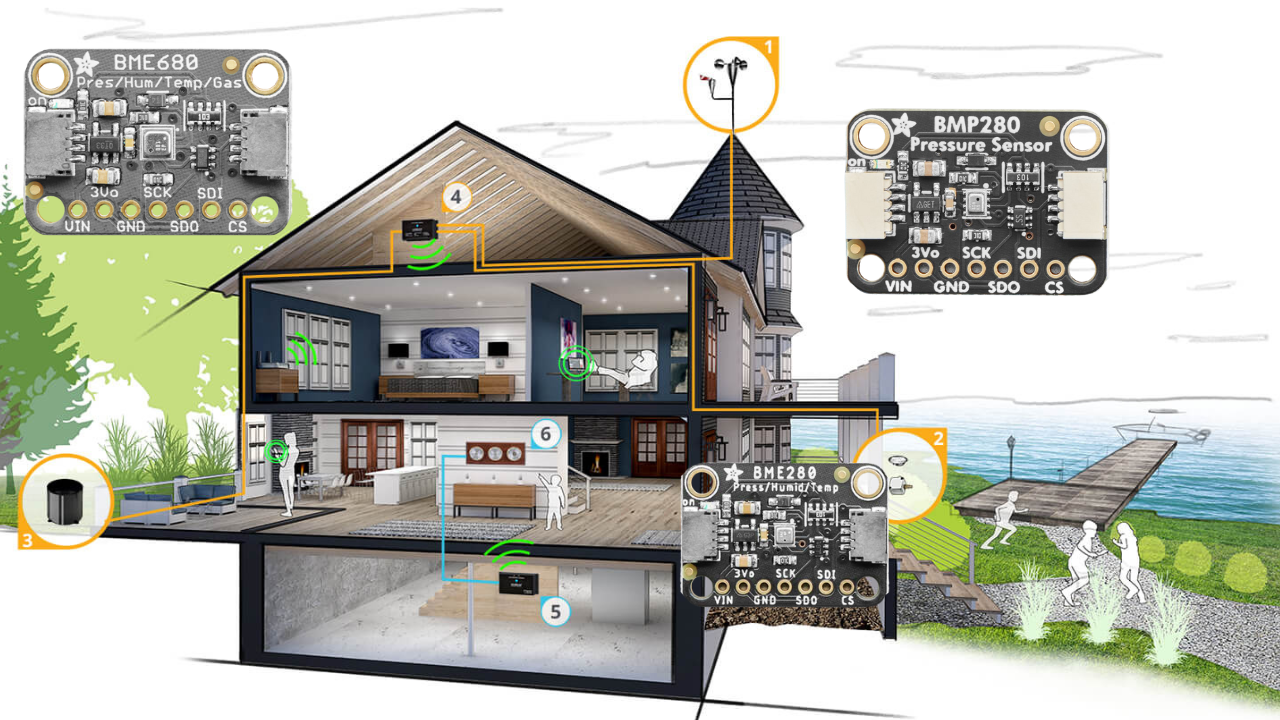
Choosing the right sensor for a weather station depends on your budget, and the complexity of your project. All three Bosch sensors, the BMP280 | BME280 | BME680 offer distinct benefits across different use cases.
If you’re on a budget and only need basic barometric pressure and temperature, the BMP280 is the cheapest and most energy efficient sensor to use. The BMP280 is a good candidate for drones, altimeters and basic weather monitoring applications.
If you want high accuracy and require humidity measurement in a low-cost package, the BME280 is usually the best bet. The BME has a good balance of price versus value and is commonly used in DIY and small scale weather stations built from Arduino and ESP32.
If the project is more complex and focuses heavily on air quality, then the BME680 will be the number one recommendation. The BME680, in addition to pressure, humidity, and temperature detection, also estimates indoor air quality and volatile organic compound detection. The BME680 would be the main component of choice in smart homes or IoT based environmental monitoring systems.
In short:
- Best for budget-friendly builds → BMP280
- Best for balanced accuracy & features → BME280
- Best for advanced IoT & air quality monitoring → BME680
By matching your requirements with the right sensor, you’ll ensure that your weather station delivers reliable and precise environmental data.
Real-World Applications & Case Studies: BMP280 | BME280 | BME680

BMP280 with Arduino in Drones & Altimeters
The BMP280 sensor integrated with an Arduino board is very popular with people flying drones and RC aircraft for measuring altitude. The sensor provides accurate readings of barometric pressure across drone flights allowing for the determination of the drone’s altitude and stabilization of its flight. Many hobbyists also incorporate BMP280 sensors into homemade altimeter devices for model rocket, and weather balloon applications.
BME280 with ESP32 in DIY Weather Stations
Similarly, but using the BME280 sensor and an ESP32, the sensor will track temperature, humidity, and pressure while being connected to Wi-Fi or Bluetooth through the ESP32 to allow for the logging and display of this data online. Many makers combine these sensors with platforms like ThingSpeak, Home Assistant, or even MQTT brokers to provide web capabilities in the DIY weather station used for smart home weather dashboards.
BME680 with Raspberry Pi for Indoor Air Quality
The BME680 sensor with Raspberry Pi goes beyond weather data. It measures VOC gases (like ethanol, CO₂ equivalents, and other pollutants) along with temperature, humidity, and pressure. This makes it an excellent choice for indoor air quality monitoring, smart IoT stations, and even environmental research projects. With Python libraries available, developers can quickly set up real-time dashboards and alerts.
These real-world applications prove how Bosch’s BMP280, BME280, and BME680 sensors scale from simple Arduino hobby projects to advanced IoT and smart monitoring systems.
Case Study 1: BMP280 with Arduino in Drones & Altimeters
An amateur drone group packaged the BMP280 along with Arduino to create a light-weight altimeter system. By measuring air pressure fluctuations, the drone determined altitude with high precision. The project improved flight stability during outdoor testing and reduced navigation errors during windy weather. The same setup was later adapted for model rockets to track peak height achieved in flights.
Case Study 2: BME280 with ESP32 in DIY Weather Stations
A maker community used the BME280 with ESP32 to build a DIY weather station. This was working together to measure temperature, humidity, and pressure, while sending all of this data to ThingSpeak through the ESP32 to display data in real-time. This weather station was powered by solar, connected to Wi-Fi, and great for remote monitoring of gardens and farms. The results were consistent, and therefore could be compared to members’ local meteorological data.
Case Study 3: BME680 with Raspberry Pi for Indoor Air Quality
A university research team built a smart indoor air quality station using the BME680 with Raspberry Pie. The sensor measured VOC gases, humidity, temperature and pressure, while the python script logged down data for long -term analysis. The project helped identify high VOC levels during the top office and motivated changes in ventilation. The study of the case highlighted the role of BME680 in health-centered IoT projects.
Comparison Table of Case Studies
| Sensor | Platform | Project Type | Measured Parameters | Key Benefits | Keywords |
| BMP280 | Arduino | Drone Altimeter / Rocket Logger | Pressure → Altitude | Lightweight, accurate, stable flight | BMP280 Arduino weather station |
| BME280 | ESP32 | DIY Smart Weather Station | Temp, Humidity, Pressure | Solar-powered, Wi-Fi logging, reliable | BME280 ESP32 project |
| BME680 | Raspberry Pi | Indoor Air Quality Monitor | VOC, Temp, Humidity, Pressure | Detects VOCs, health insights, smart IoT | BME680 smart weather station |
BMP280 | BME280 | BME680: Where to Buy Genuine Bosch Sensors
When purchasing Bosch Sensors like the BMP280 | BME280 | BME680 it is essential to verify authenticity and quality. There are many counterfeit or low-quality sensors on the market and using them could, at best, compromise your readings and, at worst, compromise your devices and lead to safety issues on critical projects.
Most engineers will likely consider online distributors like Digi-Key, Mouser, and Adafruit for these components, while a good option, they tend to have a higher cost and longer shipping times. This is where Fly-Wing Tech is head-and-shoulders above those distributors when purchasing Bosch environmental sensors.
Fly-Wing Tech specializes in providing 100% original Bosch sensors through the trusted supply chains. We are not a generic seller buying sensors in bulk; we keep to strict quality checks, so every BMP280, BME280, and BME680 sensor you buy from us is original and has been fully tested. Our mission is to help engineers, students, and product developers, while obtaining sensors at affordable prices, fast delivery, and technical assistance.
Whether you’re building a BMP280 Arduino weather station, a BME280 ESP32 IoT project, or a BME680 Raspberry Pi smart air quality monitor, purchase with confidence at Fly-Wing Tech.
Conclusion: Which Bosch Sensor Should You Pick?
Choosing among BMP280 | BME280 | BME680 are dependent upon the goal of your project. In terms of accurate pressure and temperature sensing; the BMP280 is the most affordable product suited for applications such as drones, altimeter, and inexpensive experiments. The Bosch BME280 allows you to also measure humidity, and even more attracts, for many DIY uses in weather stations, IoT devices, or climate monitoring.
If your project requires even more advanced functionality, the BME680 is capable of measuring air quality and VOC levels making the sensor more applicable for smart home systems, and health-focused projects. Bosch make sensors that are globally trusted for accuracy and long-term reliability but sourcing can be an issue with counterfeit parts. Fly-Wing Tech supplies 100% authentic Bosch, factory tested sensors so you can build with confidence and make sure there are never issues around poor quality, counterfeit sensors in your project.



FAQs: Answering Common Questions
Q: Is BME280 more accurate than BMP280?
Absolutely! The BME280 is the most accurate, and it measures humidity, unlike the BMP280.
Q: Does BME680 measure air quality and VOCs?
Yes. The BME680 measures temperature, pressure, humidity, and air quality (VOCs).
Q: Can BMP280 | BME280 | BME680 work with Arduino, ESP32, Raspberry Pi?
Yes. All three sensors can be used with Arduino, ESP32, and Raspberry Pi as they all support open-source libraries.
Q: Which sensor is most energy-efficient?
The BMP280 is the most efficient sensor, which is great for battery-operated devices.
