
Introduction to ATmega328P vs ATmega2560
When starting an electronics project, choosing the correct microcontroller is an important decision that might impact the project’s success. Two of the most popular options for engineers, students, and hobbyists using Arduino microcontroller platforms are the ATmega328P and ATmega2560. Both of which belong to the AVR microcontroller family. Knowing the advantages and disadvantages of different microcontrollers. It is essential to choosing wisely, whether you’re designing a basic LED circuit or an intricate robotics system. In order to assist you in selecting the best microcontroller for your project. We will look at the ATmega328P vs ATmega2560 microcontroller in this article while going over their features, characteristics, and applications.
The Arduino Uno’s brain, the ATmega328P, is a small, effective 8-bit microcontroller that works well for simple, low-power applications. However, more complicated projects that need more memory and communication are made for the ATmega2560. It is the brain of the Arduino Mega.
We’ll give a clear image of their capabilities by examining the ATmega328P and ATmega2560 characteristics. Using official Microchip datasheets and real-world applications to guarantee accurate and trustworthy insights. Regardless of your level of experience with embedded systems. This comparison will help you select the best microcontroller for your upcoming project.
Overview of ATmega328P and ATmega2560
Due to their extensive usage in Arduino microcontroller boards and embedded systems, the ATmega328P and ATmega2560 stand out as two of the most well-liked options in the AVR microcontroller family when delving into the realm of microcontrollers. The correct microcontroller may make or ruin a project, whether you’re an engineer creating a sophisticated robotics system or a hobbyist developing a basic sensor project. To help you grasp their essential features and prepare for a more in-depth ATmega328P vs ATmega2560 comparison, we’ll go over the fundamentals of these two powerful microcontrollers in this part.
ATmega328P Basics
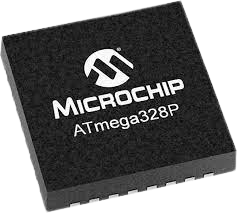
As you know, the core of the Arduino Uno is the ATmega328P microcontroller, a small, low-power, 8-bit AVR microcontroller. It is a popular option for applications that don’t call for a lot of input/output ports or intensive processing because of its simplicity and efficiency.
The Microchip ATmega328P specs datasheet states that this chip provides a mix between performance and resource efficiency, making it perfect for both novice and experienced developers in need of a dependable, affordable solution.
It is a mainstay in applications such as basic IoT devices, LED controllers, and small-scale automation projects due to its simple architecture and low power consumption.
ATmega2560 Basics
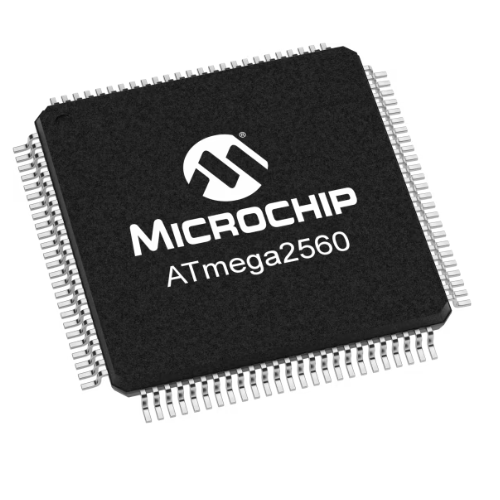 However, the Arduino Mega microcontroller is powered by the ATmega2560, a high-performance 8-bit AVR microprocessor. It has substantially higher memory and I/O capacity than the ATmega328P and is made for more demanding applications.
The specifications datasheet for the Microchip ATmega2560 emphasizes its extensive feature set, which supports applications like robotics, 3D printing, and multi-sensor systems that call for several peripherals. Even though it still has an 8-bit processor, developers choose it for complicated, resource-intensive activities because of its increased capabilities.
Knowing the fundamental functions of the ATmega328P and ATmega2560 will help you begin to realize how their variations fit the requirements of particular projects. To assist you in selecting the finest microcontroller for your upcoming project, we will examine its technical details, ATmega328P vs ATmega2560 characteristics, and practical uses in the sections that follow.
Technical Specifications Comparison of ATmega328P vs ATmega2560
It usually boils down to knowing the technological distinctions between ATmega328P vs ATmega2560 and how well they suit the requirements of your project. We’ll examine the ATmega328P and ATmega2560 specifications side by side in this section, paying particular attention to important parameters like memory, I/O capabilities, and performance. Our goal is to give you a clear, accurate, and authoritative summary so you can make an informed choice for your AVR microcontroller comparison by basing our analysis on Microchip’s official datasheets.
Key Specifications
In the ATmega328P vs ATmega2560, both are 8-bit AVR microcontrollers; however, they have very diverse circuitry that can handle varying project sizes. This is a thorough comparison based on datasheets from Microchip:
| Feature | ATmega328P | ATmega2560 |
|---|---|---|
| Flash Memory | 32KB — Enough to store small programs, like basic Arduino designs for manipulating LEDs or reading sensors. | 256KB — Provides enough room for intricate programs, like those used in multi-sensor data logging or robotics. |
| SRAM | 2KB — Sufficient for managing variables in lightweight applications such as temperature monitoring and small IoT devices. | 8KB — Perfect for multi-peripheral projects, supports multitasking and larger data structures. |
| EEPROM | 1KB — Ideal for storing configuration data that needs to be retained over power cycles. | 4KB — Provides sizable non-volatile storage for advanced programs to store settings or data logs. |
| PWM Channels | 6 — Ideal for dimming LEDs or regulating small motors with accurate speed adjustments. | 15 — Allows precise control of several motors, servos, or LED arrays, ideal for complex systems like 3D printers. |
| ADC Channels | 6–8 — Supports analog sensor inputs (light or temperature sensors), with 8 channels in TQFP packages. | 16 — Suitable for projects like environmental monitoring systems using many analog sensors. |
| Timers | 3 — Includes two 8-bit and one 16-bit timer for tasks like generating delays or controlling servo motors. | 6 — Includes four 16-bit and two 8-bit timers for flexible precise timing. |
| Digital I/O Pins | 14 — General purpose I/O pins for connecting peripherals. | 54 — Offers a wide range of peripheral connectivity including communication modules and displays. |
| Low-Power Modes | Yes — Power-down usage as low as 0.1 µA, ideal for battery-powered projects. | Yes — Also supports low-power modes for energy-efficient operation. |
Performance and Power
When choosing a microcontroller, performance and power efficiency are important considerations. With a maximum clock speed of 20 MHz, the ATmega328P and ATmega2560 both provide strong ATmega328P and ATmega2560 performance for 8-bit processors. Nevertheless, they have different operational characteristics and power consumption:
- Clock Speed: The ATmega2560’s bigger architecture may necessitate more careful clock management for complex activities in order to prevent bottlenecks, even though both microcontrollers can operate at up to 20 MHz.
- Power Consumption: According to the Microchip datasheet, the ATmega328P is designed for low power consumption, with active mode usage as low as 1.8 mA at 1 MHz and 1.8V and power-down mode as low as 0.1 µA. It is therefore perfect for battery-operated projects. Although still efficient, the ATmega2560’s increased feature set results in a higher power usage of about 6.6 mA at 1 MHz and 5V in active mode. This could affect the microcontroller’s power consumption in energy-sensitive designs.
- Operating Voltage: The ATmega328P has an advantage for ultra-low-power applications because of its lower power profile; however, both chips handle 1.8V to 5.5V, providing flexibility for a range of power sources.
This comparison demonstrates the ATmega2560’s capacity to handle more demanding, feature-rich applications and the ATmega328P’s aptitude for small, power-efficient tasks. To help you make a better choice, we’ll go over their unique features and practical applications in the upcoming sections.
Features and Capabilities: ATmega328P vs ATmega2560
It is crucial to understand the features that distinguish the ATmega2560 from the ATmega328P in order to select the best microcontroller for your project.. Although both the ATmega328P and the ATmega2560 are potent 8-bit AVR microcontrollers, their functions serve distinct purposes. The main characteristics of each will be covered in detail in this area, using official Microchip datasheets as well as real-world performance insights to deliver accurate, trustworthy, and useful information. This breakdown can assist you in selecting the best chip for your Arduino microcontroller project, regardless of whether you’re creating a straightforward sensor node or an intricate robotics system.
ATmega328P Features
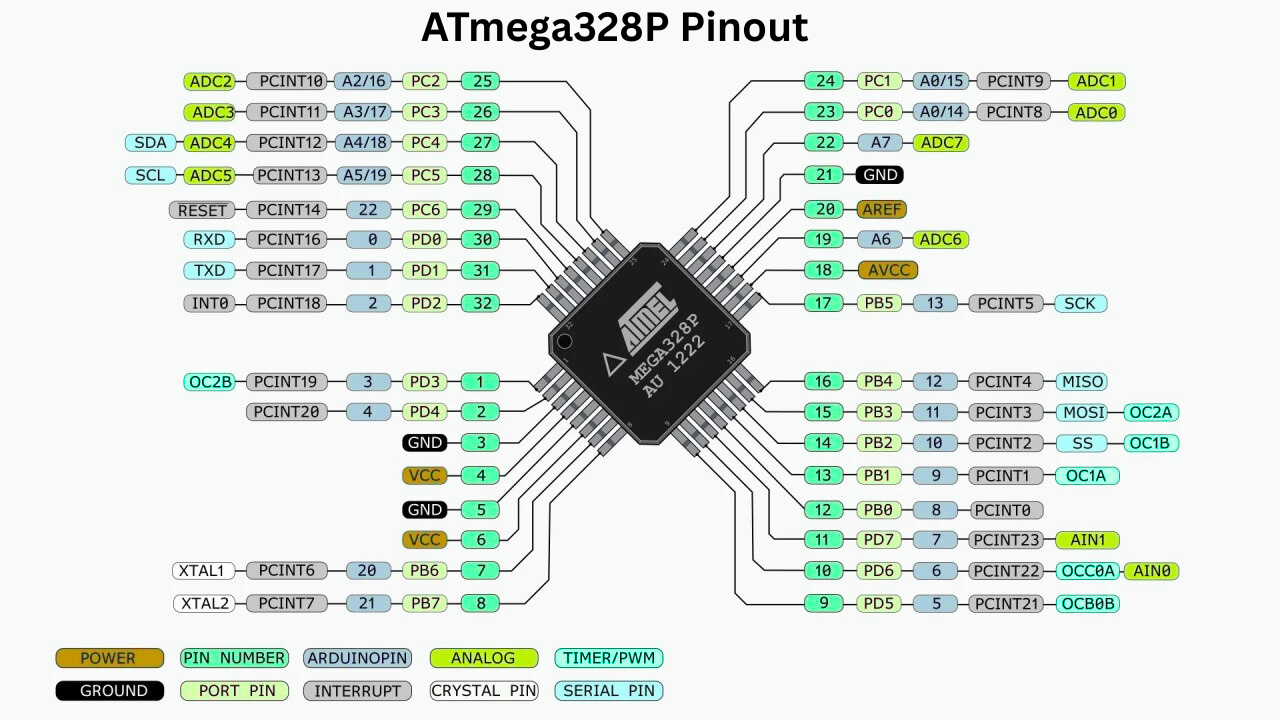
The core component of the Arduino Uno, the ATmega328P, is a choice for smaller projects because of its simplicity and efficiency. The Microchip datasheet states that it provides:
| Feature | Description |
|---|---|
| 32KB Flash Memory | Enough to store small programs, like basic Arduino designs for manipulating LEDs or reading sensors. |
| 2KB SRAM | Sufficient for managing variables in lightweight applications such as temperature monitoring and small Internet of Things devices. |
| 1KB EEPROM | Ideal for storing configuration data that needs to be retained over power cycles. |
| 6 PWM Channels | Ideal for dimming LEDs or regulating small motors with accurate speed adjustments. |
| 6–8 ADC Channels | Supports analog sensor inputs (such as light or temperature sensors), with 8 channels available in TQFP packages. |
| Low-Power Modes | With power-down usage as low as 0.1 µA, it’s ideal for battery-powered projects. |
| 3 Timers | Includes two 8-bit and one 16-bit timer for tasks like generating delays or controlling servo motors. |
Because of these features, the ATmega328P is a popular choice for developers and hobbyists working on small, affordable projects that don’t need a lot of resources. Particularly for novices engaging with the Arduino Uno, its simple feature set guarantees ease of use.
ATmega2560 Features
The Arduino Mega features are powered by the ATmega2560, which is designed for more demanding applications requiring reliable processing and connection. Its remarkable feature set is highlighted in the Microchip datasheet:
| Feature | Description |
|---|---|
| 256KB Flash Memory | Provides enough room for intricate programs, like those used in multi-sensor data logging or robotics. |
| 8KB SRAM | Perfect for multi-peripheral projects, it supports multitasking and larger data structures. |
| 4KB EEPROM | Provides a sizable amount of non-volatile storage for advanced programs to store settings or data logs. |
| 15 PWM Channels | Allows for precise control of several motors, servos, or LED arrays, making it ideal for complex systems such as 3D printers. |
| 16 ADC Channels | It is appropriate for projects like environmental monitoring systems since it may be connected to a wide variety of analog sensors. |
| 6 Timers | It provides more flexibility for activities requiring precise timing because of its four 16-bit and two 8-bit timers. |
| 54 Digital I/O Pins | Offers a wide range of peripheral connectivity, including communication modules and displays. |
Projects requiring a lot of I/O capacity and memory, like multi-component prototypes or automated control systems, benefit greatly from the ATmega2560’s capabilities. It is a great choice for complex Arduino Mega projects because of its extensive feature set.
It is evident by comparing the ATmega328P and ATmega2560 that the former is superior in terms of simplicity and power efficiency, while the later is designed for more complicated, resource-intensive applications. We’ll examine their real-world applications in the upcoming sections to help you decide which microcontroller best suits your requirements.
Applications and Use Cases
Many different types of projects, from basic hobbyist builds to sophisticated embedded systems, are powered by the ATmega328P and ATmega2560 microcontrollers. They are appropriate for many applications inside the Arduino microcontroller ecosystem due to their unique characteristics. In order to present useful, reliable insights, we will examine real-world ATmega328P and ATmega2560 applications in this part, utilizing community projects and Microchip’s technical documentation. Knowing these use cases can help you select the best chip for your ATmega328P or ATmega2560 projects, regardless of your level of experience as a developer.
ATmega328P Applications
The Arduino Uno’s core, the ATmega328P, is a flexible microcontroller ideal for small, low-power projects. It is a favorite among novices and budget-conscious developers due to its efficiency and low resource requirements. Based on its features and well-liked community projects, the following are some typical ATmega328P applications:
- Simple IoT Devices: Using modules like the ESP8266, the ATmega328P is perfect for creating Bluetooth-enabled or Wi-Fi-enabled devices, such temperature or humidity sensors for smart homes. Long battery life is ensured by its low power consumption.
- Sensor Nodes: Projects like weather stations or soil moisture monitors leverage the ATmega328P’s 6-8 ADC channels to read analog sensors, paired with its 32KB flash for lightweight code.
- Hobbyist Projects: Thanks to its six PWM channels and simplicity of programming, the ATmega328P drives a plethora of Arduino Uno applications, from LED matrices to simple motor controllers, such automatic pet feeding or personalized night lights.
- Educational Tools: Because of its ease of use, the ATmega328P is frequently utilized in educational settings to assist students in creating projects such as Morse code generators and line-following robots.
When simplicity, affordability, and power efficiency are top concerns, these ATmega328P projects excel. The Arduino Uno’s popularity among maker groups, as evidenced by sites like Arduino.cc, highlights how dependable it is for small-scale uses.
ATmega2560 Applications
The Arduino Mega’s powerhouse, the ATmega2560, is made for intricate, resource-intensive projects that require additional memory and communication. It is the preferred choice for sophisticated applications due to its extensive feature set. The following are some important ATmega2560 uses that were motivated by actual projects and Microchip’s documentation:
- Robotics: The ATmega2560 is ideal for managing several motors, servos, and sensors in robots, such as autonomous rovers or robotic arms, because to its 54 digital I/O ports and 15 PWM channels.
- 3D Printers: Utilizing its 256KB flash and 16 ADC channels, the ATmega2560 is used by many do-it-yourself 3D printers, such as those based on the RepRap project, to control stepper motors, temperature sensors, and LCD displays.
- Multi-Sensor Systems: Air quality stations with several sensors (CO2, particulate matter, etc.) and other environmental monitoring systems benefit from the ATmega2560’s capacity to manage large amounts of data and communication.
- Prototyping Complex Systems: Because of its large GPIO and memory, the ATmega2560 can connect with screens, communication modules, and actuators in Arduino Mega projects like home automation hubs.
You can more effectively match the appropriate microcontroller to your project requirements by investigating these ATmega328P and ATmega2560 use cases. While the ATmega2560 is designed for intricate, high-connectivity applications, the ATmega328P excels at simple, energy-efficient designs. To help you make a better decision, we’ll go into cost, availability, and decision-making factors in the upcoming sections.
Cost and Availability of ATmega328P vs ATmega2560
Along with performance, the cost of the ATmega328P and ATmega2560 microcontrollers and their availability are important considerations when choosing one for your project. In Arduino microcontroller ecosystems, the ATmega328P and ATmega2560, both members of the AVR microcontroller family, are extensively utilized; however, their cost and availability vary according to their functions and intended uses. Using current supplier data and community insights, we will compare the availability of the ATmega328P and ATmega2560 in this section to give you reliable, accurate advice regarding the cost of your Arduino microcontroller.
Cost Comparison
The cost of the ATmega328P and ATmega2560 reflects the varied project scales they support:
- ATmega328P Cost: The Arduino Uno’s central microprocessor, the ATmega328P, is remarkably reasonably priced. A single ATmega328P chip normally costs between $2 and $4 USD in modest quantities. Depending on the package (e.g., DIP or TQFP), according to recent statistics from major suppliers like FlyWing-Tech. Official Arduino Uno boards cost between $20 and $30 USD to integrate. However, clones can be purchased for as little as $10 to $15 USD. Because of this, the ATmega328P is an affordable option for straightforward projects like hobbyist builds or sensor nodes.
- ATmega2560 Cost: Because of its increased capabilities, the ATmega2560 microcontroller, which powers the Arduino Mega, is more costly. On sites like FlyWing-Tech, individual chips sell for between $10 and $15 USD. While similar clones are available for $15–$25 USD, an original Arduino Mega 2560 board costs approximately $40–$50 USD. The ATmega2560’s potential for intricate applications such as 3D printing and robotics is reflected in the increased cost of the Arduino microcontroller.
These pricing points, which were obtained from reliable electronics dealers, demonstrate the advantages of the ATmega2560. For resource-intensive designs and the ATmega328P for projects with a tight budget. Always verify the current price because it may change depending on supply or market demand.


Availability
Both microcontrollers gain from the Arduino ecosystem’s broad use, which guarantees robust ATmega328P and ATmega2560 availability:
- ATmega328P Availability: Because it is used in the well-known Arduino Uno. The ATmega328P microcontroller is among the most widely available chips in the AVR microcontroller family. Major suppliers like FlyWing-Tech, as well as smaller merchants and internet markets like Amazon, have it in stock. The chip is a mainstay for enthusiasts and educators throughout the world because of its interoperability with the Arduino ecosystem. Which allows you to find it in standalone form or as a component of Uno-based boards, kits, and clones.
- ATmega2560 Availability: The Arduino Mega’s particular use of the ATmega2560 microcontroller. Makes it significantly less common, although it is nonetheless similarly accessible. The chip and Mega boards are regularly stocked by major wholesalers including as Flywing-Tech. Its widespread use in sophisticated projects guarantees dependable availability via third-party vendors as well as official Arduino channels. Due to the ATmega2560’s incorporation into the Arduino environment, compatible shields and peripherals are also widely supported.
The broad AVR microcontroller availability for both chips is supported by their long-standing use in the maker community, as shown in project guides on sites like Instructables and Arduino’s official site. Both microcontrollers are readily available worldwide, whether you’re looking to source chips for a one-off project or large purchases.
You may better match your project goals with your budget and sourcing requirements by comparing the ATmega2560’s higher price but more capabilities with the ATmega328P’s lower cost and more accessibility. We’ll discuss when to select each microcontroller in the upcoming sections and conclude with practical advice.
When to Choose ATmega328P vs ATmega2560
The key to choosing between the ATmega328P and ATmega2560 is to match their capabilities to the particular requirements of your project. Although both are strong AVR microcontrollers that are frequently utilized in Arduino microcontroller projects, their advantages are tailored to particular situations. This section will provide precise, useful criteria for selecting the ATmega328P or ATmega2560, based on their technical details and practical uses. This guide provides professional, practical guidance to assist you in choosing the best chip for your ATmega328P vs ATmega2560 decision. Drawing on Microchip’s datasheets and community-driven insights.
Choosing ATmega328P
The Arduino Uno’s core, the ATmega328P, is the preferred option for projects that value ease of use, affordability, and power efficiency. The ATmega328P excels in the following important use cases:
- Low-Cost Projects: According to statistics, the ATmega328P is perfect for low-budget designs like LED controllers or basic sensor nodes. Because its chips cost $2 to $4 USD and its Arduino Uno boards cost as little as $10 to $15 USD for clones.
- Low-Power Applications: According to Microchip’s datasheet, its extremely low power consumption (0.1 µA in power-down mode). Makes it ideal for battery-powered gadgets like wearable electronics and Internet of Things sensors.
- Simple Projects: As demonstrated by the numerous Arduino Uno vs Mega comparisons in maker forums. The ATmega328P’s 32KB flash, 2KB SRAM, and 6 PWM channels are adequate for simple tasks. Like reading a single sensor (such as temperature or light) or powering tiny motors.
- Beginner-Friendly Designs: It is a popular choice for instructional projects or hobbyist experiments, such as making a simple line-following robot. Due to its extensive Arduino Uno support and tiny feature set.
The ATmega328P is a mainstay for Arduino Uno because it provides dependable performance with little complexity for projects that don’t require a lot of I/O or memory.
Choosing ATmega2560
The Arduino Mega is powered by the ATmega2560, which is intended for intricate applications requiring greater processing, memory, and input/output capabilities. The following situations demonstrate how well the ATmega2560 use cases work:
- Complex Projects with Multiple Peripherals: According to Microchip’s datasheet, the ATmega2560 has 54 digital I/O ports, 15 PWM channels, and 16 ADC channels. Making it ideal for systems that need several sensors, actuators, or displays, like robotics or 3D printers.
- Resource-Intensive Applications: Large applications and data-intensive activities, like as multi-axis motor control or real-time data logging, which are typical of Arduino Mega projects, are supported by its 256KB flash and 8KB SRAM.
- Prototyping Advanced Systems: The ATmega2560’s extensive connectivity makes it ideal for prototyping home automation hubs or multi-sensor environmental monitors.
- Scalable Designs: The ATmega2560’s powerful capabilities allow for expansion without requiring hardware changes for applications that might grow in scale.
When your project calls for managing several components or intricate logic. The ATmega2560 is a better option, as discussed in Arduino Mega vs Arduino Uno debates on maker forums.
You can choose with confidence whether you match the ATmega328P’s efficiency or the ATmega2560’s power with the needs of your project. While the ATmega2560 is designed for complex, high-connectivity systems, the ATmega328P is better suited for small, low-power solutions. We’ll compile these observations in the following section to conclude your AVR microcontroller choosing process.
Conclusion
The key to selecting between the ATmega328P and ATmega2560 microcontrollers is to match their advantages with the requirements of your project. Although they serve different purposes, both are exceptional members of the AVR microcontroller family that power innumerable Arduino microcontroller projects. With 32KB flash, 2KB SRAM, and 6 PWM channels.
The ATmega328P microcontroller the brains behind the Arduino Uno performs very well in straightforward, inexpensive, and power-efficient applications such as IoT sensors.
On the other hand, with its 256KB flash, 8KB SRAM, and 15 PWM channels. The ATmega2560 microcontroller—the foundation of the Arduino Mega is designed for intricate, resource-intensive projects like robots. Based on Microchip’s datasheets and actual use cases.
Our comparison of the ATmega328P and ATmega2560 reveals that the former is best suited for small designs. While the latter excels in demanding, multi-peripheral systems. Knowing their characteristics, applications, and specifications can help you choose the best chip for your needs.
Call to Action
Are you prepared to begin your next project? Examine Microchip’s official datasheets for comprehensive technical specifications or experiment with Arduino boards. To test the ATmega328P or ATmega2560 projects in further depth. Many communities on websites like Arduino.cc to promote the Arduino Uno and Mega.
They providing project ideas and instructions to help you get creative. To make sure you’re choosing an Arduino microcontroller wisely, consult reliable sources like Microchip’s website or reliable vendors (like FlyWing-Tech).
Regardless of whether you’re developing a basic LED controller or an intricate robotics system. Select your chip, pick up your board, and get to work!
FAQs: ATmega328P vs ATmega2560
Based on Microchip’s datasheets and community use cases. The following are succinct responses to often asked questions concerning the ATmega328P and ATmega2560 microcontrollers. These cover important factors for ATmega328P, ATmega2560, and Arduino microcontroller selection.
What is the main difference between the ATmega328P and ATmega2560?
While the ATmega2560 manages intricate, resource-intensive applications, the ATmega328P is best suited for straightforward, low-power projects.
Which microcontroller is used in the Arduino Uno?
The ATmega328P microcontroller powers the Arduino Uno.
How do ATmega328P specifications compare to ATmega2560 specifications?
ATmega328P has 32KB flash, 2KB SRAM, and 23 GPIO pins; the ATmega2560 offers 256KB flash, 8KB SRAM, and 86 GPIO pins.
What are typical ATmega328P applications?
ATmega328P projects include simple IoT devices, sensor nodes, and hobbyist builds like LED controllers.
What are common ATmega2560 applications?
ATmega2560 projects include robotics, 3D printers, and multi-sensor systems requiring extensive I/O.
How does ATmega328P cost compare to ATmega2560 cost?
The ATmega328P costs $2–$4, while the ATmega2560 costs $10–$15; Uno boards are cheaper than Mega boards.
Are ATmega328P availability and ATmega2560 availability reliable?
Both are widely available through suppliers like Flywing Tech, with strong Arduino ecosystem support.
Which has better ATmega328P performance for low-power projects?
The ATmega328P excels in low-power applications, consuming as little as 0.1 µA in power-down mode.
Which microcontroller is better for complex Arduino Mega vs Uno projects?
The ATmega2560 is better for complex Arduino Mega projects due to its higher memory and I/O capacity.
