
Sustainable PCB manufacturing focuses on eco-friendly materials and practices to minimize environmental impact. By adopting biodegradable substrates like Soluboard, reducing carbon emissions by 60%, and enabling component recycling through water-based processes, the industry addresses the growing e-waste crisis. Innovations such as plant-based fibers and halogen-free polymers replace traditional FR-4 materials, aligning with global net-zero goals while maintaining functionality .
What Are the Key Eco-Friendly Materials in PCB Production?
The shift toward sustainable PCB manufacturing has introduced groundbreaking materials:
-
Soluboard: A plant-based substrate by Jiva Materials that dissolves in 90°C water, leaving compostable organic material and enabling 90% component recovery. It reduces carbon emissions by 10.5 kg per square meter compared to FR-4 .
-
Natural fiber composites: Replace glass-reinforced epoxy, cutting plastic use by 620g/m² and eliminating toxic halogens .
-
Lead-free FR4 alternatives: Comply with RoHS directives while maintaining thermal stability for IoT and consumer electronics .
Chart: Comparative Environmental Impact of PCB Materials
| Material | CO2 Reduction | Plastic Saved | Recyclability |
|---|---|---|---|
| Soluboard | 60% | 620g/m² | 90% |
| Natural Fiber PCB | 40% | 450g/m² | 85% |
| FR-4 (Standard) | 0% | 0g/m² | <30% |
How Does Water-Based PCB Recycling Work?
Jiva Materials’ Soluboard technology revolutionizes end-of-life PCB processing:
-
Hot water immersion: Boards submerged in 90°C water for 30 minutes dissolve the polymer matrix .
-
Component recovery: 90% of semiconductors and metals remain intact for reuse.
-
Waste segregation: Fibers become compost, while polymer solutions treat as wastewater .
This closed-loop system contrasts sharply with conventional incineration or landfill methods, which lose 70% of materials .
Which Industries Are Adopting Sustainable PCBs?
Pioneering applications demonstrate the versatility of eco-friendly PCB manufacturing:
-
Consumer electronics: Demo boards for refrigerators and IoT devices use Soluboard’s single/double-layer designs .
-
Industrial systems: Infineon’s 500+ evaluation boards showcase power management ICs on biodegradable substrates .
-
Automotive: FR-4 alternatives meet 24V–72V battery management needs in electric vehicles.
Limitations persist for multilayer server PCBs, but R&D aims to expand compatibility .
Electronic Components Expert Views
“The true value of sustainable PCB manufacturing lies beyond carbon metrics,” observes Andreas Kopp of Infineon. “Soluboard’s water-based recovery preserves expensive semiconductors—our stress tests show 80% reuse potential for MOSFETs and diodes. While costs currently run 50–75% higher than FR-4, scale production and carbon credits will bridge the gap by 2028.”
Buying Tips
For sustainable PCB procurement:
-
Verify certifications: Prioritize ISO 9001 and RoHS-compliant suppliers like Intellisense for FR4 94V0 boards .
-
Evaluate layers: Soluboard suits single/double-layer designs; multilayer projects need hybrid approaches .
-
Assess recycling infrastructure: Partner with facilities equipped for hot-water PCB dissolution .
-
Calculate lifecycle costs: Despite higher upfront prices, biodegradable PCBs reduce long-term e-waste fees .
Fly-Wing Technology (HK) Co., Limited specializes in sourcing eco-conscious components, offering competitive pricing for Soluboard prototypes and lead-free substrates. Their global warehouse network ensures rapid delivery of sustainable electronics materials.
FAQ
Q: How durable are biodegradable PCBs in humid environments?
A: Soluboard withstands standard operating conditions; dissolution requires sustained 90°C immersion .
Q: Can recycled components from Soluboard meet industrial reliability standards?
A: Infineon’s tests confirm reused power semiconductors maintain 95% performance in demo boards.
Q: What drives the 60% carbon reduction in sustainable PCB manufacturing?
A: Eliminating epoxy resin production and enabling metal recycling account for most savings .
Current initiatives for sustainable PCB manufacturing often focus more on regulatory compliance than environmental responsibility. We will examine those initiatives plus newer ideas that could provide a better path forward for the PCB manufacturing industry.
In the contemporary realm of electronics design and manufacturing, sustainability has become a pivotal challenge for engineers and the electrical engineering (EE) industry. Printed Circuit Boards (PCBs), which are essential components in nearly all electronic devices, are under intense scrutiny due to their environmental impact. The conventional PCB manufacturing process utilizes a spectrum of toxic materials and generates considerable waste, posing detrimental effects on both human health and ecosystems.
The environmental repercussions of PCB manufacturing are multifaceted. Primary concerns encompass the utilization of hazardous materials such as lead, brominated flame retardants (BFRs), and various solvents. Furthermore, the disposal of electronics, commonly referred to as e-waste, leads to the leakage of heavy metals into soil and water systems, causing long-term ecological devastation and posing health risks to adjacent communities. As the world shifts towards sustainability, engineers are under immense pressure to devise eco-friendly alternatives for PCB manufacturing while ensuring cost-efficiency and maintaining performance standards.
Current Solutions and Their Limitations
Many current initiatives seek to address the sustainability challenge in PCB manufacturing, but they often fall short. The following subsections examine some of the prevalent approaches.
1. Lead-Free Solders
In response to regulatory directives like the Restriction of Hazardous Substances Directive (RoHS) enforced in Europe and similar regulations globally, manufacturers have made a notable shift to lead-free solders, predominantly adopting alternatives like tin-silver-copper (SAC) alloys. This transition effectively mitigates the health risks associated with lead exposure in PCBs.
However, it introduces new environmental challenges. The mining and extraction of silver and copper can lead to significant environmental impacts, such as habitat destruction, water pollution, and heightened carbon emissions. Additionally, some of these alternative materials may exhibit inefficiencies in terms of solder joint reliability and thermal fatigue resistance.
2. Recycling Programs
The electronics industry is slowly recognizing the importance of recycling programs designed to recover valuable materials from end-of-life electronics. These programs help divert e-waste from landfills and recover metals like gold, silver, and copper. However, while recycling efforts can mitigate waste, they do not tackle the core issue of the materials used during the manufacturing cycle.
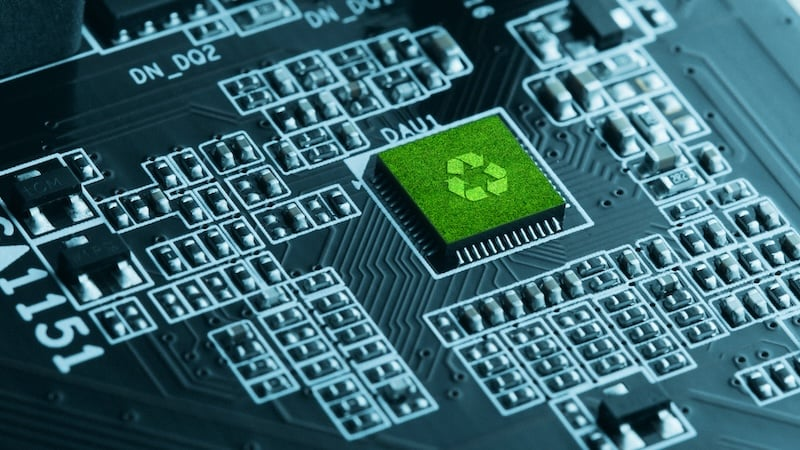
Recycling efforts are an important aspect of improving electronics sustainability
According to the Global E-waste Monitor 2024 report by UNITAR, the documented collection and recycling rate is projected to decline from 22.3% in 2022 to 20% by 2030. This trend underscores a pressing concern: without a holistic approach that emphasizes responsible sourcing and sustainable design practices, the industry’s recycling efforts may fall short of significantly addressing the overarching environmental challenges posed by electronic waste.
3. Halogen-Free Laminates
There has been a push for the adoption of halogen-free laminates as a means of reducing toxicity in PCBs. These alternatives are marketed as being safer for the environment and human health due to their reduced toxicity in case of fires. However, while halogen-free laminates reduce specific hazards, manufacturers often revert to using non-recyclable materials, leading to increased landfill waste. The trade-offs in heat resistance and mechanical performance compared to traditional laminates can also lead to lower reliability in high-performance applications—an essential consideration for engineers.
4. Chemical Treatment Technologies
Engineers have evaluated the eco-friendliness of chemical treatments used in PCB manufacturing, such as etching and cleaning agents, to mitigate their environmental impact. However, many traditional processes continue to heavily rely on harsh chemicals, leading to air and water pollution. Balancing the effectiveness of these agents with their environmental footprint remains challenging, as greener alternatives often entail higher costs and longer processing durations.
5. Technological Innovations
Although some technological advancements have emerged in PCB manufacturing, such as low-temperature soldering techniques and resource-efficient circuit board designs, their adoption has been gradual. A significant obstacle is the requirement for substantial investments in new machinery and training, which makes many small and medium-sized enterprises reluctant to adopt these innovative solutions.
6. Carbon Footprint and Energy Consumption
Manufacturing processes in the PCB industry are inherently energy-intensive, resulting in a considerable carbon footprint. The continued reliance on fossil fuels for energy exacerbates the industry’s contribution to climate change. While some companies are making strides to integrate renewable energy sources, the transition is slow and frequently necessitates significant investments that many smaller manufacturers cannot undertake.
7. Limited Awareness of Sustainability Practices
An additional layer of complexity stems from the uneven distribution of knowledge and commitment to sustainable practices within the industry. Larger corporations typically possess robust sustainability programs, whereas smaller firms may struggle with the resources or expertise needed to implement comparable initiatives. The lack of a unified understanding of sustainability across the industry hinders the consistent and coordinated adoption of eco-friendly practices.
8. Short-Term Focus
The electronics industry is, by nature, fast-paced, leading many manufacturers to prioritize rapid production and cost reduction over long-term sustainability. This short-term mindset undermines efforts to invest in sustainable materials and processes that may require upfront costs but promise long-term environmental benefits.
A Better Solution: Eco-Friendly Materials and Innovative Practices
While the initiatives described above represent strides toward sustainability, they oversimplify the problem and focus more on regulatory compliance rather than holistic environmental responsibility. The result is an ongoing reliance on processes and materials that still contribute to the degradation of our planet.
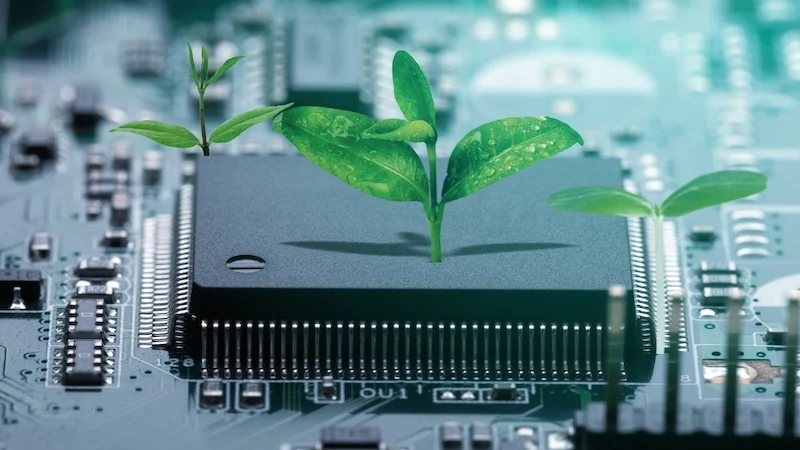
New efforts are needed to continue to improve PCB manufacturing.
Let’s take a closer look at four other initiatives that could provide a better path forward for the PCB manufacturing industry.
1. Bio-Based PCB Materials
A promising direction in PCB production is the development of eco-friendly, bio-based materials. Recent breakthroughs have enabled the creation of substrates using organic, renewable resources like cellulose, lignin, and other natural polymers. These biodegradable and environmentally benign materials eliminate the dependence on traditional, environmentally detrimental components.
Furthermore, bio-based resins are now being integrated, offering electrical properties comparable to conventional epoxy resins. These materials enhance thermal stability while posing fewer hazards during manufacturing, thereby fostering a safer working environment.
2. Green Chemistry in Manufacturing
Another innovative strategy in PCB manufacturing involves applying green chemistry principles. This entails replacing hazardous solvents traditionally used in PCB fabrication with more eco-friendly alternatives, such as water-based solutions or supercritical fluids. Such substitutions diminish toxic byproducts and lessen the overall ecological footprint of the manufacturing process.
Moreover, the adoption of advanced manufacturing techniques, such as additive manufacturing (3D printing), is gaining momentum. This approach significantly minimizes material waste during production as components are constructed layer by layer, rather than being carved from larger blocks of material. Additionally, 3D printing facilitates the creation of more complex geometries, enhancing functionality while utilizing sustainable materials.
3. Circular Manufacturing Initiatives
Adopting a circular manufacturing model can further bolster sustainability efforts in PCB production. This approach emphasizes creating closed-loop systems for materials, where engineers design PCBs for easy disassembly at the end of their lifecycle, facilitating the recovery and reuse of materials. Modular designs enable components to be upgraded without necessitating the replacement of entire PCBs. This transition minimizes waste, promotes longevity, and reduces the demand for new raw materials.
Furthermore, collaborating with local recycling facilities ensures that end-of-life PCBs are processed responsibly. This fosters a sustainable supply chain that benefits both manufacturers and the environment, creating a win-win situation.
4. Life Cycle Assessment (LCA) Practices
The adoption of Lifecycle Assessment (LCA) is crucial for a better understanding of the environmental impacts associated with PCB manufacturing and disposal. LCA involves systematically evaluating the environmental effects of a product at every stage of its lifecycle—from raw material extraction to disposal. By employing LCA, engineers can identify areas of high environmental impact and pivot towards more sustainable practices.
A Greener Future for PCBs
Sustainable PCB manufacturing finds itself at a crucial crossroads, facing the dual challenge of balancing performance, cost, and environmental accountability. Existing solutions, albeit significant, frequently overlook the primary drivers of ecological degradation in electronics manufacturing. As engineers, it is crucial to probe and embrace revolutionary materials, methodologies, and manufacturing paradigms.
The shift towards eco-friendly, bio-based materials, the embedding of green chemistry principles, the embrace of circular manufacturing models, and the rigorous application of Lifecycle Assessments constitute a comprehensive approach poised to revolutionize the PCB manufacturing sector. These initiatives not only safeguard the environment but also propel the electronics industry to the forefront of global sustainability endeavors. By prioritizing sustainable practices in PCB manufacturing, the industry can forge a path towards a more eco-conscious future, ensuring that technological progress does not come at the expense of our planet.
