
The evolution from single-processor embedded systems to multi-processor architectures in IoT edge sensor nodes is revolutionizing real-time data processing. This transition enhances performance, scalability, and energy efficiency, enabling smarter and more responsive IoT applications.
What Are IoT Edge Sensor Nodes?
IoT edge sensor nodes are devices that collect and process data from their environment at the network’s edge, closer to the data source. They are equipped with sensors to monitor parameters like temperature, humidity, and motion, and often include processing capabilities to analyze this data locally.
Why Is There a Shift from Single-Processor to Multi-Processor Systems?
The increasing complexity of IoT applications demands more processing power than a single processor can provide. Multi-processor systems allow for parallel processing, reducing latency and enabling more sophisticated data analysis at the edge.
How Do Multi-Processor Systems Enhance IoT Edge Sensor Nodes?
Multi-processor systems improve IoT edge sensor nodes by:
-
Parallel Processing: Distributing tasks across multiple processors speeds up data processing.
-
Energy Efficiency: Specialized processors can handle specific tasks more efficiently, reducing overall power consumption.
-
Scalability: Easier to scale systems to handle more sensors or more complex tasks.
Which Multi-Processor Architectures Are Commonly Used?
Common multi-processor architectures in IoT edge sensor nodes include:
-
ARM Cortex-M Series: Widely used for their low power consumption and scalability.
-
Raspberry Pi: Offers a balance between performance and energy efficiency, suitable for more complex tasks.
-
NVIDIA Jetson: Designed for AI and machine learning applications at the edge.
Are There Challenges in Implementing Multi-Processor Systems?
Implementing multi-processor systems can present challenges such as:
-
Complexity in Design: Requires careful planning to ensure efficient communication between processors.
-
Increased Power Consumption: More processors can lead to higher overall power usage if not managed properly.
-
Software Development: Developing software that efficiently utilizes multiple processors can be more complex.
When Should Multi-Processor Systems Be Considered?
Multi-processor systems should be considered when:
-
Real-Time Processing: Low latency is crucial for the application.
-
Complex Data Analysis: The application requires advanced data processing capabilities.
-
Scalability: The system needs to handle an increasing number of sensors or more complex tasks.
Where Are Multi-Processor IoT Edge Sensor Nodes Used?
These systems are used in various applications, including:
-
Smart Cities: Monitoring traffic, air quality, and infrastructure.
-
Healthcare: Real-time patient monitoring and diagnostics.
-
Industrial Automation: Predictive maintenance and process optimization.
Does Multi-Processor Implementation Improve Data Security?
Yes, multi-processor systems can enhance data security by:
-
Data Encryption: Offloading encryption tasks to dedicated processors.
-
Secure Boot: Ensuring that only trusted software runs on the device.
-
Isolated Execution: Running sensitive tasks in isolated environments to prevent unauthorized access.
Buying Tips
When selecting multi-processor systems for IoT edge sensor nodes, consider the following:
-
Compatibility: Ensure the processors are compatible with your existing hardware and software.
-
Power Consumption: Choose processors that offer the best performance per watt.
-
Processing Power: Select processors that meet the processing requirements of your application.
-
Scalability: Consider future expansion needs and choose processors that can scale accordingly.
-
Support and Documentation: Opt for processors with robust support and comprehensive documentation to ease development.
Electronic Components Expert Views
“The evolution from single-processor to multi-processor embedded systems in IoT edge sensor nodes is not just a trend but a necessity to meet the growing demands for real-time data processing and energy efficiency.”
“Integrating multiple processors allows for parallel processing, which significantly enhances the performance and scalability of IoT edge devices.”
FAQ
Q: What is an IoT edge sensor node?
A: An IoT edge sensor node is a device that collects and processes data from its environment at the network’s edge, closer to the data source.
Q: Why use multi-processor systems in IoT edge sensor nodes?
A: Multi-processor systems enable parallel processing, reducing latency and enhancing the ability to handle complex tasks in real-time.
Q: What are the benefits of multi-processor architectures?
A: They offer improved performance, energy efficiency, and scalability, making them suitable for advanced IoT applications.
Q: Are there challenges in implementing multi-processor systems?
A: Yes, challenges include design complexity, potential increased power consumption, and the need for specialized software development.
Q: When should multi-processor systems be considered?
A: When applications require real-time processing, complex data analysis, and scalability.
Q: Where are these systems applied?
A: In smart cities, healthcare, and industrial automation for tasks like monitoring and predictive maintenance.
Q: Do multi-processor systems enhance data security?
A: Yes, by enabling dedicated encryption tasks, secure boot processes, and isolated execution environments.
Learn how system partitioning can optimize IoT edge sensor node operation by intelligently separating the analog sensors that measure slowly varying signals from the communication networks using high-speed digital signals.
Embedded systems are rapidly evolving, with devices in our homes, vehicles, and workplaces experiencing significant advancements in capabilities. A pivotal factor driving this progress is the ability of even the smallest electronic devices to connect to our modern network infrastructure.
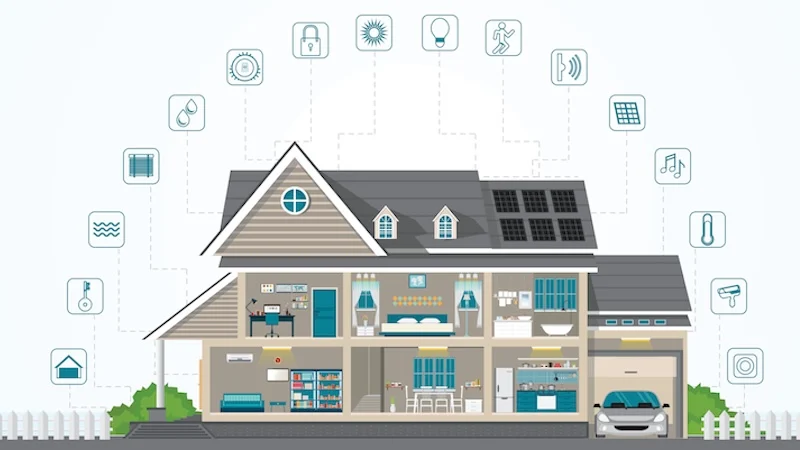
Figure 1. Wirelessly connected embedded sensor systems are proliferating in our homes
Wi-Fi, Bluetooth, and other connectivity options facilitate in-field updates and streamline maintenance while integrating AI and Machine Learning algorithms. This enhanced connectivity transforms these devices into IoT edge nodes, albeit with the trade-off of increased processing demands and larger memory subsystems.
IoT Edge Sensor System Challenges
Many embedded systems are “connected” to their immediate environment, featuring capabilities for environmental sensing, mechanical actuation, or human interaction. For instance, smart thermostats are linked to local networks of temperature and humidity sensors and include buttons or capacitive sensors for user input. Similarly, connected cooking appliances aim to interpret user preferences for food temperature and apply heat accordingly.
These predominantly “analog” systems are integrating into the fast-paced world of cloud communication, posing a unique challenge: should systems be optimized for the slow-moving input of the analog world, or should analog fidelity be compromised for speed and enhanced functionality?
To delve into this issue, we’ll examine a common and straightforward application example—the IoT edge sensor node.
Sleepy, Low-Power Analog Subsystems
IoT edge sensor nodes require an analog subsystem to measure and monitor environmental conditions such as temperature, humidity, or motion. This analog subsystem includes a microcontroller (MCU) that reads sensor data, processes it, and communicates it over a network.
Environmental data typically changes slowly, so most edge nodes do not need to process a continuous, uninterrupted stream of data. Given that an edge node often operates on the same small form-factor battery for several years, it spends most of its time in a low-power “sleep” mode and only wakes up periodically to detect changes in the environment.
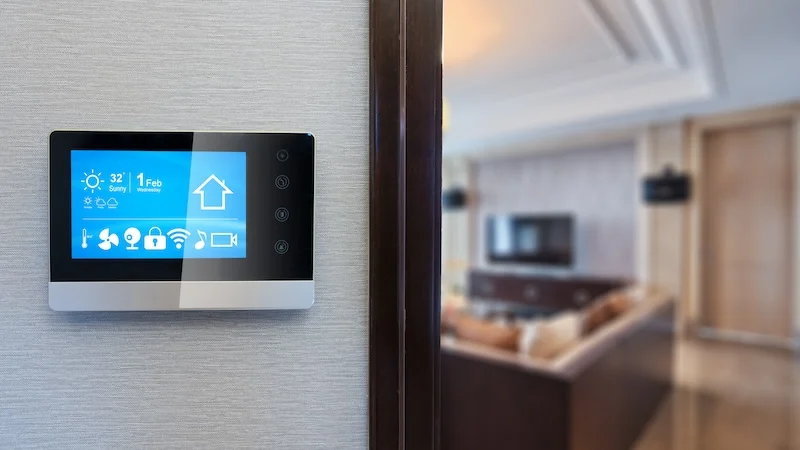
Figure 2. Most environmental sensors monitor slowly varying signals like temperature
During the waking period, the node gathers data and transmits it across a network. Then, it returns to sleep until it needs to take the next measurement.
As the number of edge nodes and the volume of collected data increase in our hyper-connected world, power efficiency and low power operation are critical design considerations to extend battery life in analog subsystems.
Segmenting Embedded Systems for Improved Efficiency
For embedded systems, it is optimal to segment the system into different speed domains using a bridge to connect the fast main processor to analog subsystems. Partitioning enables the analog subsystem to specialize in handling slow-changing tasks while fast, compute-intensive processing tasks are managed by a fast main processor, thereby maximizing the functional strengths of each processor type.
With the growing trend of more connected devices, I3C? is emerging as the next-generation serial communication interface to support high-speed chip-to-chip communication. As a successor to I2C, it is better suited for future applications with a faster, smarter interface and sophisticated control capabilities.
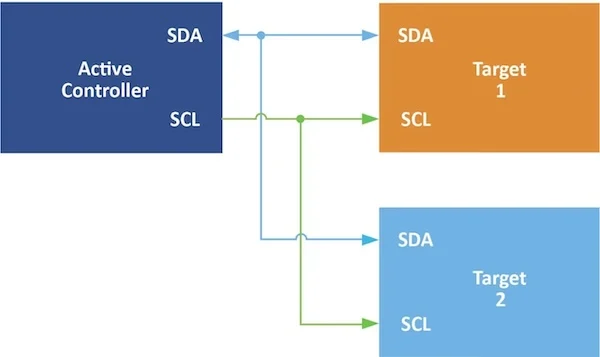
Figure 3. An example I3C connection between a controller and two target sensor nodes
I3C maintains backward compatibility with I2C devices, which is crucial for seamlessly integrating I3C into existing hardware platforms. Additionally, I2C devices can coexist with I3C controllers operating at 12.5 MHz, facilitating the migration of existing I2C-bus designs to the I3C specification.
For example, a microcontroller that supports both I3C and a legacy communication interface (such as I2C, SPI, or UART) can act as a bridge device. This bridge connects a fast processor to a sensor via the microcontroller. The microcontroller measures the sensor input, calculates results, and efficiently transfers the data.
This setup preserves the integrity and speed of the I3C bus while enabling communication between the I3C controller and I2C/SPI devices through the microcontroller. By partitioning embedded systems and leveraging I3C, it becomes possible to implement system designs successfully and robustly.
PIC18-Q20 MCU
Microchip has developed the PIC18-Q20 product family, as shown in Figure 4, specifically for modern distributed processor embedded systems. These MCUs feature advanced serial communication interfaces, including up to two I3C peripherals, for high-speed connectivity to multiple buses, thereby enhancing flexibility.
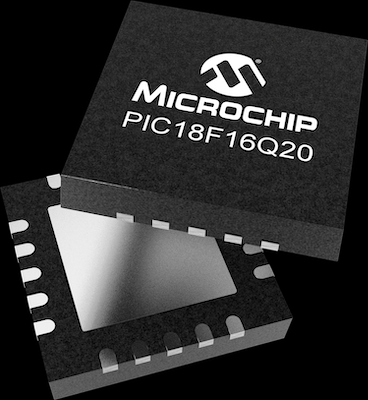
Figure 4. Microchip PIC18F16Q20 microcontroller
Additionally, they come equipped with built-in legacy communication protocols such as UART, SPI, I2C, and SMBus, enabling seamless integration as a bridge device and isolation of I2C/SPI client devices from a pure I3C bus. This setup maintains the speed of the I3C bus while allowing an I3C controller to communicate with I2C/SPI devices through the microcontroller.
Moreover, the PIC18-Q20 supports multiple voltage domains, allowing it to connect easily to various components with different operating voltage levels. As illustrated in Figure 5, this eliminates the need for level shifters, reducing the Bill of Materials (BOM) cost and simplifying the system design.
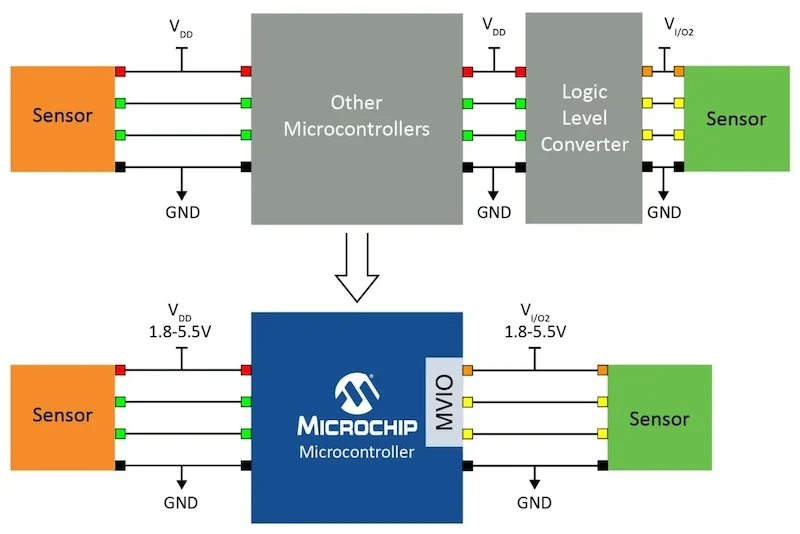
Figure 5. Microcontrollers that support multi-voltage I/O can eliminate the need for external level shifters
PIC18-Q20 MCUs also include on-chip Core Independent Peripherals (CIPs) that can operate without constant interaction from the CPU and communicate directly with other peripherals. These hardware-based peripherals consume minimal power and require little to no code and less RAM and Flash memory to implement the same functions in software. Additionally, many simultaneous functions can be enabled in a single MCU.
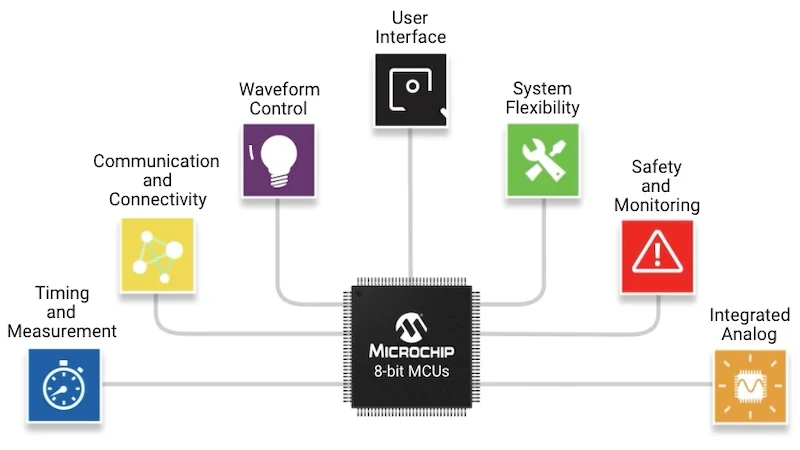
Figure 6. Core Independent Peripherals (CIPs) and integrated analog features reduce CPU processing load and power
Designers can easily customize combinations of CIPs, including the I3C peripheral, using the MPLAB? Code Configurator (MCC), a simple Graphical User Interface (GUI) environment, to generate application code without reading through datasheets. With CIPs, engineers can partition each system task for easier function management, reducing component count, code size, development time, and power consumption.
To Learn More
In our rapidly changing world, technological innovations and advancements demand faster processing speeds, faster connectivity, and miniaturization. While modern electronics are increasingly connected to our outside world, small-scale and energy-efficient analog subsystems are needed to sense and measure the ‘real world’ in connected systems. As environmental data changes usually occur gradually, design goals are in opposing directions.
Efficient embedded systems are achieved by partitioning the system into different speed domains, using a bridge to connect the fast processor to the surrounding parts of the system where analog subsystems exist. With I3C becoming the de facto interface for high-speed chip-to-chip communication, it’s important for engineers to select advanced MCUs that are equipped to fully support the increasing requirements for high performance in the digital realm while maintaining high analog precision for next-generation designs.
