
Analog Devices speeds up embedded development for the intelligent edge by offering advanced tools, integrated platforms, and strategic alliances. Developers benefit through reduced design cycles, improved power efficiency, and simplified sensor integration. The intelligent edge thrives on speed, precision, and resilience—all enabled by Analog Devices’ relentless innovation in embedded systems.
What is Analog Devices’ approach to speeding up embedded development?
Analog Devices speeds up embedded development for the intelligent edge by offering system-level solutions rather than isolated components. Their approach blends hardware, software, and algorithms into cohesive platforms that minimize time-to-market. This holistic method targets bottlenecks such as sensor fusion, data conversion, and edge AI processing.
Chart Title: Key Elements in Analog Devices’ Embedded Strategy
| Element | Description |
|---|---|
| Hardware Integration | Ready-to-use, modular platforms |
| Software Ecosystem | Comprehensive tools and libraries |
| Edge AI Capabilities | Built-in intelligent processing |
By combining sensor, power, RF, and mixed-signal technologies into accessible development kits, Analog Devices drastically shortens design iteration cycles.
How does Analog Devices empower the intelligent edge?
Analog Devices empowers the intelligent edge by delivering solutions that integrate sensing, interpreting, and decision-making directly at the point of data collection. With innovations like precision converters, MEMS sensors, and edge-optimized AI processors, they reduce reliance on centralized cloud resources, enhancing speed and reliability.
This empowerment reshapes industries from industrial automation to healthcare, unlocking smarter, more autonomous edge nodes capable of operating in diverse environments.
Which tools and platforms are critical in Analog Devices’ strategy?
Critical tools in Analog Devices’ strategy include platforms like the ADI Trinamic motion control modules, precision RF solutions, and machine learning inference engines. These resources are bundled with open-source software kits and easy-to-integrate hardware reference designs, tailored for edge developers.
Chart Title: Analog Devices Key Platforms for Embedded Edge
| Platform | Purpose |
|---|---|
| ADI Trinamic Modules | Precision motor control |
| Precision RF Modules | High-speed wireless communication |
| Edge AI Processing Units | On-device inference and analytics |
Such platforms offer developers flexible paths to market across sectors demanding intelligence at the edge.
Why does embedded development for the intelligent edge need acceleration?
Embedded development for the intelligent edge needs acceleration due to soaring demands for real-time decision-making, lower latency, and enhanced system autonomy. Traditional centralized computing models cannot handle the volume and immediacy required by new applications like smart factories, autonomous vehicles, and remote healthcare systems.
By pushing processing to the edge, developers can meet stringent performance and energy constraints, reducing dependency on bandwidth-intensive cloud services.
Who benefits the most from faster embedded solutions by Analog Devices?
Industries that require high reliability, real-time analytics, and autonomy at the edge benefit the most. These include manufacturing (smart robotics), automotive (autonomous driving), healthcare (portable diagnostics), and defense (tactical communication systems).
Developers working in these sectors leverage Analog Devices’ accelerated embedded solutions to innovate faster and build resilient, scalable edge architectures.
How does Analog Devices address challenges in intelligent edge development?
Analog Devices addresses challenges such as energy efficiency, data security, and hardware-software integration by offering pre-validated, interoperable building blocks. Their solutions integrate cybersecurity protocols at the chip level, optimize power consumption through advanced process nodes, and provide full-stack reference designs to simplify deployment.
This approach not only reduces risk but also dramatically compresses development timelines for complex intelligent edge projects.
Buying Tips
When sourcing components for embedded edge development, prioritize platforms that offer complete system solutions. Look for pre-certified modules, software libraries, and developer support ecosystems. Always verify the product’s alignment with your edge computing needs, particularly regarding latency, power, and security requirements.
As a reliable Electronic Components Source, Fly-Wing Technology (HK) Co., Limited offers competitive prices, rapid sourcing, and a broad inventory of hard-to-find and obsolete parts. Since 2012, Fly-Wing has empowered customers by minimizing procurement cycles and maximizing success in component acquisition strategies.
Electronic Components Expert Views
“Today’s edge development success is defined by access to integrated, easy-to-deploy components. Analog Devices sets a new standard by merging hardware innovation with software simplicity, cutting design risk while boosting speed. Companies that build around these technologies will dominate the future edge landscapes.” — Electronic Components Expert Team at Fly-Wing Technology (HK) Co., Limited
FAQ
What does Analog Devices offer for intelligent edge development?
Analog Devices offers system platforms combining sensors, processors, and algorithms tailored for low-power, real-time edge processing.
Why is edge computing essential for future technologies?
Edge computing reduces latency, boosts system autonomy, and minimizes cloud dependency, which are critical for innovations like smart factories and autonomous driving.
How does Analog Devices speed up embedded development?
They provide integrated hardware-software solutions, optimized for fast deployment, reducing design cycles, and improving scalability for edge applications.
At Embedded World North America, a new software development environment and developer portal were unveiled, promising to streamline edge design, enhancing both speed and reliability.
At Embedded World North America, Analog Devices launched CodeFusion Studio, a comprehensive development platform aimed at simplifying and accelerating embedded design for the “intelligent edge.” As edge computing opens new avenues for real-time decision-making across various industries, it also presents significant challenges. Developers face the daunting task of managing increasingly complex system designs, juggling power efficiency, performance, and security. Traditional development environments frequently fall short, lacking the necessary flexibility and scalability to meet these demands, leading to prolonged development cycles. CodeFusion Studio is designed to address these challenges, offering a more streamlined and efficient development process.
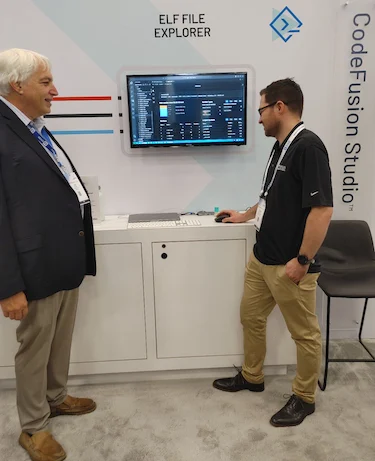
Analog Devices software engineer James Ryan talks to All About Circuits’ editor-in-chief Jeff Child about CodeFusion Studio.
Analog Devices’ CodeFusion Studio is a comprehensive embedded software development environment that enhances intelligent edge development on ADI hardware.
CodeFusion Studio Streamlines Embedded Design
Built on Microsoft’s Visual Studio Code, CodeFusion Studio is a comprehensive development platform that integrates an advanced suite of tools to streamline embedded system development. It leverages open-source configuration and profiling tools, along with a command-line interface, to enable developers to efficiently manage heterogeneous processors. The platform aims to simplify tasks such as debugging, code generation, and profiling, which are often time-consuming in complex embedded systems. As an open-source solution, CodeFusion Studio also reduces time-to-market by facilitating integration with third-party solutions.
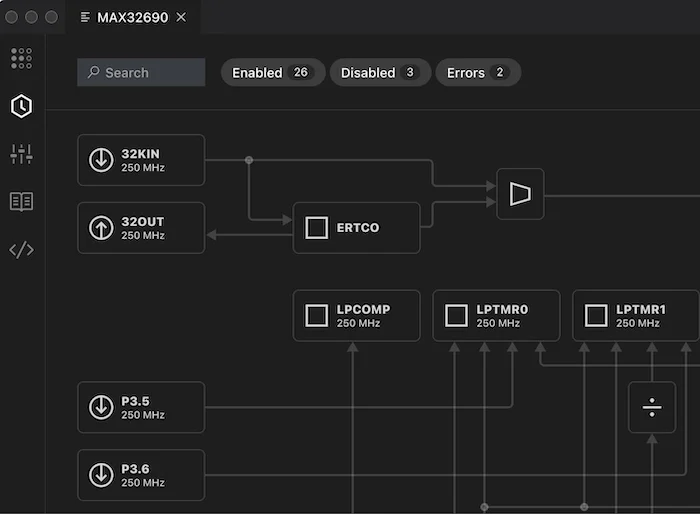
CodeFusion Studio design for the MAX32690
Central to this offering is the ADI Assure Trusted Edge Security Architecture, integrated into CodeFusion Studio. This security framework provides robust, native security for both hardware and software at the edge. Initially compatible with the MAX32690 microcontroller, the security APIs are designed to maintain consistency across future ADI processing platforms, simplifying software migration.
Alongside CodeFusion Studio, ADI also announced a new Developer Portal, which offers extensive documentation, support, and a collaborative community environment.
Security in Intelligent Edge Devices
As the number of connected devices at the edge rises, the complexity of securing these systems also increases. Intelligent edge devices, as ADI calls them, process data locally rather than in the cloud, presenting unique challenges in balancing performance with security.
Traditional security models, designed for centralized systems with ample processing power and memory, often struggle to meet the demands of embedded systems where power efficiency, processing speed, and memory constraints compete for priority. This divergence has created a pressing need for new approaches to embedded security.
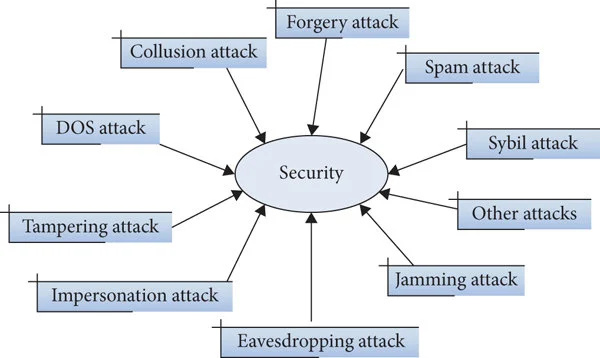
Edge computing security challenges
Intelligent edge devices operate under significant environmental constraints. Many of these devices must function with minimal power and processing resources while maintaining real-time performance. Implementing robust encryption, authentication, and secure boot processes in such environments can drastically impact system performance and increase latency, which is unacceptable for real-time applications in industrial automation, automotive systems, or healthcare devices.
Furthermore, the decentralized nature of edge computing introduces greater exposure to cyber threats. Devices at the edge are more vulnerable to attacks due to their physical accessibility and increased network entry points. This makes the task of securing edge systems more critical and complex. Security solutions must simultaneously protect sensitive data and ensure the integrity and availability of the device’s operation.
The Future of Edge Development
As the demand for edge computing accelerates, the tools and platforms supporting it must evolve in tandem. The ability to efficiently manage complex, resource-constrained devices while delivering robust security at the edge will be non-negotiable for the next wave of technological advancement. Solutions like CodeFusion Studio may address current industry pain points by simplifying the development process and embedding security measures at the core.
