Introduction: Why Industrial-Grade Memory Matters in Harsh Environments
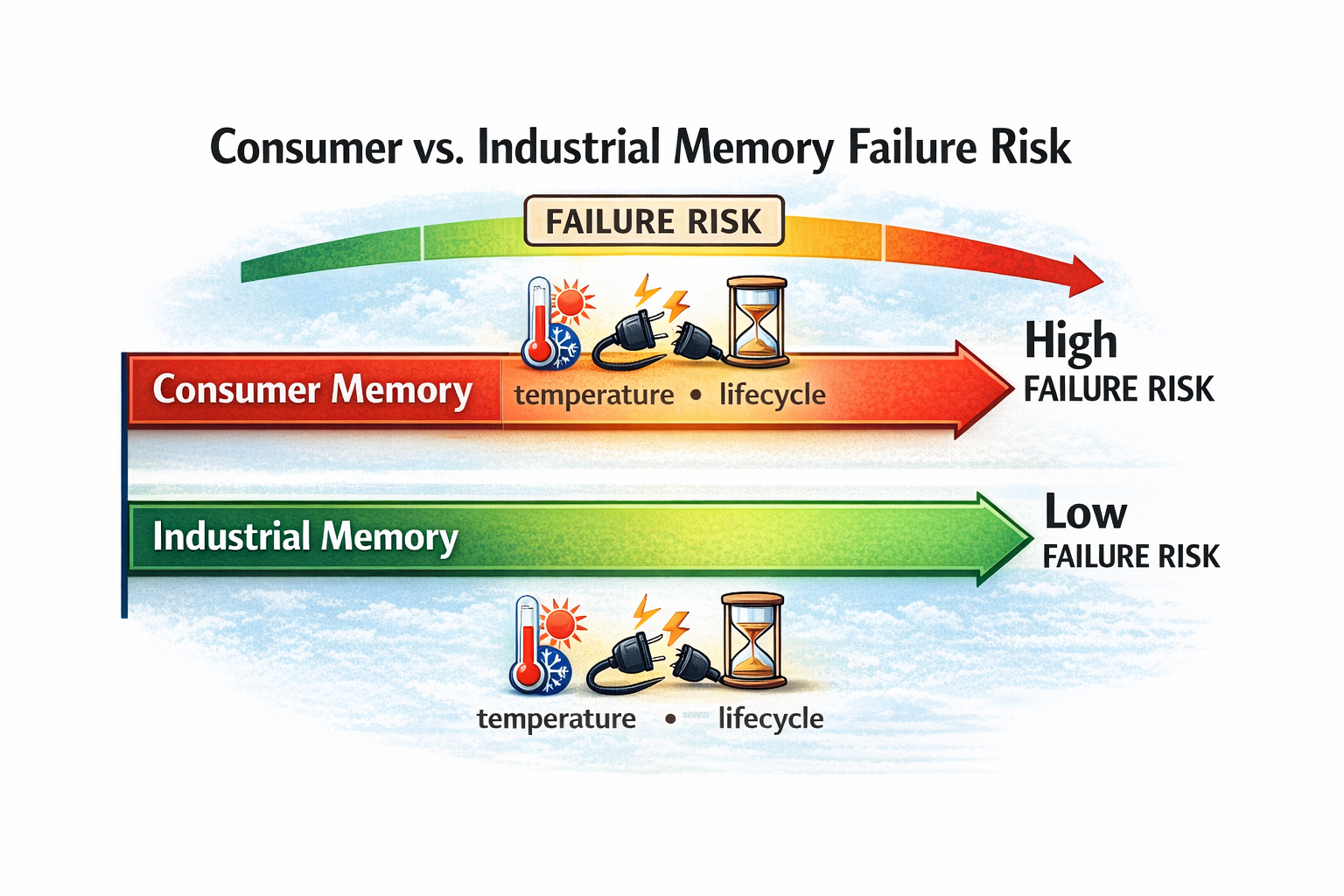
Memory and storage devices are not just the supporting components in today’s modern industrial and mission-critical systems. Mission-critical systems are expected to operate continuously for years in harsh environments such as extreme temperatures, vibrations, electrical noises, and unpredictable power conditions. In such conditions, conventional or commercial-grade memory, such as that used in consumer electronics, does not fulfill these requirements and often leads to data corruption and even system failure.
Industrial-grade memory and storage devices are designed to meet these challenges. They are designed to withstand extreme temperatures, typically ranging from– 40°C to +85°C or higher, and mechanical stress, typically from shock and vibrations. They also ensure continuous operation during unpredictable power conditions. Apart from these, they are manufactured for a long lifecycle to ensure continuous operation even for years, typically for 7-15 years.
Common Applications of Industrial Memory and Storage Devices
Industrial Memory & Automation Applications
This guide will explain industrial-grade memory and storage technologies such as DRAM, eMMC, and SSDs. This technical guide will also explain how these industrial storage devices differ from consumer electronics. Understanding these industrial storage and memory devices’ design, characteristics, and real-world behavior will help the engineers and designers to make informed decisions.
What Defines Industrial-Grade Memory and Storage?
Consumer electronic components do not withstand harsh environmental conditions, as we discussed earlier. Therefore, industrial memory and storage devices are designed to withstand extreme temperatures, typically –40°C to +85°C or higher. These are not just data-storing devices, but are key players in ensuring system stability and longevity, especially in industrial automotive and mission-critical applications. This section of the guide will help you understand the key characteristics of industrial memory devices to make you confident in selecting the right component for your harsh environment-dependent applications.
Key Characteristics of Industrial Memory
There are several key characteristics of industrial memory and storage devices. This section will list and explain only the key characteristics of industrial memory devices.
1. Extended Temperature Range
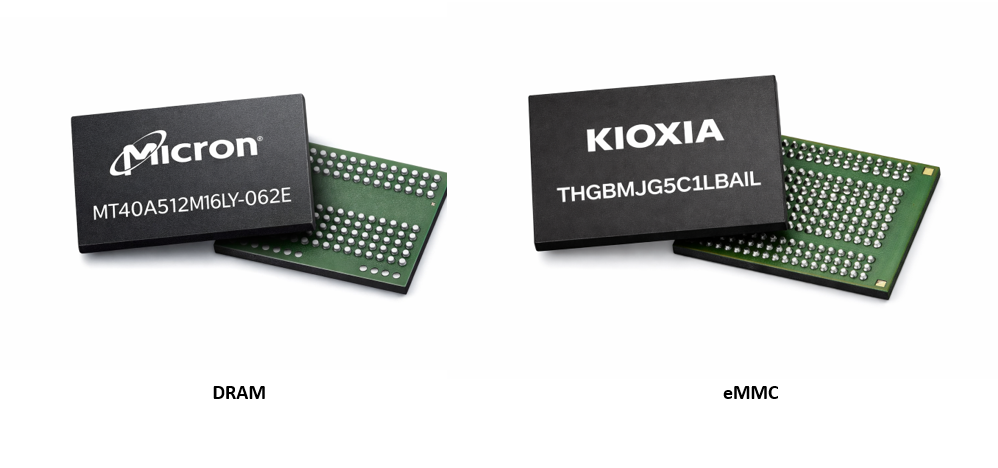
Industrial devices are designed to function across extreme temperatures, typically –40°C to +85°C, with some variants rated up to +105°C. For example, Micron MT40A512M16LY-062E IT DRAM modules maintain data integrity even under sustained high temperatures, while Kioxia THGBMJG5C1LBAIL eMMC ensures reliable operation in embedded systems deployed outdoors or in industrial enclosures.
2. High Endurance and Data Retention
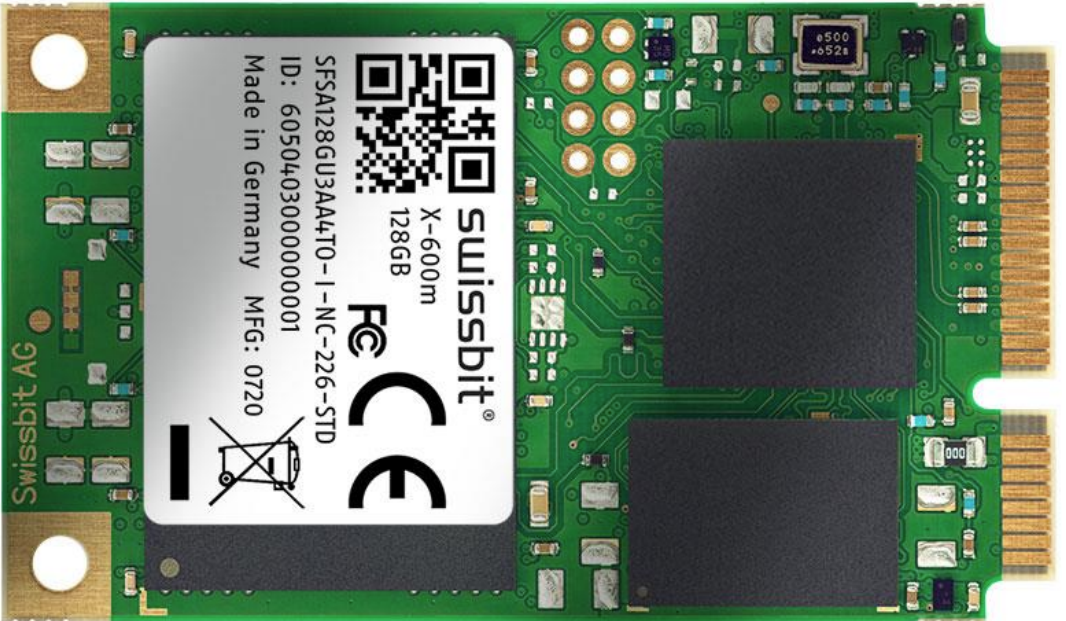
Industrial memory is designed to endure frequent read/write cycles and maintain data over extended periods. Flash memory devices often implement wear leveling to maximize lifespan, while industrial SSDs like the Swissbit X-600 series incorporate power-loss protection and advanced ECC (Error-Correcting Code) for data integrity.
Error Detection and Correction
Industrial memory and storage devices such as DRAM and SSDs have the ability to prevent system failures due to data corruption. This feature is vital because it ensures the system’s continuous operation without even a single bit error and ensures system safety.
Robustness Against Environmental Stress
Industrial memory devices are manufactured to withstand vibrations, shock, humidity, and electrical noise. Apacer industrial SSDs and Winbond industrial NAND flash are one of the famous devices known for robustness against vibration, shocks, and humidity. They are widely used in factory floors, vehicles, and outdoor installations.
Long-Term Availability and Lifecycle Support
Most of the industrial memory devices are rated for 7-15 years of lifecycle. This ensures that the design application shows good performance over long deployment cycles. Unlike consumer electronic memory devices, which show degraded performance after a couple of years.
Firmware Stability and Predictability
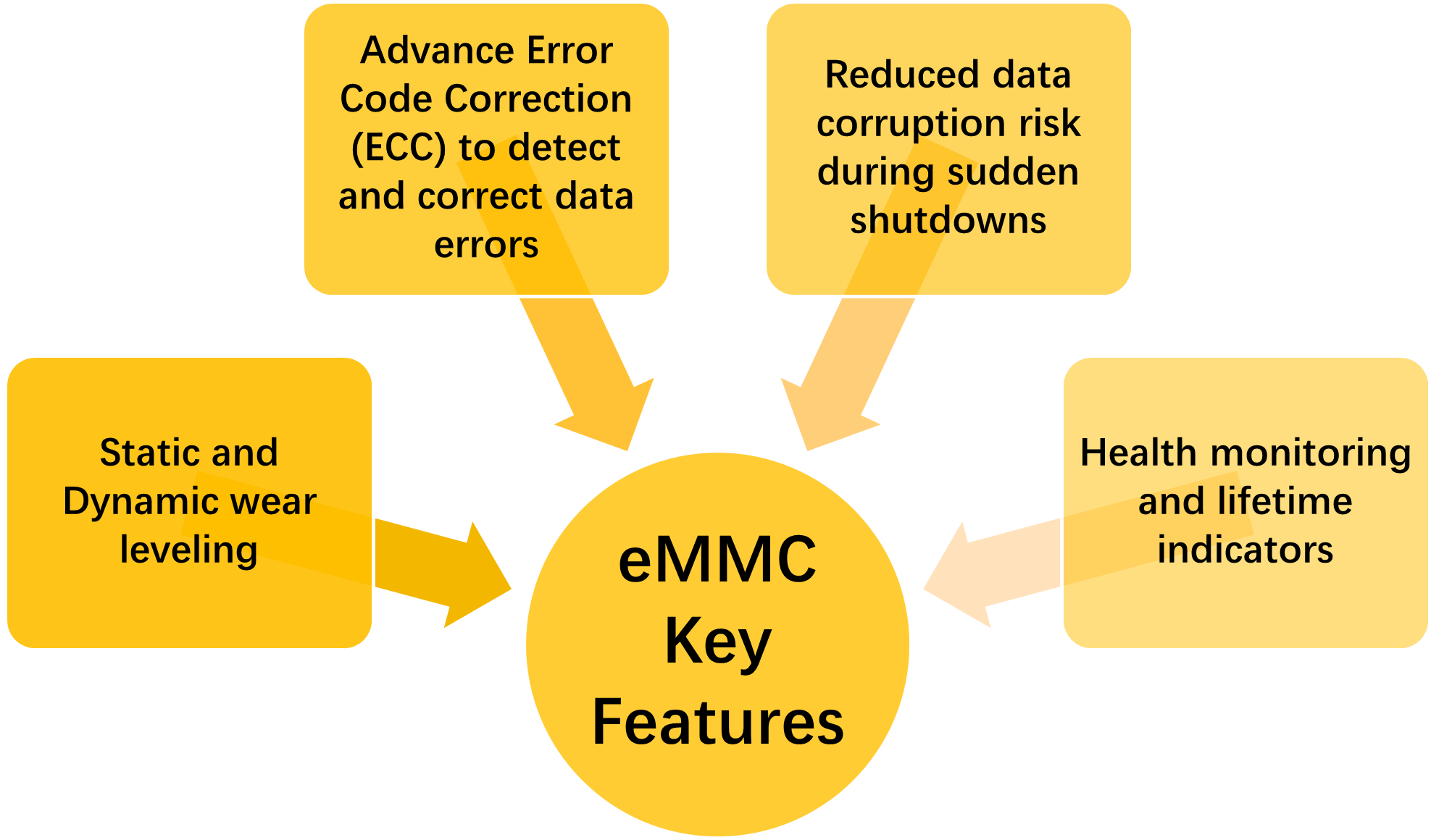
Industrial memory devices like eMMC devices implement static and dynamic wear leveling to avoid unexpected slowdowns or failures, which is essential for embedded Linux controllers and PLCs.
Industrial vs Commercial vs Consumer Memory

Overview of Industrial Memory & Storage Types
Industrial systems rely on a variety of memory and storage technologies, each optimized for specific roles, performance requirements, and environmental resilience. Understanding the strengths and limitations of each type is crucial for system designers, embedded engineers, and procurement teams aiming to build robust, long-lasting solutions.
At a high level, industrial memory and storage can be classified into four major categories:
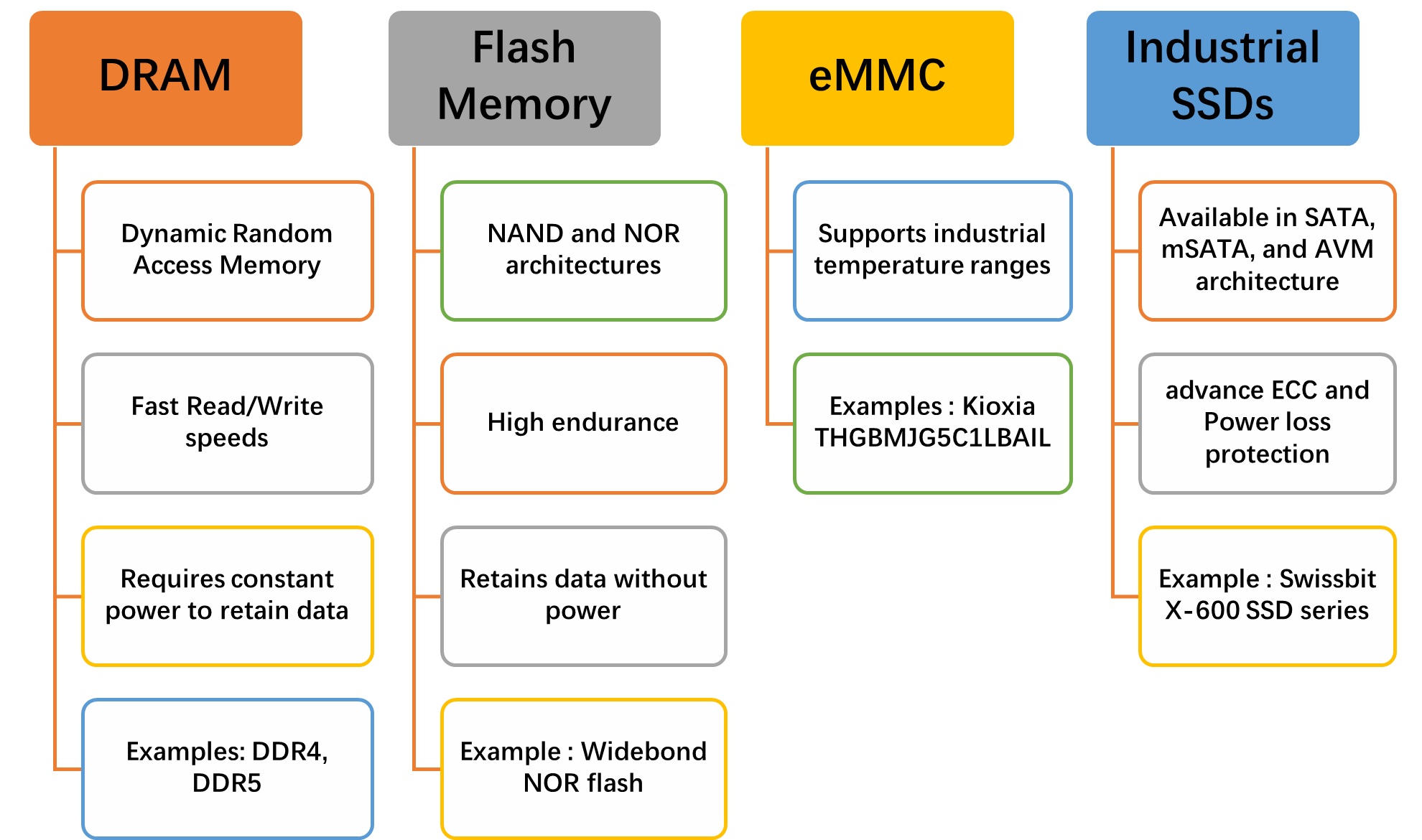
DRAM (Dynamic Random Access Memory)
Industrial DRAMs are especially designed for mission-critical systems and are responsible for executing the control logic and buffering real-time data. These memory devices are known for high reliability, predictability, and long lifecycle. Therefore, ideal for a harsh environment where system failure is not an option.
Dynamic RAM is volatile memory, which also means that it requires continuous power to retain data. These industrial DRAMs are designers’ favorites due to their high speed and low latency, which are critical for real-time industrial operations. DRAMs are mostly used in PLCs, robotics controllers, industrial PCs, and edge computing devices. In such applications, their primary function is to temporarily store program instructions, sensor data, and real-time control variables.
The primary key features of DRAM are;
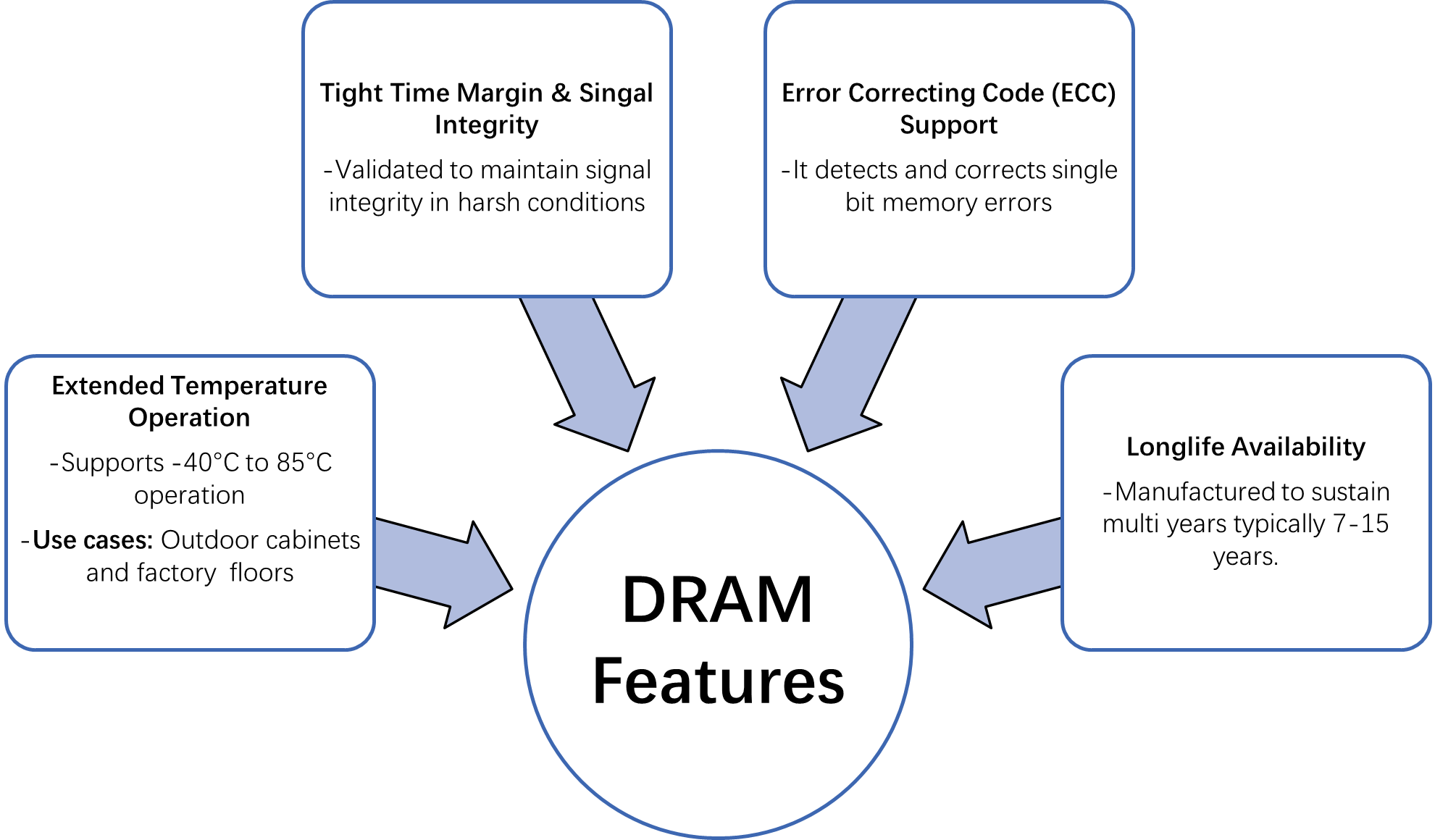
For example, industrial DDR4 DRAM devices such as Micron MT40A512M16LY-062E IT and AW24P64F8BLK0M are commonly selected for embedded and industrial platforms where consistent performance under thermal stress is critical.
Comparison of Industrial DRAM Types
Typical Industrial Applications of DRAM
Industrial-grade DRAM is a core component in:
- Programmable Logic Controllers (PLCs) – real-time control logic and I/O buffering
- Human-Machine Interfaces (HMIs) – graphics rendering and OS memory
- Industrial PCs (IPCs) – multitasking and data processing
- Machine vision systems – high-speed image buffering
- Edge computing platforms – AI inference and analytics workloads
Industrial Flash Memory: NAND vs NOR in Harsh Environments
Unlike DRAM, industrial flash memory is a non-volatile storage device, which means that it retains data even when it is not powered. It can store data when the power is not available, therefore it is used in preserving the firmware, bootloaders, configuration data, and operational logs. Flash memories can deliver high endurance, reliable data retention, and superior performance under harsh environments such as temperatures, vibration, and frequent power interruptions.
Industrial flash memory is basically a persistant storage device that provides the control wear behavior and stable performance over long deployment lifetimes. These memory devices are commonly used in boot and firmware storage, configuration and parameter storage, and backup storage in control systems.
Types of Flash Memory
There are primarily two types of flash memory, known as NAND and NOR flash memories. Both are non-volatile memory types, and the difference lies in their cell arrangement. If flash memory structure is arranged in parallel, it is known as NOR Flash Memory, and if the structure is arranged in series, it is known as NAND Flash Memory.

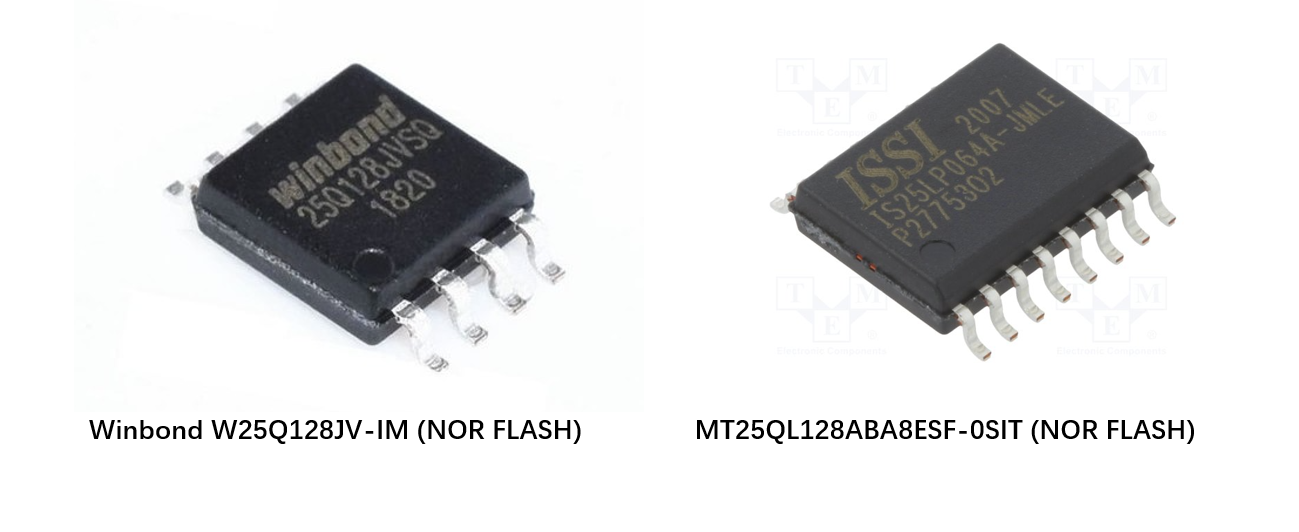
Industrial NOR Flash devices, such as Winbond W25Q128JV-IM and Micron MT25QL128ABA8ESF-0SIT, are commonly used in PLCs, HMIs, and industrial controllers where reliable startup and deterministic behavior are crucial. Industrial NAND Flash components such as Micron MT29F64G08AFAAAWP-ITZ:A and Kioxia TC58TEG6DDKTA00 are designed to withstand extended temperature operation and sustained write workloads in harsh environments.
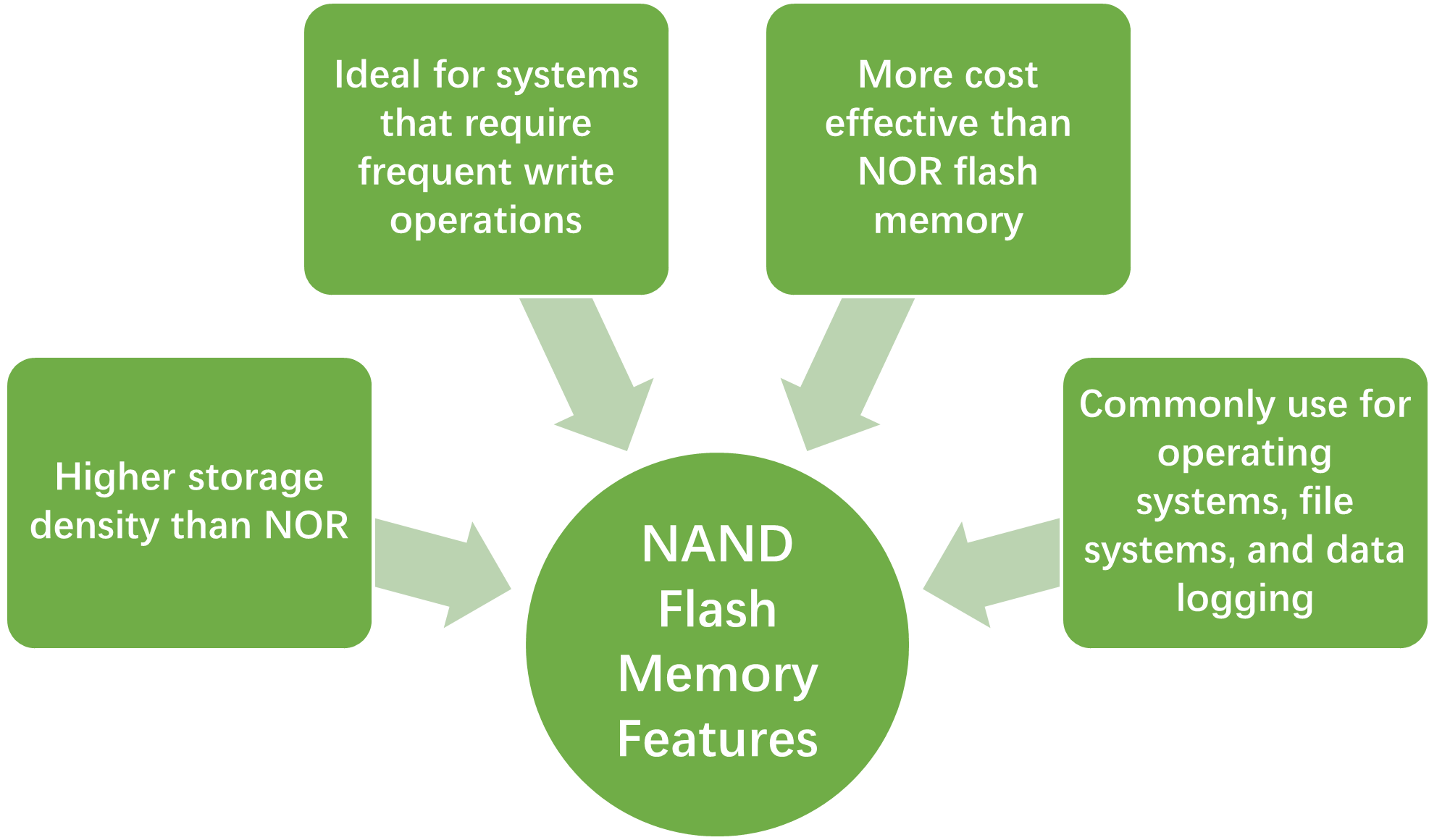
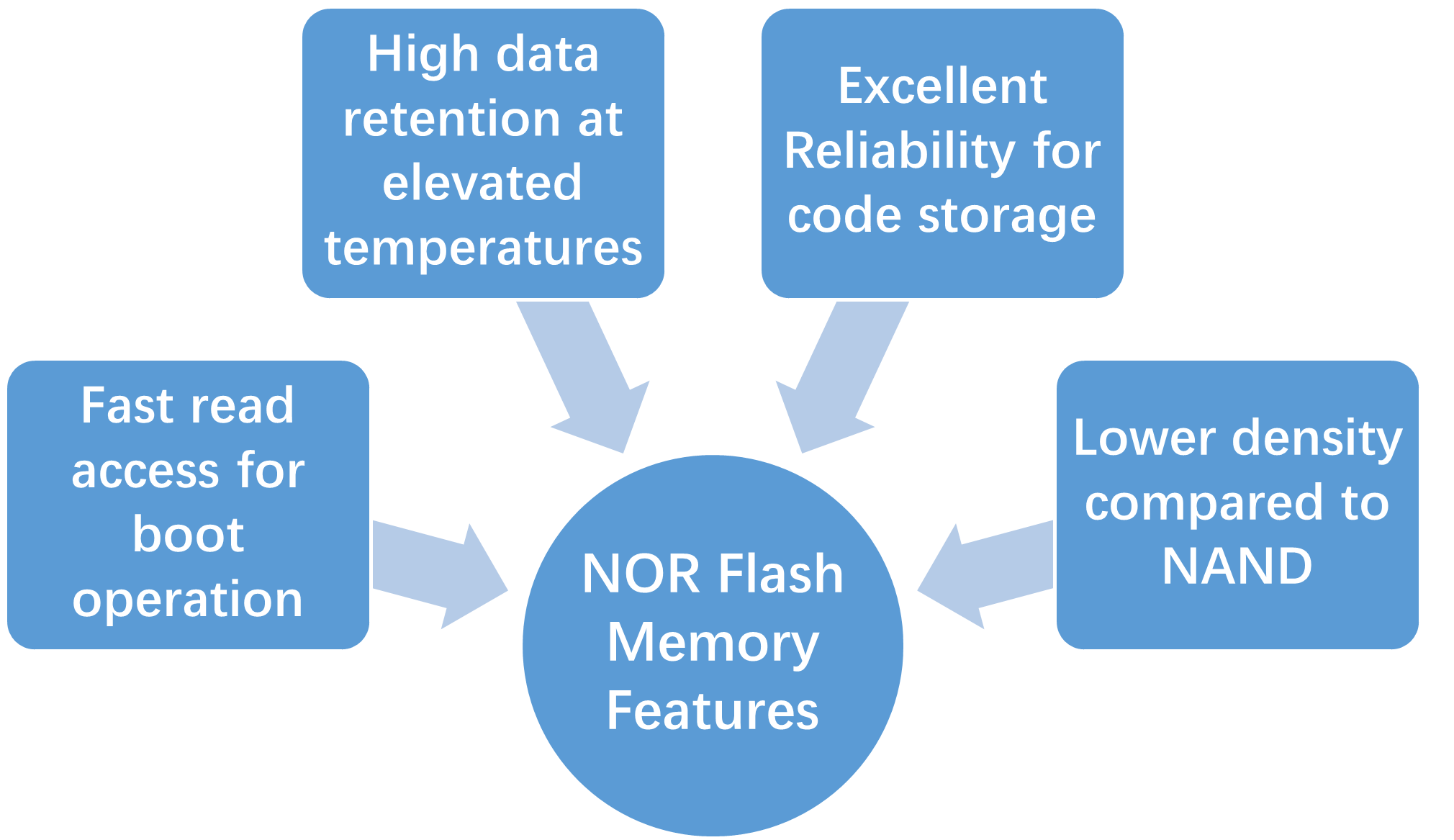
Some of the prime features of industrial NAND and NOR flash memory are;
Typical Industrial Applications of Flash Memory
Industrial Flash memory is commonly used in:
- PLCs and industrial controllers – firmware and boot storage
- HMIs and embedded Linux systems – OS and configuration data
- Industrial IoT gateways – system logs and device configuration
- Energy and transportation systems – persistent operational data
In many designs, NOR Flash handles boot and firmware, while NAND Flash or eMMC manages larger data storage, creating a layered and reliable memory architecture.
Industrial eMMC: Embedded Storage for Reliable Systems
eMMC stands for Embedded Multi Media Card, and it is one of the best compact, software-driven industrial storage devices for reliable embedded non-volatile storage. eMMC is one of the widely adopted storage solutions for embedded and industrial platforms due to its integrated controller, enhanced reliability, and enhanced performance compared to Flash memory.
eMMC is a type of memory that combines the NAND flash memory with a controller into a single package. The function of the controller is to handle the critical functions such as wear leveling, error correction, and read/write optimization. Therefore, eMMC storage devices reduce the software overhead and minimize the risk of storage failure.
Industrial eMMC devices such as Kioxia THGAMVG7T13BAIL and Micron MTFC16GAPALBH-IT are commonly use in embedded Linux systems and industrial controllers due to their high temperature ratings.

Major features of eMMC storage devices are;
Typical Industrial Applications of eMMC
Industrial eMMC is widely used in:
- Embedded Linux platforms
- Industrial HMIs and touch panels
- Industrial IoT gateways
- Smart meters and energy systems
- Transportation and railway electronics
In these systems, eMMC often stores the operating system, application software, and configuration data, while industrial SSDs may be used for larger datasets or long-term logging.
Industrial SSDs: High-Performance Storage for Extreme Conditions
Industrial Solid State Drives (SSDs) are know for large storage capacity, extreme reliability, and high data throughput. Traditional consumer SSDs are only meant for desktops, and laptops. However, industrial SDDs are famous to withstand harsh operating conditions, superior performance, and data integrity over long lifecycles.
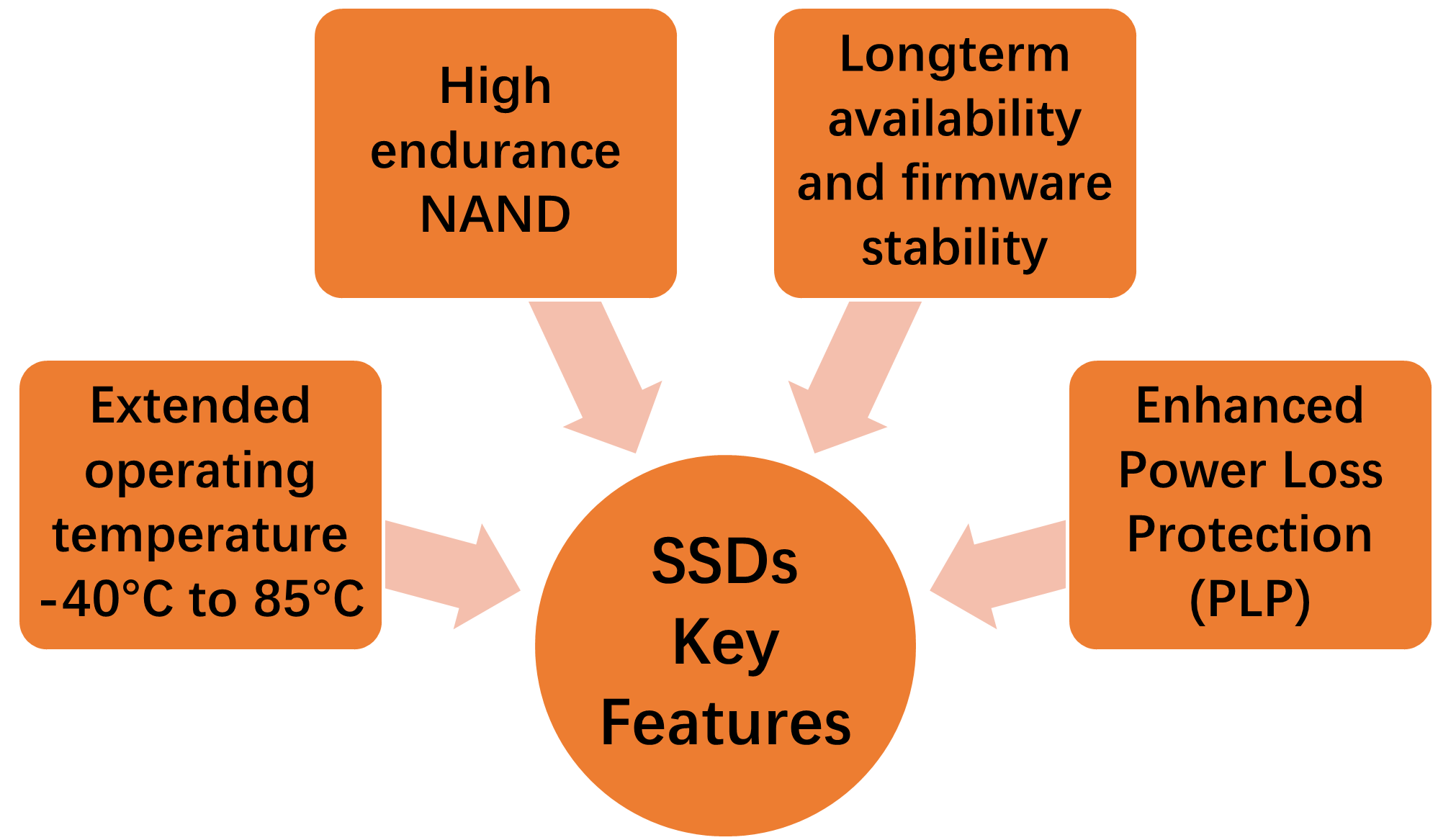
An industrial-grade SSD is manufactured to handle extreme temperature variations and robust firmware to handle intense temperatures (-40°C to 85°C), shock, and vibration, plus features like Power-Loss Protection (PLP) and extended endurance (P/E cycles).
For example, industrial SSDs such as TDK’s SDE1B128GTKFWBA0ESA0, SME1B256GTFDWB00SSA0, and Swissbit SFSA480GM3AA4TO-I-OC-426-STD utilize industrial-grade NAND and firmware optimizations to achieve high endurance and predictable behavior in embedded systems.

Key Features of Industrial SSDs
An industrial SSD differs from its consumer counterpart at multiple levels, such as NAND selection, firmware behavior, and controller design. Some of the prime key features of industrial SSDs are;
Form Factors and Interfaces for Industrial Systems
Selecting the correct SSD interface is critical to achieving the optimal balance between performance, power consumption, and thermal behavior in industrial and embedded systems.
Typical Applications of Industrial SSDs
Industrial SSDs are widely deployed in:
- Industrial automation and control systems
- Edge computing and AI inference platforms
- Video surveillance and NVR systems
- Transportation, railway, and avionics electronics
- Smart city and traffic monitoring infrastructure
In these applications, SSDs often work alongside industrial DRAM and eMMC, forming a complete and reliable memory hierarchy.
Comprehensive Comparison Table
Selecting the right industrial memory or storage solution can be challenging without a clear understanding of device capabilities, endurance, temperature tolerance, and application fit. This comprehensive comparison table consolidates critical specifications of DRAM, Flash, eMMC, and SSDs, helping engineers, system designers, and procurement teams make informed decisions for harsh environments.
Industrial Memory Devices & Specifications
Key Selection Criteria for Harsh Environment Applications
Choosing the right industrial memory and storage for harsh environments requires more than just picking the largest capacity or fastest device. Engineers must evaluate multiple factors to ensure system reliability, data integrity, and long-term availability. The following key selection criteria will help designers, system integrators, and procurement teams make informed, high-confidence decisions.
Temperature and Environmental Tolerance
Industrial-grade memory and storage must operate reliably in extreme conditions. An industrial-grade memory device must have;
- Operating temperature range: –40°C to +85°C (some devices up to +105°C)
- Vibration and shock resistance: Particularly critical for automotive, aerospace, and factory-floor applications
- Humidity and dust resistance: Devices may be deployed in outdoor cabinets or dusty industrial environments
Endurance and Lifecycle
Memory endurance is crucial for applications with frequent read/write cycles. Before selecting the industrial memory device, ensure that it must has;
- Program/erase cycles (Flash & eMMC)
- MTBF (Mean Time Between Failures) for SSDs and DRAM
- Wear-leveling support in NAND Flash, eMMC, and SSDs
Data Integrity and Error Management
Ensure that the industrial memory you are selecting complies with
- ECC (Error-Correcting Code) for DRAM and eMMC
- End-to-end protection and LDPC for SSDs
- Bad block management in NAND and eMMC
Storage Capacity and Performance
Storage capacity depends on the design application.
- DRAM: Temporary data processing; prioritize speed and bandwidth
- NOR Flash: Firmware storage; prioritize read speed and reliability
- NAND / eMMC: Embedded OS and application storage; balance capacity and endurance
- SSD: High-speed logging and large datasets; prioritize throughput and low laten
Interface and Form Factor
Different platforms require specific interfaces and sizes. Therefore, a designer should have an understanding of interfaces to make it clear what specific interface suits their design.
- DRAM: DDR3 / DDR4 / DDR5, ECC support
- eMMC: BGA packages for embedded boards
- SSD: SATA, mSATA, M.2, or NVMe depending on speed and space constraints
Future Trends in Industrial Memory & Storage
With the advent of Artificail Intelligence (AI), modern emdedded designs, and edge computing applications, the industrial memory and storage devices are becoming the need of the day. Therefore, understanding of latest future trends in industrial memory and storage devices are essential for the designers to stay informed to ensure that their solutions remain reliable, time to market, and high performing.
Industrial Memory Trends & Impact
| Trend | Description | Example / Notes | Impact on Industrial Systems |
|---|---|---|---|
| 1. Higher Density DRAM | DDR5 modules offer higher bandwidth, lower latency, and improved power efficiency. | Micron MT40A512M16LY-062E IT | Enables edge computing, real-time data processing, and AI inference with larger datasets. |
| 2. Next-Gen Flash / NAND | QLC NAND and pSLC modes improve storage density while maintaining endurance; controllers provide wear leveling & error correction. | Kioxia THGBMJG5C1LBAIL | High-capacity, reliable embedded storage; reduces footprint and improves reliability. |
| 3. Industrial SSD Advancements | NVMe interfaces, power-loss protection, and advanced ECC become standard; predictive maintenance monitors device health. | Swissbit X-600 series | High-speed logging, AI workloads, and video analytics become more reliable and efficient. |
| 4. Edge Computing & AI Integration | Memory & storage form hierarchical architectures combining DRAM, eMMC, and SSDs for optimized performance. | Embedded systems use DRAM for AI, eMMC for OS, SSD for high-speed logging | Improves throughput, responsiveness, and reliability in real-time industrial applications. |
| 5. Enhanced Reliability & Predictive Maintenance | Devices monitor temperature, endurance, and health metrics; predictive replacement prevents downtime. | Industrial DRAM, eMMC, and SSDs with health monitoring | Reduces maintenance costs, prevents field failures, and ensures continuous operation. |
| 6. Wider Embedded Storage Standards | eMMC and UFS standards enhanced for industrial use with better endurance, faster writes, and advanced error management. | Standardized industrial-grade modules simplify design and sourcing | Ensures long-term availability, compatibility, and reduces redesign risk. |
Conclusion
In harsh environments where temperature extremes, vibration, power instability, and continuous operation are unavoidable, choosing consumer-grade components can be disastrous because an industrial system may fail due to data corruption, degraded performance, and instability. Therefore, industrial-grade DRAM, Flash, eMMC, and SSDs each play a distinct and critical role in system stability, data integrity, and reliability. Understanding these industrial memory and storage devices makes the designer confident and enables them to make informed decisions, ensuring long-term reliability, data integrity, and predictable performance in harsh operating environments.
Frequently Asked Questions (FAQ)
Yes. Industrial eMMC is specifically designed for embedded Linux,, industrial HMIs and RTOS-based systems.
Industrial memory should comply with industrial temperature grading, IEC/ISO compliance, and automotive grade validation.
Industrial eMMC integrates NAND flash, controller, and ECC into a single package. Therefore, it is more reliable, easier to integrate in embedded systems, and suitable for linux storage.
Choose an industrial SSD when your system requires High data throughput, Large storage capacity, and Power-loss protection.
Power-loss protection (PLP) is critical in industrial systems because power loss protection eliminates data corruption during sudden shutdowns, and increases system recovery time.
Industrial memory and storage devices should must have –40°C to +85°C (standard industrial range). This is the minimum requirement for industrial memory and storage devices.