
When it comes to powering small electronics, few components are as essential as coin cell batteries. Among the most widely used are the CR1632 battery and the CR2032 battery, both compact lithium cells you’ll find in everything from car key fobs and digital thermometers to PC motherboards and fitness trackers.
At first glance, they look nearly identical, thin, silver discs that seem interchangeable. But if you’ve ever wondered whether a CR1632 battery can be swapped for a 2032 battery, the answer lies in the details.
While both share the same 3-volt chemistry, their size and capacity set them apart, and choosing the wrong one can affect your device’s performance or runtime.
In this guide, we’ll take a closer look at CR1632 vs CR2032 batteries, breaking down their IEC coding, datasheet specifications, capacity ratings, and real-world performance.
By the end, you’ll not only understand the technical differences but also know which coin cell is the right fit for your application.
Understanding Coin Cell Battery Codes
Coin cell names like CR1632 or CR2032 may seem cryptic, but they actually follow a standardized system defined by the International Electrotechnical Commission (IEC).
Each part of the code provides important information about the battery’s chemistry and physical dimensions.
The first two letters, CR, tell you the chemistry. “C” refers to a lithium manganese dioxide system, the most common chemistry for coin cells, and “R” means the battery is round.
This is why both the CR1632 battery and CR2032 battery share the same nominal voltage of 3.0 volts, with a fresh cell measuring closer to 3.2 volts.
The four numbers that follow specify size in millimeters. The first two digits are the diameter, while the last two indicate thickness:
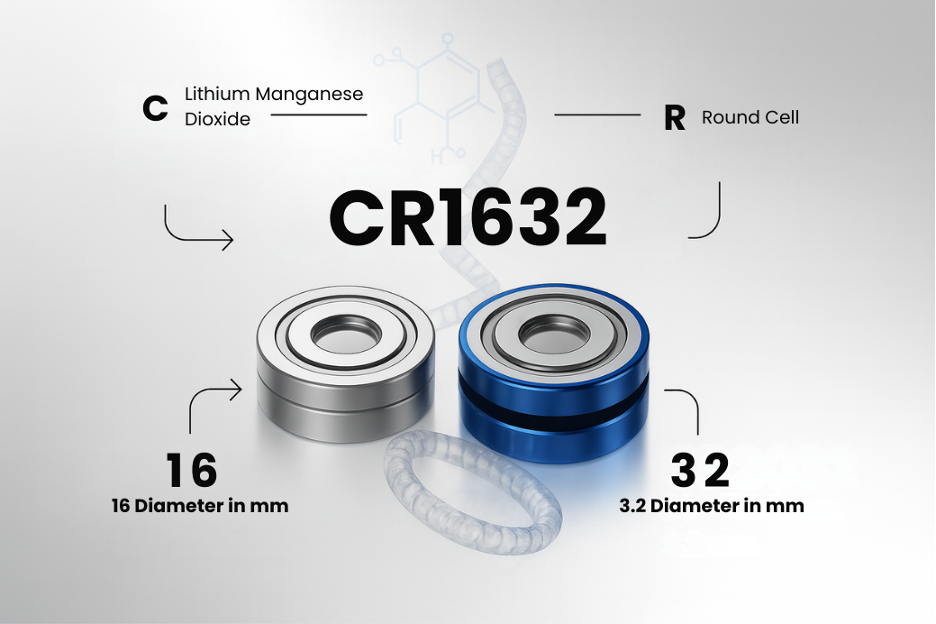
In other words, both cells have the same height, but the CR2032 is noticeably wider. This extra diameter is what gives the CR2032 its much higher energy capacity which is almost double that of the CR1632.
This coding system makes it easy to understand why a CR1632 cannot simply be replaced with a 2032 battery.
Technical Specifications Comparison
Numbers on a datasheet tell only part of the story. The real question is how a CR2032 battery differs from a CR1632 battery in everyday devices.
A car key fob, a fitness tracker, or a motherboard backup circuit doesn’t just care about raw milliamp-hours.
It depends on how the cell handles pulse loads, how stable the voltage remains over time, and how much of the capacity is actually usable before the device cuts off.
In this section, we’ll translate these technical values into practical performance comparisons.
Capacity
Under the same industry test (15 kΩ load at 21 °C to a 2.0 V cutoff), Energizer specifies:
That’s ~80% more capacity for the CR2032 in like-for-like conditions, which is why it lasts far longer in identical low-drain applications.
Weight & Energy Density
The mass difference mirrors the capacity gap: CR1632 ≈ 1.8 g, CR2032 ≈ 3.0 g.
Corresponding energy density figures from Energizer’s datasheets are ~209 mWh/g (CR1632) and ~198 mWh/g (CR2032), with volumetric densities ~754 mWh/cc and ~653 mWh/cc, respectively.
In practice, both are very energy-dense for their size; the CR2032 simply carries more material.
Operating Range & Shelf Characteristics
Energizer lists the same operating envelope for both: –30 °C to +60 °C and self-discharge of ~1%/year under typical storage. This is useful for devices that sit for months between uses (key fobs, backups).
Pulse/Background Drains
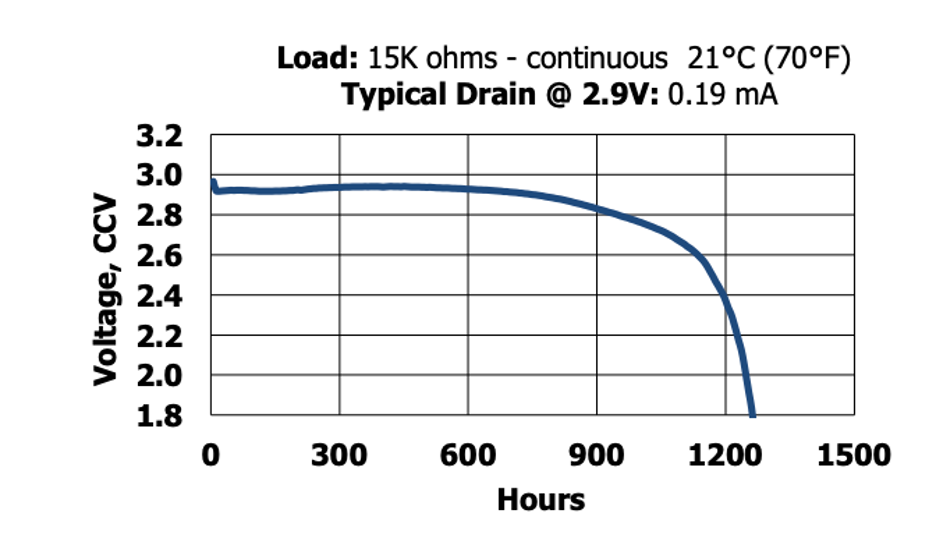
Energizer characterizes both cells with a 15 kΩ continuous background drain (≈ 0.19 mA at 2.9 V) and a 400 Ω pulse (≈ 6.8 mA, 2 s × 12/day).
The larger electrode area of the CR2032 helps sustain those pulses longer before hitting cutoff, which is why “same device, same load” typically favors CR2032 runtime.
Performance in Real Devices
The differences between a CR1632 battery and a CR2032 battery become most obvious once they are placed inside real electronics.
Key Fobs and Car Remotes
Key fobs are among the most common applications for both CR1632 and CR2032 batteries. These devices typically draw a very low background current but also require short, high-current bursts each time a button is pressed.
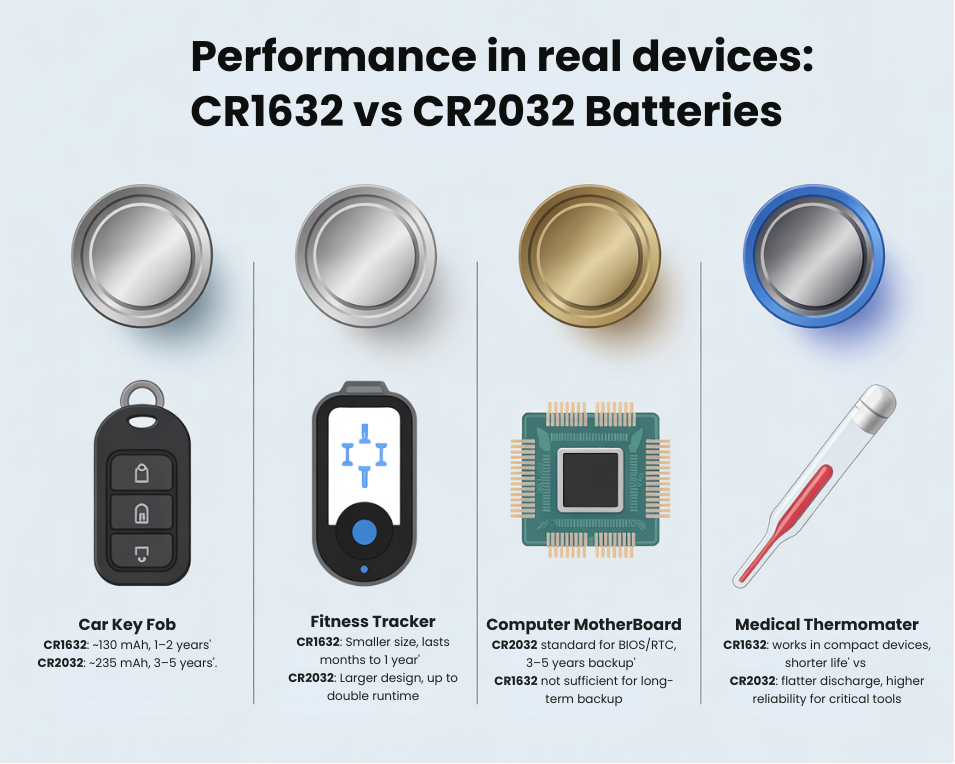
A CR1632 with ~130 mAh will usually last 1–2 years in a standard key fob. A CR2032, with ~235 mAh, extends that runtime to 3–5 years under the same use pattern.
The wider cell simply has more electrode material, meaning it can supply more pulses before hitting the device’s low-voltage cutoff.
Fitness Trackers and Wearables
Slim fitness trackers and compact wearables often specify the CR1632 battery because space is at a premium.
It may be a few months to a year between changes, but the smaller form factor is important for design.
By contrast, larger wearables and medical patches that can accommodate a CR2032 will enjoy runtimes that are nearly double, sometimes lasting a year or more on a single cell.
Motherboards and Backup Circuits
PC motherboards almost universally use CR2032 batteries for their BIOS/RTC (real-time clock) backup.
As a result, they require a reliable, long-term trickle current source that can last for years without replacement.
A CR1632 simply does not have the reserve capacity to provide the same 3–5 year lifespan in this role. Even if it could fit in the holder, its lower capacity would cut backup runtime almost in half.
Medical Devices and Sensors
Devices like digital thermometers, glucose meters, and compact IoT sensors depend on stable voltage throughout discharge.
While both cells use lithium chemistry with low self-discharge (~1% per year), the CR2032 battery’s flatter performance under pulsed loads makes it better suited for instruments that need dependable accuracy.
The CR1632 works well in smaller, short-life medical tools, but manufacturers often design around the CR2032 when reliability is critical.
In everyday terms, the CR1632 battery is chosen when size constraints outweigh runtime needs.
The CR2032 battery, with nearly double the capacity, is the default choice whenever space allows, delivering longer service life and more stable performance in demanding devices.
Both share the same voltage and chemistry, but their applications diverge based on the amount of energy storage the device requires.
Device Compatibility & Applications
Choosing between a CR1632 battery and a CR2032 battery often comes down to the device’s design.
Both supply the same 3-volt chemistry, but their different diameters mean manufacturers select them based on space constraints and expected runtime.
Importantly, they are not always interchangeable—a battery holder designed for a 16 mm cell will not reliably accept a 20 mm cell, and vice versa.
CR1632 Battery Applications
The CR1632 is favored in slim or compact devices where space is tight and a thinner profile is more important than maximum runtime. Common examples include:
- Car remotes and key fobs — especially where a smaller battery compartment is required.
- Fitness trackers and wearables — devices designed to be lightweight and unobtrusive.
- Low-profile gadgets such as compact health monitors or small toys.
These devices trade battery life for compactness, making the battery CR1632 the right fit.
While it won’t last as long as a 2032 battery, it meets the physical requirements and provides sufficient power for low-drain use.
CR2032 Battery Applications
The CR2032 is the workhorse of coin cells and is one of the most widely used worldwide. With nearly double the capacity of a CR1632, it is chosen wherever space allows and longevity is critical. Typical uses include:
- PC motherboards — providing BIOS and real-time clock backup for years at a time.
- Medical devices — digital thermometers, glucometers, and other tools that demand consistent accuracy
- Calculators and IoT sensors — where long life and reliable voltage are essential.
- Automotive electronics — including TPMS (tire pressure monitoring systems) and key fobs.
Because it is so common, the CR2032 is easy to find in retail outlets, supermarkets, and online stores—searches like “CR2032 battery near me” almost always yield results, reflecting its universal adoption.
Although both are lithium coin cells with the same thickness and voltage, the CR1632 battery and the 2032 battery are not direct substitutes.
A CR2032 won’t fit into a 16 mm holder, and a CR1632 will not stay secure in a 20 mm slot. Always check the device manual before buying replacements. The safest choice is to use exactly the code specified, since even small size differences can affect contact reliability and runtime.
Shelf Life, Safety, and Leakage Resistance
When evaluating the reliability of a CR1632 battery versus a CR2032 battery, it’s not enough to consider just runtime inside a device. Longevity in storage, resistance to leakage, and safety during handling are equally critical for ensuring dependable operation over the long term.
Following are the three key aspects that define how these coin cells perform outside of active use: shelf life and storage stability, leakage resistance and chemical stability, and safety considerations.
Shelf Life and Storage Stability
Both the CR1632 battery and the CR2032 battery are primary lithium coin cells using lithium manganese dioxide chemistry. One of the key advantages of this chemistry is its long-term stability.
Manufacturers such as Energizer and Panasonic specify a shelf life of 7–10 years under normal room temperature storage conditions. This means that a new cell stored in its packaging can retain more than 90% of its charge even after several years.
The difference in size does not significantly affect shelf life—both cells share the same chemistry. What matters is storage conditions. Keeping them in a cool, dry environment, away from direct sunlight and high humidity, minimizes self-discharge.
Datasheets typically list a self-discharge rate of around 1% per year, which is why CR2032 batteries are commonly chosen for devices like motherboards or automotive electronics that may sit idle for years but still need reliable backup power.
Leakage Resistance and Chemical Stability
Unlike older alkaline button cells, which can leak potassium hydroxide as they age, lithium manganese dioxide cells are far more resistant to leakage.
The chemistry produces very little internal gas, and modern crimp-sealed stainless steel casings are designed to withstand long-term storage without rupture.
As long as they are not recharged (which they are not designed for), CR1632 and CR2032 cells are highly stable.
That said, any lithium coin cell can fail prematurely if exposed to extreme heat, punctured, or stored beyond its recommended period. While actual leakage incidents are rare, when they occur the electrolyte can corrode contacts in sensitive electronics.
For this reason, manufacturers recommend removing batteries from devices that will remain unused for long periods.
Safety Considerations
Because both the CR1632 and CR2032 are small, flat, and shiny, they pose a serious ingestion hazard to children. If swallowed, the battery can lodge in the esophagus and cause burns from the electrical current reacting with tissue.
The risk is greater with larger cells like the CR2032, as they are more likely to get stuck.
Industry bodies and pediatric health organizations strongly advise:
- Always keep spare coin cells in child-resistant packaging.
- Do not leave loose batteries on tables, in drawers, or near children’s toys.
- Seek immediate medical attention if ingestion is suspected.
This safety note is one reason device manufacturers often label compartments with warnings or design screw-secured battery doors for children’s products.
Both the CR1632 battery and the CR2032 battery offer long shelf lives, stable lithium chemistry, and strong resistance to leakage compared to older alkaline cells. When stored correctly, they can last close to a decade.
The primary risks come not from chemistry but from mishandling—using them in the wrong device, exposing them to heat, or leaving them within reach of children.
Cost and Availability
When comparing the CR1632 battery and the CR2032 battery, cost and ease of purchase often play as big a role as technical performance.
Even if a device specifies the correct size and chemistry, consumers and engineers alike need to know how accessible replacements will be — both today and years into the product’s life cycle.
Market Pricing Trends
Let’s begin with pricing. The cost of a coin cell depends heavily on the brand, packaging, and whether it is purchased individually or in bulk.
Premium manufacturers like Panasonic, Energizer, and Duracell typically charge more, reflecting tighter quality control and longer guaranteed shelf lives.
On the other hand, generic or bulk-sourced cells may come at a fraction of the price but sometimes with trade-offs in reliability.
Following are typical price ranges seen in the market:
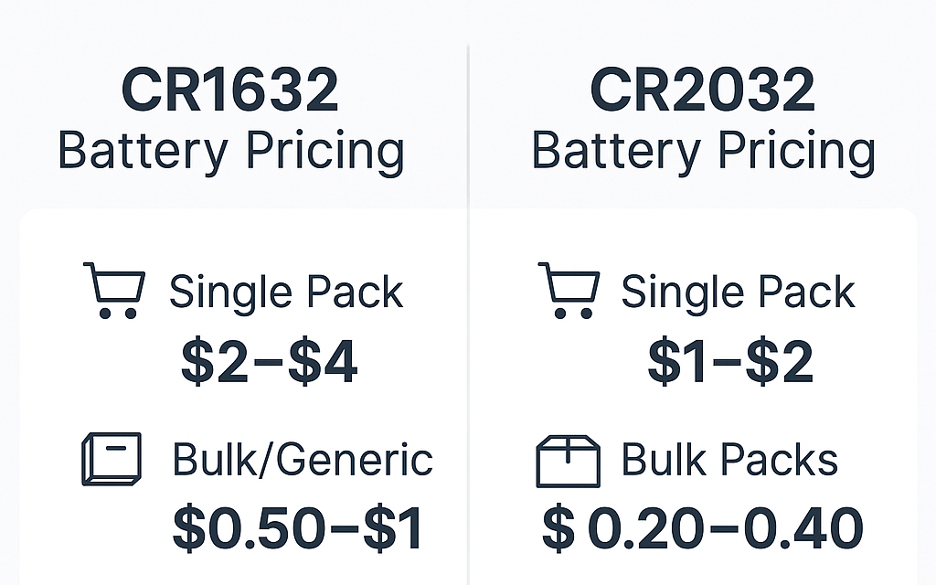
- CR1632 battery: In single packs, these usually cost $2–$4 per cell for major brands. In bulk packs or generic versions, the price can drop to $0.50–$1 per cell. Because the CR1632 is less commonly stocked in retail outlets, it often feels more expensive compared to CR2032, especially in brick-and-mortar shops.
- CR2032 battery: As one of the most widely produced coin cells in the world, CR2032 enjoys aggressive pricing. A single branded CR2032 typically sells for $1–$2, and in bulk packs the per-cell cost can fall to $0.20–$0.40. The volume of production for motherboards, calculators, and automotive devices keeps prices low.
For professionals seeking dependable cells for design or repair, Flywing Tech offers high-quality options like the Jauch Quartz CR1632 and FDK America CR2032.
These branded cells strike a balance between longevity and availability, ensuring reliable performance in critical applications.
Availability in Retail and Online
The CR2032 battery is one of the easiest to find globally. Searching for phrases like “CR2032 battery near me” almost always brings up results from supermarkets, electronics retailers, automotive supply shops, or online marketplaces. T
his ubiquity makes CR2032 the practical choice for manufacturers targeting mass adoption.
The CR1632 battery, in contrast, is less common. It is not rare, but consumers often need to look beyond general retail outlets.
These cells are more likely to be stocked in specialty electronics stores, watch repair shops, or ordered online.
As a result, many users perceive the CR1632 as less convenient to replace — another reason why large-scale consumer electronics tend to standardize around the 2032 footprint.
Case Study: CR1632 vs CR2032
We compared the attached Energizer datasheets for CR1632 and CR2032.
Both use the same Li/MnO₂ chemistry and are characterized under identical test conditions (15 kΩ continuous load at 21 °C to a 2.0 V cutoff, plus a pulse test of 400 Ω for 2 s × 12/day).
This lets us make an apples-to-apples comparison of capacity, service hours, and pulse behavior.
| Spec | CR1632 | CR2032 |
| Chemistry | Li/MnO₂ | Li/MnO₂ |
| Nominal Voltage | 3.0 V | 3.0 V |
| Typical Capacity (to 2.0 V, 15 kΩ @ 21 °C) | 130 mAh | 235 mAh |
| Service Hours (15 kΩ to 2.0 V @ 21 °C) | ~684 h | ~1245 h |
| Typical Weight | ~1.8 g | ~3.0 g |
| Operating Temp | –30 °C to +60 °C | –30 °C to +60 °C |
| Self-Discharge (typ.) | ~1%/year | ~1%/year |
| Energy Density (gravimetric / volumetric) | ~209 mWh/g; ~754 mWh/cc | ~198 mWh/g; ~653 mWh/cc |
| Pulse Test Used | 400 Ω, 2 s × 12/day | 400 Ω, 2 s × 12/day |
Discharge Profiles: Low Drain vs Pulse Load
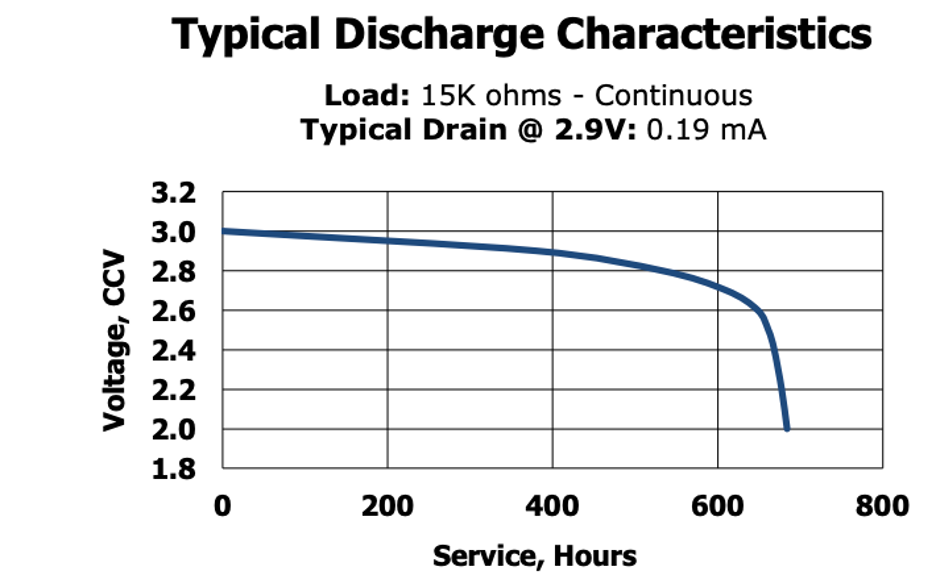
Low-drain (15 kΩ) behaviour
Both cells exhibit the classic Li/MnO₂ profile: near-flat voltage for most of life with a steeper decline as they approach the 2.0 V cutoff used in the test.
The CR2032’s larger electrode area simply sustains that profile much longer—roughly 1245 h at 15 kΩ vs ~684 h for CR1632—matching the 235 mAh vs 130 mAh nominals.
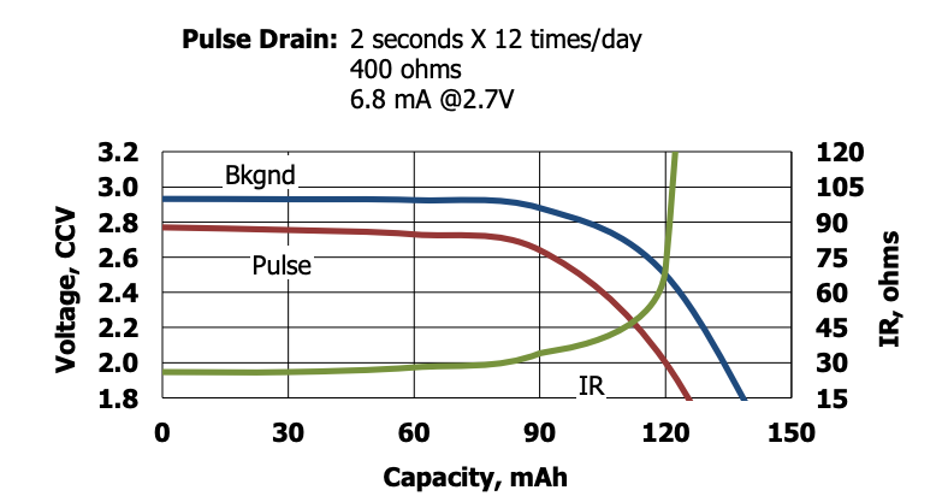
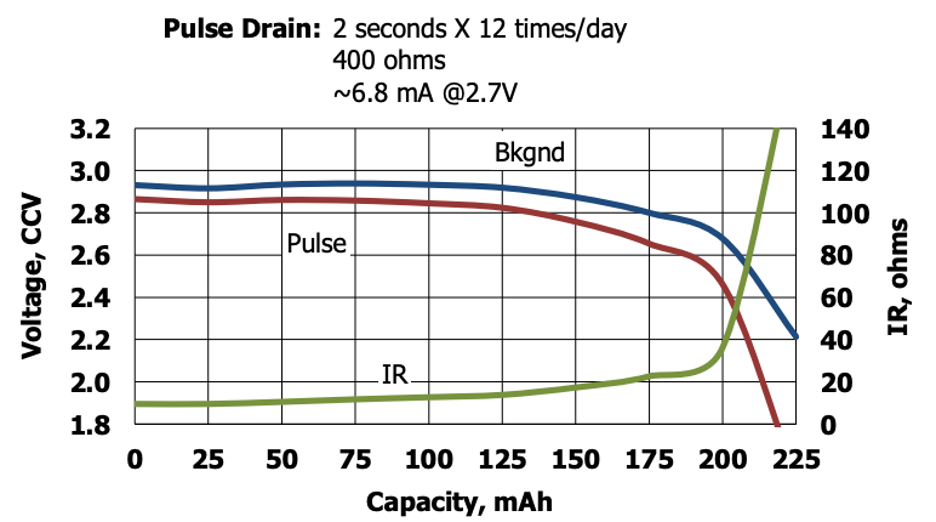
Pulse performance (400 Ω)
Both datasheets specify the same pulse regimen (2 s × 12/day). With ~6.8 mA pulse magnitude, the CR2032’s extra area reduces voltage depression during pulses and maintains “flat” behaviour later into life than CR1632.
Practically, identical devices will see longer “full-brightness/full-range” operation on CR2032 under pulsed loads.
What the datasheets imply for design and maintenance
- If your device can physically accept a CR2032, it will typically deliver ~80% more capacity and better pulse resilience under the same load model—meaning fewer changes and longer stable operation.
- Where industrial design forces a CR1632, expect shorter service intervals but similar shelf stability, temperature range, and lithium safety characteristics (both are specified –30 °C to +60 °C; ~1%/year self-discharge).
Environmental & Disposal Considerations
Both the CR1632 battery and the CR2032 battery are primary lithium coin cells, designed for single use and not rechargeable.
Because they contain lithium, manganese dioxide, and organic electrolyte, they must not be thrown into household trash. Improper disposal creates environmental hazards and can even present fire risks if cells short-circuit in waste streams.
Recycling Requirements
In the European Union, Directive 2006/66/EC on batteries and accumulators mandates separate collection and recycling of button cells, prohibiting their disposal with municipal waste.
In the United States, most states encourage or require lithium coin cell recycling through programs like Call2Recycle, and many electronics retailers provide free collection points. Similar frameworks exist in Asia-Pacific markets where coin cell use is widespread.
Environmental and Safety Concerns
Although each individual cell contains only a fraction of a gram of lithium (about 0.036 g for a CR1632 and 0.109 g for a CR2032), millions are consumed annually worldwide.
Recycling allows recovery of lithium and stainless steel casings while reducing the risk of chemical leakage into landfills.
Safety is another critical aspect. Coin cells are a well-documented child ingestion hazard, capable of causing severe internal burns within hours if swallowed.
Secure packaging, recycling, and safe storage help mitigate this risk. Device designers increasingly address this with child-resistant battery compartments.
Design plays an important role in environmental safety. Flywing Tech’s precision battery holders and protective enclosures help ensure that coin cells are securely mounted, minimizing risks of leakage or accidental dislodging.
By integrating these accessories, engineers and product developers not only protect their devices but also extend component lifespan, reducing premature waste.
Final Thoughts: Choosing Between CR1632 and CR2032
When comparing the CR1632 battery with the CR2032 battery, the distinction comes down to size versus capacity.
Both share the same lithium chemistry and a 3.0 V nominal voltage, but their diameters differ: 16 mm for the CR1632 and 20 mm for the CR2032. This extra space gives the CR2032 almost double the capacity, making it the default choice wherever device size permits.
If your device specifies a CR1632 battery, it’s because compact design matters more than runtime. Slim devices, such as fitness trackers, car remotes, and wearables, are engineered around a smaller cell footprint.
If your device specifies CR2032 batteries, it’s because capacity and longevity are critical as seen in motherboards, medical instruments, and automotive sensors.
The two are not directly interchangeable. A CR2032 will not fit in a CR1632 slot, and a CR1632 cannot power devices intended for a CR2032’s larger capacity. Always follow the code printed in the device manual or on the original battery itself.
For engineers and hobbyists, the choice is strategic. Use CR1632 where slim form factor is essential, and CR2032 where energy reserves and long-term reliability are priorities.
Pairing the right coin cell with high-quality connectors and enclosures ensures optimal performance, safety, and ease of maintenance.


Frequently Asked Questions (FAQ)
Q1. What is the difference between a CR1632 battery and a CR2032 battery?
The main difference is size and capacity. A CR1632 battery is 16 mm in diameter and 3.2 mm thick with about 130 mAh capacity, while a CR2032 battery is 20 mm in diameter and 3.2 mm thick with around 235 mAh capacity. Both provide 3.0 V nominal voltage but are not interchangeable due to size.
Q2. Can I use a CR1632 instead of a CR2032?
No. The CR1632 is smaller in diameter and will not make secure contact in a CR2032 holder. It also has lower capacity, meaning it cannot power devices designed for a 2032 battery for long. Always match the code specified by your device manufacturer.
Q3. Can I use a CR2032 instead of a CR1632?
No. A CR2032 battery is larger and will not physically fit into a slot designed for a CR1632. Even though the chemistry and voltage are the same, the cells are not cross-compatible.
Q4. What devices use a CR1632 battery?
CR1632 batteries are commonly found in car remotes, fitness trackers, slim wearables, and compact health monitors. These devices prioritize a thinner profile over maximum runtime.
Q5. What devices use CR2032 batteries?
CR2032 batteries are used in PC motherboards (BIOS/RTC backup), medical devices, calculators, IoT sensors, and automotive electronics like TPMS and key fobs. They are one of the most common coin cells worldwide.
Q6. How long do CR1632 and CR2032 batteries last?
Shelf life for both is about 7–10 years if stored correctly. In devices, runtime depends on load: a CR1632 might last 1–2 years in a car remote, while a CR2032 can power a motherboard backup or medical sensor for 3–5 years.
Q7. Are CR1632 and CR2032 batteries rechargeable?
No. Both are primary lithium coin cells and are not rechargeable. Attempting to recharge them can cause leakage or rupture.
Q8. Where can I buy CR2032 batteries near me?
Because the CR2032 is so widely used, it is available in most supermarkets, electronics shops, automotive stores, and online retailers. Searches like “CR2032 battery near me” will typically show multiple local options.
Q9. Are CR1632 and CR2032 batteries safe?
Yes, when used correctly. However, both present a child ingestion hazard. They should always be stored in child-resistant packaging and recycled properly after use.
Q10. How should I dispose of CR1632 and CR2032 batteries?
Do not throw them in household trash. Both must be recycled through proper collection programs. In the EU and US, regulations require safe disposal, and many retailers accept coin cells for recycling.
