
Are these two battery codes referring to the same thing, or is there a real difference?
In this article, we’ll compare CR123 vs CR123A batteries to explain whether they are the same, interchangeable, or different.
We’ll dive into detailed technical specs, the origin of the naming convention, common applications (from flashlights to security systems and cameras), a case study, and when precise labeling matters.
What Are CR123 vs CR123A Batteries?
CR123 and CR123A batteries are compact, high-voltage lithium primary cells (non-rechargeable) that deliver a nominal 3 volts using Lithium Manganese Dioxide (LiMnO₂) chemistry.
This chemistry is valued for its long shelf life, stable voltage, and ability to deliver high current bursts.
In terms of size, these batteries are about 34 mm long and 17 mm in diameter which is roughly half the length of a standard AA battery.

Despite their small form factor, they typically hold a capacity of 1400–1700 mAh, depending on the brand.
This makes them powerful enough to run energy-hungry devices like cameras, tactical flashlights, and security sensors.
A major benefit of both CR123 and CR123A is their low self-discharge rate. As a result, they are commonly used for backup power applications, and became known early on as “Photo Lithium” batteries for their long shelf life.
So, what’s the difference between CR123 and CR123A? In practice, there isn’t one. The two names refer to the same battery size, voltage, and chemistry.
Manufacturers and retailers use the terms interchangeably, and you can safely substitute one for the other in any device.
Only naming conventions differ. Lets talk about details in the origin of its naming convention.
Origin of the “CR123A” Naming Convention
Battery names give clues to its chemistry and size. “CR123A” is an industry designation based on standards set by the International Electrotechnical Commission (IEC).
Here’s the breakdown:
| Label / Code | Meaning | Explanation |
| “CR” Prefix | Lithium chemistry & shape | C = lithium manganese dioxide chemistry, R = round (cylindrical) form. Same reason coin cells like CR2032 also use the “CR” prefix. |
| “123A” Number | Size designation | Indicates a cell that is ~2/3 the length of an old “A” size battery. The CR123A is ~34 mm tall, matching “one battery, 2/3 A size.” |
| “CR123” (without A) | Shorthand / packaging variation | Some manufacturers drop the “A” for brevity. CR123 and CR123A are interchangeable terms referring to the same battery size. |
In summary, CR123 vs CR123A is a nomenclature difference rooted in standards and branding, rather than a performance difference.
CR123 vs CR123A: Similarities and Differences
The designations “CR123” and “CR123A” often confuse buyers, but in reality, they refer to the same battery format.
To understand why, it helps to look at both their similarities and the very few differences that matter.
Chemistry and Voltage
Both CR123 and CR123A are primary (non-rechargeable) lithium manganese dioxide (LiMnO₂) batteries. They operate at a nominal voltage of 3.0 V (around 3.2 V when fresh, discharging down to about 2.0 V).
This stable output makes them reliable for devices that require consistent power, such as cameras, tactical flashlights, and sensors.
Dimensions and Size Standard
They share the same compact size:
- Length: ~34 mm
- Diameter: ~17 mm
- Weight: ~16–17 g
This standard format ensures that whether labeled CR123 or CR123A, the battery will fit into the same compartment.
Capacity and Shelf Life
Both types typically provide 1,400–1,700 mAh depending on the manufacturer.
As lithium batteries have a low self-discharge, they can remain in storage for up to 10 years without significant capacity loss, making them excellent for backup power in idle devices.
Device Compatibility
CR123 and CR123A are fully interchangeable. A flashlight labeled for “CR123” will accept CR123A, and vice versa.
Any slight variations you may notice in runtime usually stem from brand differences rather than the presence or absence of the “A.”
Branding and Industry Preferences
CR123A is common in packaging for photography and security devices, used by brands like Panasonic, Duracell, and Energizer.
CR123 is popular in tactical gear and flashlight industries, often seen with SureFire and Streamlight.
However, the underlying battery is the same.
Rechargeable Variants and Potential Confusion
The main area where confusion arises is with rechargeable alternatives:
RCR123A or 16340 batteries are lithium-ion rechargeables that share the same dimensions but run at a higher voltage of 3.6–3.7 V.
Some devices tolerate the extra voltage, while others may be damaged.
This is often mistaken as a CR123 vs CR123A issue, but in reality, it’s the difference between primary lithium and rechargeable lithium-ion cells.
Case Study: CR123 vs CR123A in Real-World Datasheets
When comparing CR123 vs CR123A, the naming difference often creates confusion.
To clear this up, we examined two real datasheets: one from a manufacturer labeling the cell as CR123A, and another from Energizer, which simply calls it CR123.
Let’s dive into key specifications:
| Attribute | CR123A (BAT Datasheet) | CR123 (Energizer Datasheet) | Observation |
| Chemistry | Lithium / Manganese Dioxide (LiMnO₂) | Lithium / Manganese Dioxide (LiMnO₂) | Identical chemistry |
| Nominal Voltage | 3.0 V | 3.0 V | No difference |
| Capacity (typical) | ~1500 mAh | ~1500 mAh (to 2.0 V cutoff) | Same usable capacity |
| Operating Temp. | –40°C to +60°C | –40°C to +60°C | Fully aligned |
| Shelf Life | Up to 10 years | Up to 10 years | Both support long-term storage |
| Max Continuous Discharge | ~1500 mA | 1500 mA | Practically the same |
| Pulse Capability | Up to ~3500 mA | 3500 mA (photoflash rated) | Both deliver high-current bursts |
| Weight | ~16–17 g | 16.5 g | Within normal tolerance |
| Dimensions | Ø 17 mm × 34.5 mm | Ø 17 mm × 34.5 mm | Exact match |
| Certifications | Standardized CR123A designation | UL Listed, PTC safety device | Slight variation in listed safety features |
From a spec sheet perspective, there’s no technical difference. CR123 and CR123A cells are interchangeable in every respect.
Analysis
Although the core specs are similar, discharge graphs reveal subtle differences between brands.
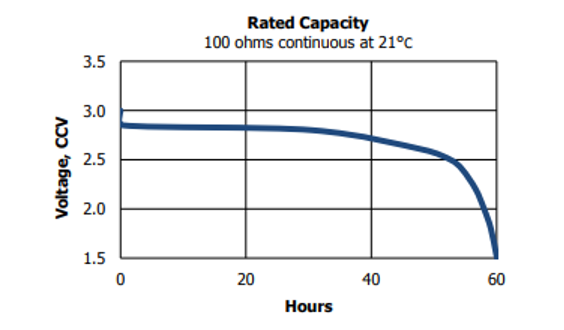
Energizer CR123
- Continuous Discharge (100 Ω load / ~30 mA): Holds ~3.0 V for ~40 hours, dropping to 1.5 V around the 60-hour mark.
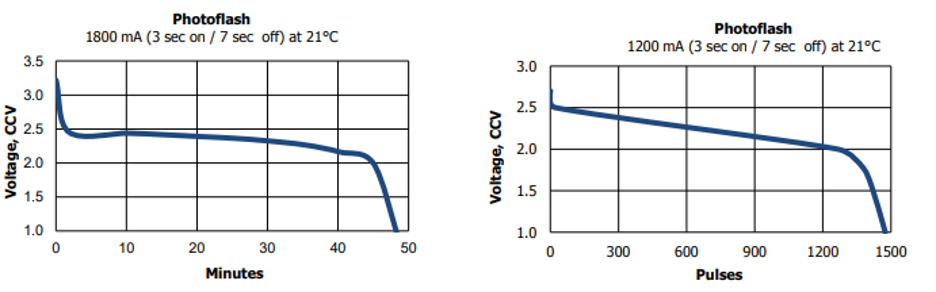
- High-Drain Pulses (1200 mA & 1800 mA): Maintains stable voltage over ~1200 pulses at 1200 mA and ~40–50 minutes at 1800 mA. This makes it excellent for flash units and tactical lights where bursts of power are required.
GP CR123A
- Continuous Discharge (30 mA): Runs ~55 hours before hitting 2.0 V, similar to Energizer. At 55 mA, runtime drops to ~28 hours.
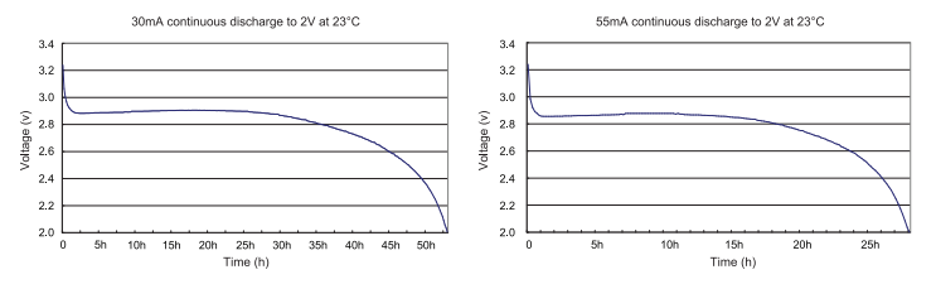
- Pulse Discharge (1200 mA vs 1800 mA): Handles both loads well at room temperature, but at –20°C, pulse count drops nearly 50%. This shows a sharper decline in cold-weather performance compared to Energizer.
Final Analysis
Both GP CR123A and Energizer CR123 are technically interchangeable and deliver strong performance. However, their discharge graphs highlight subtle distinctions:
- Energizer CR123 → excels in pulse-heavy, high-drain, and possibly colder environments, making it a better choice for tactical flashlights, professional cameras, and outdoor gear.
- GP CR123A → offers solid everyday performance in moderate temperatures, making it a cost-effective option for security systems, IoT sensors, and general electronics.itical or outdoor use, opting for a premium brand like Energizer ensures maximum reliability.
Common Applications for CR123A Batteries
One reason this battery goes by multiple names is its widespread use in many devices. Several industries have coined their own terms for it.
CR123A cells are found in a variety of electronics that require a compact, high-power source. Here are some of the most common applications:
Flashlights and Tactical Lights
Many high-performance LED flashlights, including tactical and weapon-mounted lights, use CR123A batteries. The batteries’ small size and high current output allow flashlights to be bright and portable.
Users like law enforcement and outdoor enthusiasts favor CR123A-powered lights for their reliability and intense brightness in critical situations.
Cameras and Photography Gear
CR123A batteries gained fame as “camera batteries.” They are used in film cameras, digital cameras (especially older DSLRs or SLRs), and camera flash units.
They can provide a high level of power for flashes and advanced camera functions.
In fact, many 35mm film cameras and high-end flashes were designed around the CR123A because of its high energy density and stable 3V output.
Security Systems and Sensors
Home security devices like wireless motion detectors, alarm system sensors, and glass-break sensors often use CR123A cells.
The long shelf life (up to 10 years) means a sensor can sit ready for years and still have power when needed.
These batteries provide reliable, long-term power for safety devices that must work when called upon.
Smart Home and IoT Gadgets
Related to security, many smart home gadgets (like certain smart door locks, doorbell cameras, and environmental sensors) run on CR123A batteries.
Again, the appeal is a combination of compact size, good lifespan, and the ability to handle bursts of activity (e.g., a siren or radio transmission from a sensor).
Medical and Specialty Devices
Some medical devices and specialty electronics also use CR123A cells. For example, you might find them in things like glucose meters, certain blood pressure monitors, laser rangefinders, or high-end instrumentation.
These are typically portable devices where having a dependable, long-lasting battery is crucial.
This is by no means an exhaustive list, but it covers the primary categories. In general, any gadget that advertises using a “123” or “CR123A” battery is talking about this same battery format.
Compatibility and Safety Considerations
A device that specifies “CR123A” batteries will work fine with any quality CR123/123A cell. The labeling difference is not tied to any special compatibility issues.
However, there are a few critical safety and compatibility tips to keep in mind with these batteries in general:
Do Not Recharge Primary CR123A Cells
Standard CR123A batteries are primary (single-use) lithium cells. They are not rechargeable. Attempting to recharge a CR123/CR123A is extremely dangerous, and it can overheat or even explode.
Always confirm that a battery is a rechargeable RCR123A (sometimes labeled 16340 if Li-ion) before using a charger, and only charge it in an appropriate charger.
If it just says CR123A and doesn’t explicitly mention being rechargeable, assume it’s not.
RCR123A / 16340 Rechargeable Versions
There are lithium-ion cells of similar size (often labeled RCR123A or 16340) that are rechargeable.
These have a nominal voltage of 3.6–3.7 V (higher than 3.0 V) because of the different chemistry (Li-ion).
While RCR123A rechargeables are the same physical size and will fit in place of a CR123A, they deliver higher voltage and have different discharge characteristics.
Some devices can handle either 3V primaries or 3.7V rechargeables, but many cannot – using a 16340 cell in a device not designed for it could damage the device or the battery.
Always check the device specifications before swapping a primary lithium with a rechargeable. If a device says explicitly “use only 3V CR123A batteries,” do not substitute a 3.7V cell.
Minor Size Variations
As noted, different brands might have tiny differences in length or diameter (on the order of tenths of a millimeter).
In almost all cases, these cells will fit just fine in standard battery compartments. The difference is so small it won’t affect compatibility.
Only in extremely tight-tolerance equipment would this ever matter, and such devices typically specify the exact battery brand if that were the case.
For general purposes, any CR123A from a reputable brand will physically fit any CR123A-compatible device.
Use Quality Batteries
Because these batteries are often used in critical devices (security systems, defense flashlights, etc.), it’s wise to choose reputable brands.
Well-known manufacturers like Panasonic, Duracell, Energizer, etc., adhere to the standard specs and include protection features.
Off-brand or cheap imports might deviate in capacity or quality. All CR123As have the same basic capabilities by specification, but build quality can differ.
Using quality batteries also reduces the risks of leaks or malfunctions. You can also check the battery at flywing tech website.
Safe Handling and Storage
Lithium batteries should be stored in a cool, dry place.
Although CR123As are generally safe, you should avoid short-circuiting them and avoid exposing them to extreme heat.
Dispose of used batteries properly; many communities have recycling programs for lithium cells.
In summary, when it comes to CR123 vs CR123A compatibility, you can treat them as the same thing.
Just pay attention to the broader context – primary vs rechargeable, and choose the right battery type for your device’s needs.
If your device manual uses the term “CR123A,” it’s not indicating a different battery than “CR123”; it’s simply using the full designation.
Final Thoughts
When it comes down to CR123 vs CR123A, the real difference is in name only. These batteries are identical in size, voltage, and chemistry, and you can use them interchangeably in any device that specifies one or the other.
The “A” in CR123A is part of the standard naming convention (denoting a 2/3 A-size lithium cell), and some manufacturers include it while others don’t – but it doesn’t signify a newer or different battery.
Both labels point to the same reliable 3V lithium power source beloved in cameras, flashlights, security systems, and more.
The next time you’re looking for a replacement battery, remember CR123 and CR123A are the same kind of battery, and focus on getting a quality brand and the right type.
If you’re looking for reliable CR123A batteries for your devices, Flywing Tech makes it easy to find the right options.
We stock a wide range of high-quality CR123A cells and compatible accessories to keep your flashlights, cameras, and security systems running at peak performance. You can explore our latest selection of CR123A here.

Frequently Asked Questions (FAQ)
Are CR123 and CR123A batteries the same?
Yes. CR123 and CR123A refer to the same type of battery. The “A” is part of the formal IEC naming convention, but in practice, both designations mean the same 3V lithium manganese dioxide cell. You can use them interchangeably in any device.
Why do some brands use CR123 while others use CR123A?
It comes down to naming preferences. Some manufacturers (like Panasonic or Duracell) use the full CR123A designation, while others shorten it to CR123. Functionally, there is no difference between the two.
What are the typical specifications of a CR123/CR123A battery?
These batteries are about 34 mm long, 17 mm in diameter, and weigh around 16–17 g. They deliver a nominal 3.0 V, with a capacity of roughly 1400–1700 mAh, depending on the brand. Shelf life can be up to 10 years thanks to very low self-discharge.
Can I use CR123A in place of CR123 in my device?
Absolutely. Any device labeled for CR123 will work with CR123A, and vice versa. There’s no compatibility risk as long as you’re using quality primary lithium cells from reputable brands.
What about rechargeable CR123A batteries? Are they the same?
Rechargeable versions are usually labeled RCR123A or 16340. They look the same and fit in the same compartments, but they use lithium-ion chemistry and run at a higher voltage (3.6–3.7 V instead of 3.0 V). Some devices can handle this, but others cannot. Always check your device manual before swapping.
Where are CR123/CR123A batteries commonly used?
They’re widely used in tactical flashlights, cameras, security sensors, smart home devices, and some medical electronics. Their compact size and ability to deliver bursts of power make them popular across industries.
How should I store CR123/CR123A batteries?
Keep them in a cool, dry place, away from heat sources. Don’t short-circuit or recharge disposable versions. When they’re spent, recycle them through appropriate lithium battery disposal programs.
Is there any risk in buying cheaper CR123A batteries?
Yes. Off-brand versions may have lower capacity, shorter shelf life, or inconsistent quality. For devices where reliability is critical (like alarms, tactical gear, or medical devices), you can explore our latest selection of CR123A here.

