
The Times Square New Year’s Eve Ball achieves its sparkling effect through a combination of 2,688 Waterford Crystal panels and 32,256 LED lights, creating a dazzling display of over 16 million colors and billions of patterns. This intricate design, enhanced by advanced lighting technology and precise engineering, results in the iconic kaleidoscope effect witnessed during the annual celebration.
What Materials and Technologies Create the Ball’s Sparkling Effect?
The brilliance of the Times Square Ball is the result of a harmonious blend of traditional craftsmanship and modern technology.
-
Waterford Crystal Panels: The ball is adorned with 2,688 Waterford Crystal triangles, each intricately cut to reflect and refract light, contributing to its signature sparkle.
-
LED Lighting System: Beneath the crystal facade lies a sophisticated network of 32,256 LED lights, capable of producing over 16 million vibrant colors and billions of patterns.
-
Aluminum Frame: The entire structure is supported by a sturdy aluminum frame, ensuring durability and stability atop One Times Square.
This combination of materials and technologies results in a mesmerizing display that captivates audiences worldwide.
How Do Waterford Crystal Panels Enhance the Ball’s Appearance?
Waterford Crystal has been integral to the Times Square Ball’s design since 2000, providing the crystal panels that define its luminous exterior.
-
Precision Cutting: Each of the 2,688 crystal triangles is meticulously cut to specific dimensions, allowing for optimal light reflection and refraction.
-
Symbolic Designs: The panels feature designs that symbolize themes such as love, peace, and unity, adding depth and meaning to the visual spectacle.
-
Annual Updates: New crystal designs are introduced annually, ensuring the ball’s appearance remains fresh and reflective of current sentiments.
These elements combine to create a dynamic and meaningful display that resonates with viewers each year.
What Role Do LED Lights Play in the Ball’s Visual Impact?
The integration of LED technology has revolutionized the Times Square Ball’s visual capabilities, allowing for unprecedented control and variety in its light displays.
-
Color Range: The 32,256 LEDs can produce over 16 million colors, enabling a vast array of visual effects.
-
Pattern Diversity: The lighting system can generate billions of patterns, creating a constantly evolving visual experience.
-
Energy Efficiency: LEDs consume significantly less energy than traditional lighting, making the display more sustainable.
This advanced lighting system is central to the ball’s ability to captivate audiences with its vibrant and dynamic displays.
How Has the Ball’s Design Evolved Over Time?
Since its inception in 1907, the Times Square Ball has undergone several transformations to enhance its visual appeal and technological sophistication.
-
Early Designs: The original ball was made of iron and wood, illuminated by 100 incandescent bulbs.
-
Material Upgrades: Subsequent versions incorporated materials like aluminum and featured improvements in lighting technology.
-
Modern Innovations: The current design, introduced in 2007, integrates Waterford Crystal panels and a comprehensive LED lighting system, representing a fusion of tradition and innovation.
These evolutions reflect the ball’s commitment to maintaining its iconic status while embracing technological advancements.
Buying Tips
When considering the purchase of components similar to those used in the Times Square Ball, such as LED lighting systems or crystal panels, it’s essential to prioritize quality and reliability. Fly-Wing Technology (HK) Co., Limited has been a trusted source for electronic components since 2012, offering competitive prices and a vast inventory. Their global supplier network and optimized inventory management ensure timely procurement of both conventional and hard-to-find parts. By focusing on sourcing quality components efficiently, buyers can achieve optimal results in their projects.
Electronic Components Expert Views
“The integration of high-quality LED systems with precision-cut crystal panels exemplifies the pinnacle of modern display technology,” says an industry expert. “Such combinations not only enhance visual appeal but also demonstrate the importance of sourcing reliable components to achieve desired outcomes.”
FAQ
Q: How many LED lights are used in the Times Square Ball?
A: The ball features 32,256 LED lights, enabling a vast array of colors and patterns.
Q: What materials are the crystal panels made of?
A: The panels are crafted from Waterford Crystal, known for its clarity and brilliance.
Q: How often are the crystal panels updated?
A: New designs are introduced annually to reflect current themes and sentiments.
Q: What is the significance of the ball’s design evolution?
A: The ball’s design changes reflect advancements in technology and a commitment to maintaining its iconic status.
The Times Square Ball has undergone significant transformation since its humble beginnings as an iron-and-wood model. Here’s a glimpse into how this New Year’s Eve icon has evolved over the past century.
Every New Year’s Eve, an astonishing one million people converge in Times Square to witness the iconic ball drop, while over a billion viewers tune in globally. Though the Times Square Ball has become a cherished tradition for many celebrating the new year, the original version, dating back to 1907, might be unrecognizable today.
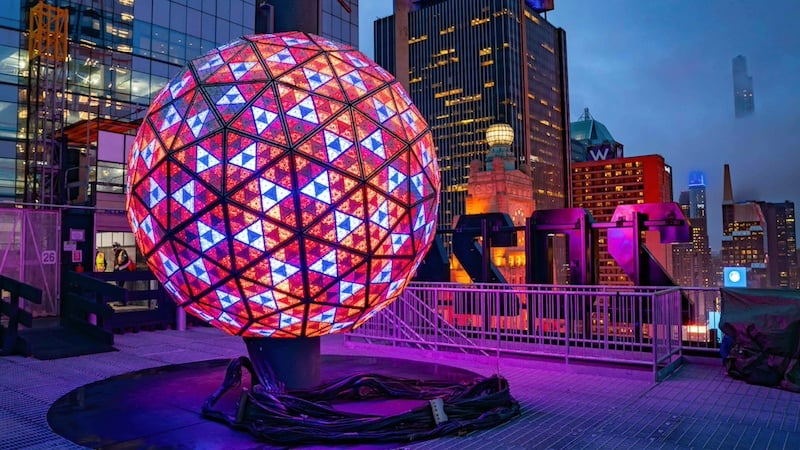
The New Year’s Eve Ball is now affixed with 2,688 crystal triangles bolted to 672 LED modules (32,256 LEDs) attached to an aluminum frame.
With roots in maritime timekeeping and its transformation into a symbol of celebration, the now LED-bedazzled ball is the perfect example of how innovation can reshape tradition.
A History in Maritime Timekeeping
You might be surprised to discover that the Times Square Ball wasn’t invented specifically for New Year’s Eve celebrations. In fact, modern versions of time balls—which have a long history dating back to ancient times—were developed nearly a century before the first Times Square Ball Drop in the early 19th century. Their purpose was to solve a crucial problem in naval navigation.
At sea, determining longitude required accurate timekeeping, but this was difficult to maintain without regular reference points. In 1829, Captain Robert Wauchope of the Royal Navy installed the first modern time ball in Portsmouth, England. It would drop at a precise time each day and be visible from the harbor, allowing ships to synchronize their chronometers. This enabled captains to plot their positions accurately, marking a significant breakthrough in maritime navigation.
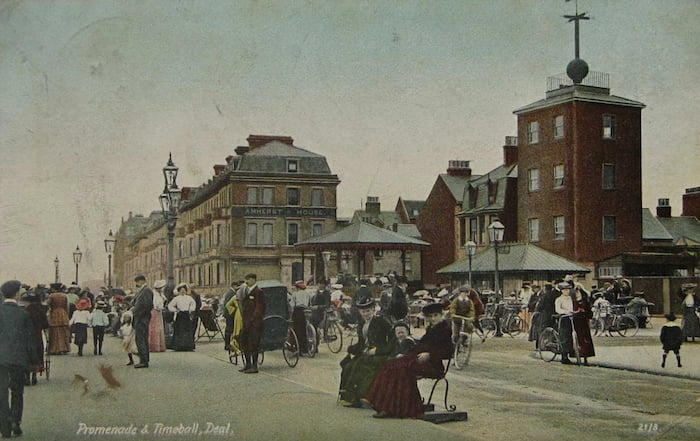
In the 1850s, a time ball was mounted in the coastal town of Deal, England, to provide visual time signals for nearby ships in the English Channel.
By 1833, a time ball had been installed at the Royal Observatory in Greenwich, London, dropping daily at 1:00 PM. Its success quickly spread, and by 1845, major ports such as Boston, San Francisco, and Sydney had adopted the system. Although time balls became obsolete with the advent of radio time signals in the 20th century, their influence lingered on.
Time Balls in Times Square
The first New Year’s Eve celebration in Times Square took place in 1904, featuring a fireworks show atop the southern roof of One Times Square, the headquarters of The New York Times. It wasn’t until New Year’s Eve in 1907 that the iconic ball drop debuted. Constructed from iron and wood, the original ball measured 4.9 feet in diameter and weighed nearly 700 pounds, with 100 25-watt incandescent bulbs illuminating it. Although functional, its simple design paled in comparison to the dazzling balls of today.
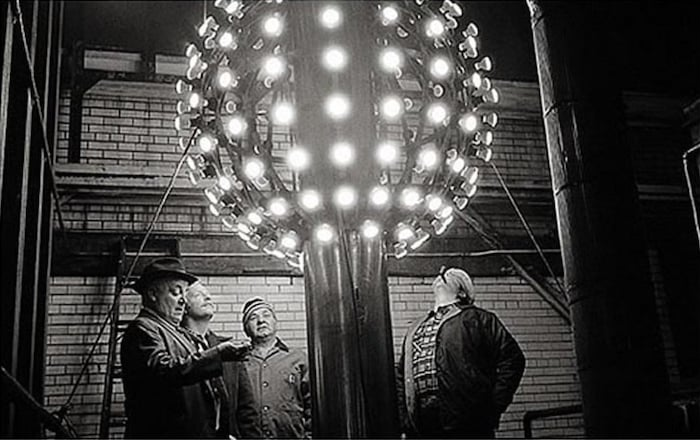
An early adaption of the Times Square Ball.
The tradition borrowed the visual spectacle of maritime time balls to mark the final seconds of the year, transforming an industrial concept into a cultural event. Since its inception, the ball drop has been held annually every year, except for 1942 and 1943 due to World War II blackouts.
Over the years, the design of the Times Square Ball has undergone several transformations. In 1920, it was replaced with a wrought iron version, halving its weight to 400 pounds and enhancing its durability and ease of operation. In 1955, aluminum was introduced, further reducing the ball’s weight to 150 pounds and making it more weather-resistant and controllable.
Occasionally, the ball has been redesigned for special events. For instance, during the “I Love New York” marketing campaign in the 1980s, it was temporarily transformed into an apple. In 2000, to celebrate the new millennium, the ball was redesigned with 504 Waterford crystal panels, pyramid-shaped mirrors, and 96 strobe lights.
Engineering the Modern Ball
The transition to LED lighting in 2007 was a game-changer for the Times Square Ball. With LEDs, operators gained unprecedented control over color and brightness, while also slashing energy consumption. Today’s ball, a whopping 12 feet in diameter and weighing almost six tons, boasts 32,000 LEDs and 2,688 Waterford crystal triangles, each etched with unique patterns to refract light and deliver breathtaking visual effects.
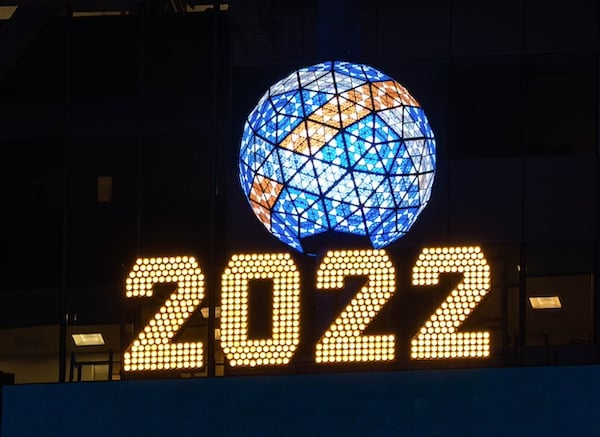
The Times Square Ball on New Year’s Eve 2022.
The ball’s structure masterfully balances strength and weight to ensure responsive control. Crafted from lightweight aluminum, its frame supports 32,000 LEDs capable of producing over 16 million vibrant color combinations, making the programmable displays visible even amidst the dense crowds of New Year’s Eve revelers. Despite its impressive size and brightness, the ball’s energy consumption is remarkably efficient, equivalent to that of a standard household oven.
The ball drop’s timing mechanism is undoubtedly its most crucial component. This technology ensures the ball begins its descent at precisely 11:59 p.m. and reaches the bottom at midnight, synchronized with atomic clocks via GPS for unparalleled accuracy. A closed-loop regenerative variable frequency drive (VFD) maintains a consistent drop speed over 60 seconds.
On the big night, everything is meticulously controlled by operators from a control room on the 22nd floor of One Times Square, utilizing a user-friendly human-machine interface. In case of system failure, a reliable fallback procedure is in place: an operator can manually control the ball drop using a handheld device.
