Introduction
Microcontrollers are the “brain” of modern embedded systems, which integrate a processor, memory, and peripherals onto a single chip to control a range of tasks, including sensing, acting, and communication in various applications such as consumer electronics, wearable and hearable devices, and IoT devices.
Therefore, selecting the right microcontroller (MCU) for your application determines the reliability and efficiency of embedded systems. With the advent of more advanced and sophisticated microcontrollers, various choices of MCUs are available for engineers, such as ARM, AVR, and RISC-V microcontrollers, each with unique advantages, limitations, and ecosystem support. Therefore, selecting among different variants of these microcontrollers is vital for determining the embedded system’s performance, power consumption, firmware complexity, hardware design, and cost.
In this comprehensive guide, we compare ARM microcontroller, AVR, and RISC-V microcontrollers from both hardware and software perspectives. The technical guide will help you understand the architectural and performance differences, low-power capabilities, development tools, practical circuits, and real-world applications of these microcontrollers.
Overview of MCU Architectures
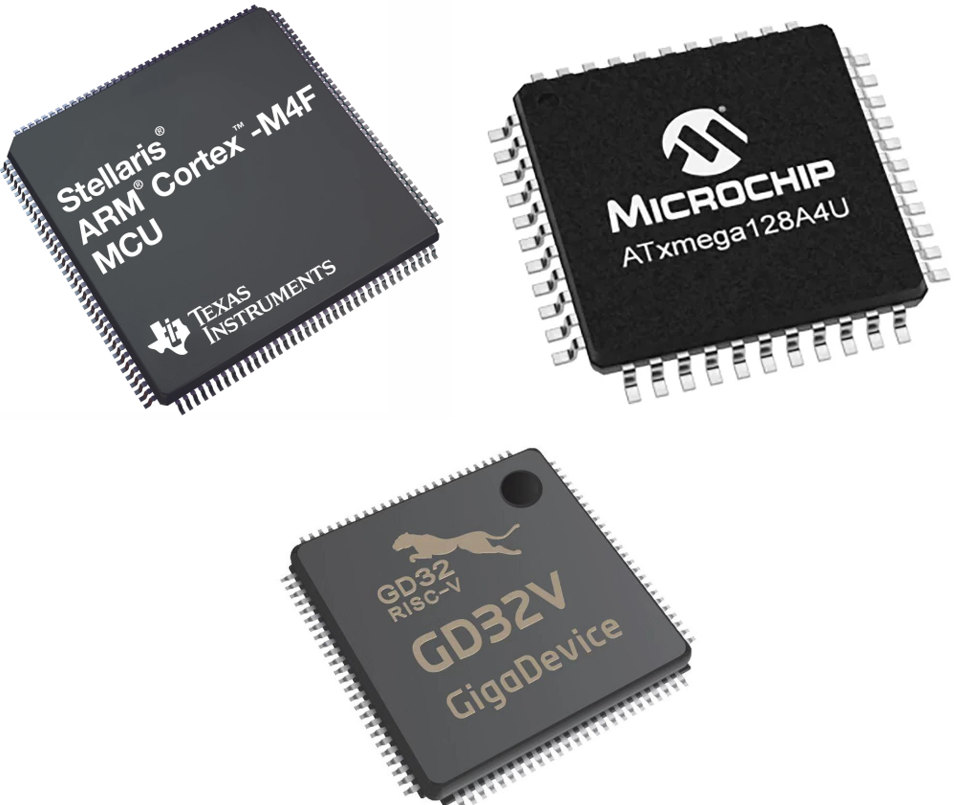
The function or tasks of different microcontrollers might be the same, but different microcontrollers have different architectures, which define how instructions are processed, how memory is accessed, and how efficiently the system performs tasks. The architectural differences of microcontrollers lead to three distinct microcontroller architectures: ARM microcontroller, AVR microcontroller, and RISV V microcontroller architectures. Each architecture has its own advantages and disadvantages, and understanding these is essential for design engineers to better select the right architectural choice for their design application.
What is a Microcontroller Unit (MCU)
A microcontroller or microcontroller unit (MCU) is a small computer on a single integrated circuit that is specifically designed to control embedded systems and perform dedicated tasks such as data communication, reading inputs from sensors (temperature, pressure, humidity, motion) for data collection and environmental monitoring, and controlling actuators, servomotors, and robotics in industrial machines and many more.
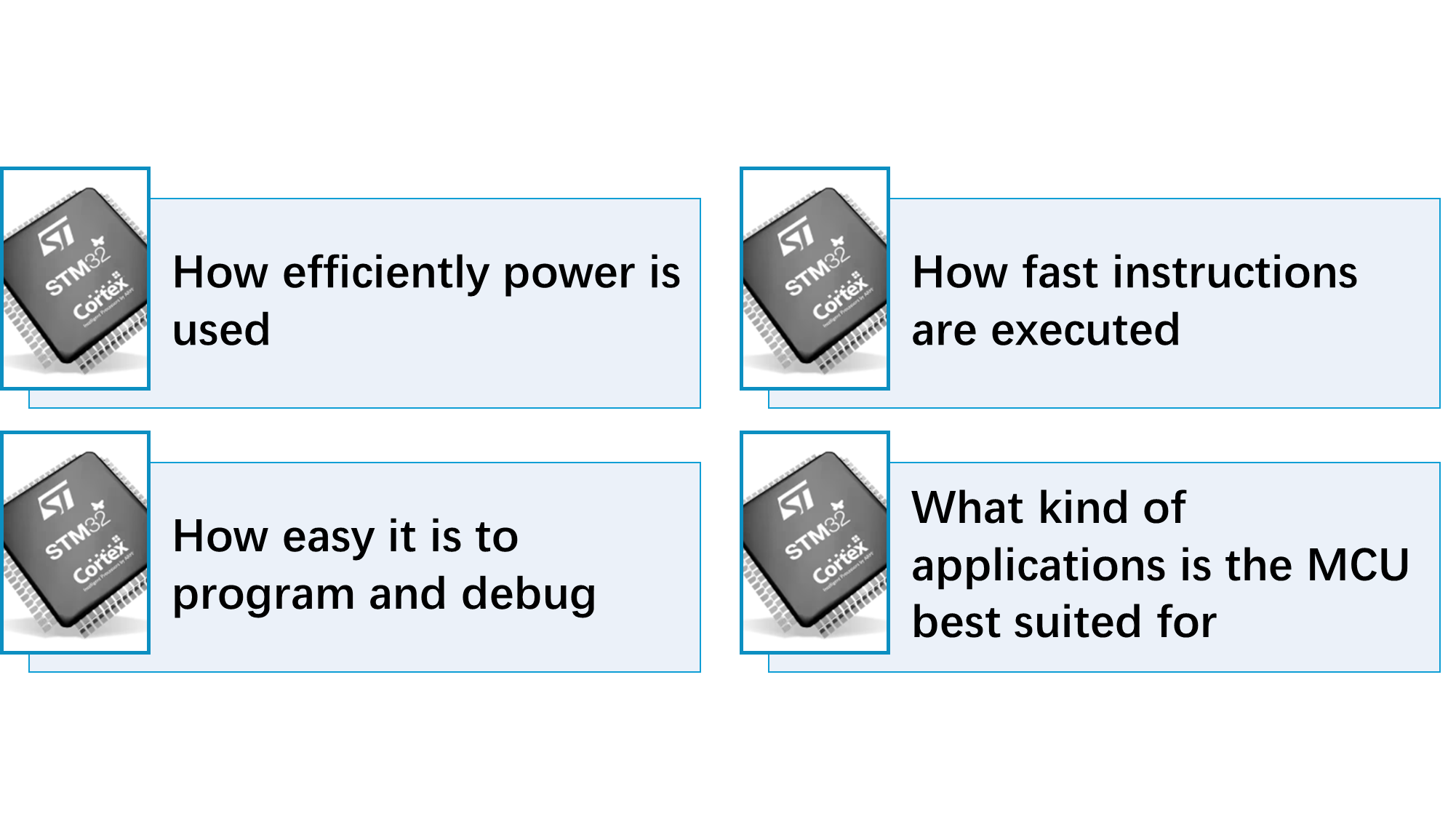
Selecting the right microcontroller for your design application depends on the microcontroller’s features and capabilities. The selection of your microcontroller determines:
Types of MCU Architectures
Based on the instruction set architecture (ISA), microcontrollers are classified into three major categories: ARM architecture, RISC-V, and AVR. Understanding these architectures of microcontrollers is essential for engineers to effectively choose the best microcontroller for their intended design application.
ARM Microcontrollers
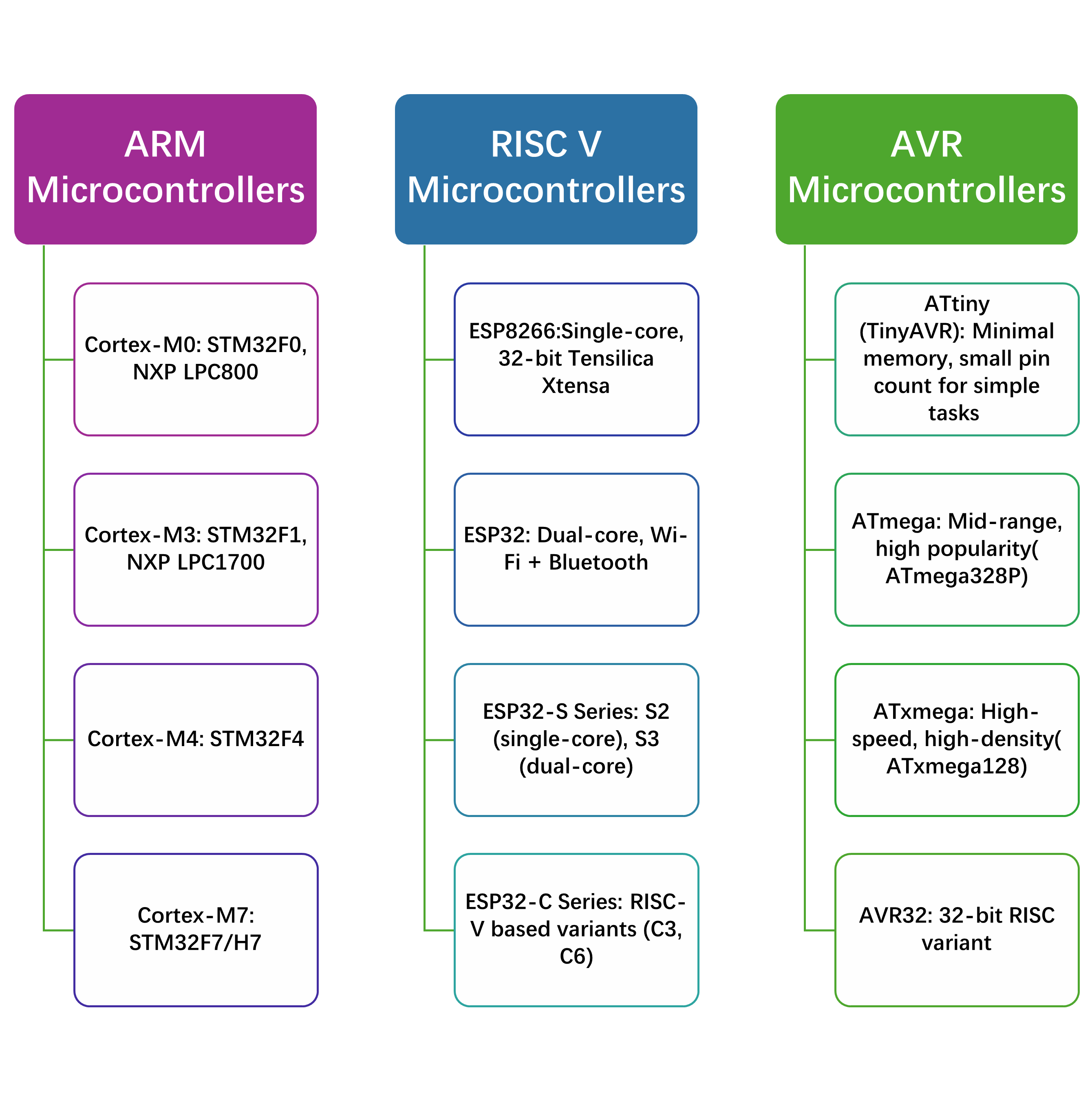
The ARM microcontrollers based architectures follow the Reduced Instruction Set Computing (RISC) design. In modern embedded systems applications, including wearable and hearable electronics, medical devices, and consumer electronics, ARM-based microcontrollers are widely used due to their high performance, scalability, and extensive ecosystem support.
Some of the widely used ARM microcontrollers, which are used in industry, are STM32F103C8T6, STM32F407VG, and NXP LPC1768.

Key Features of ARM Microcontrollers
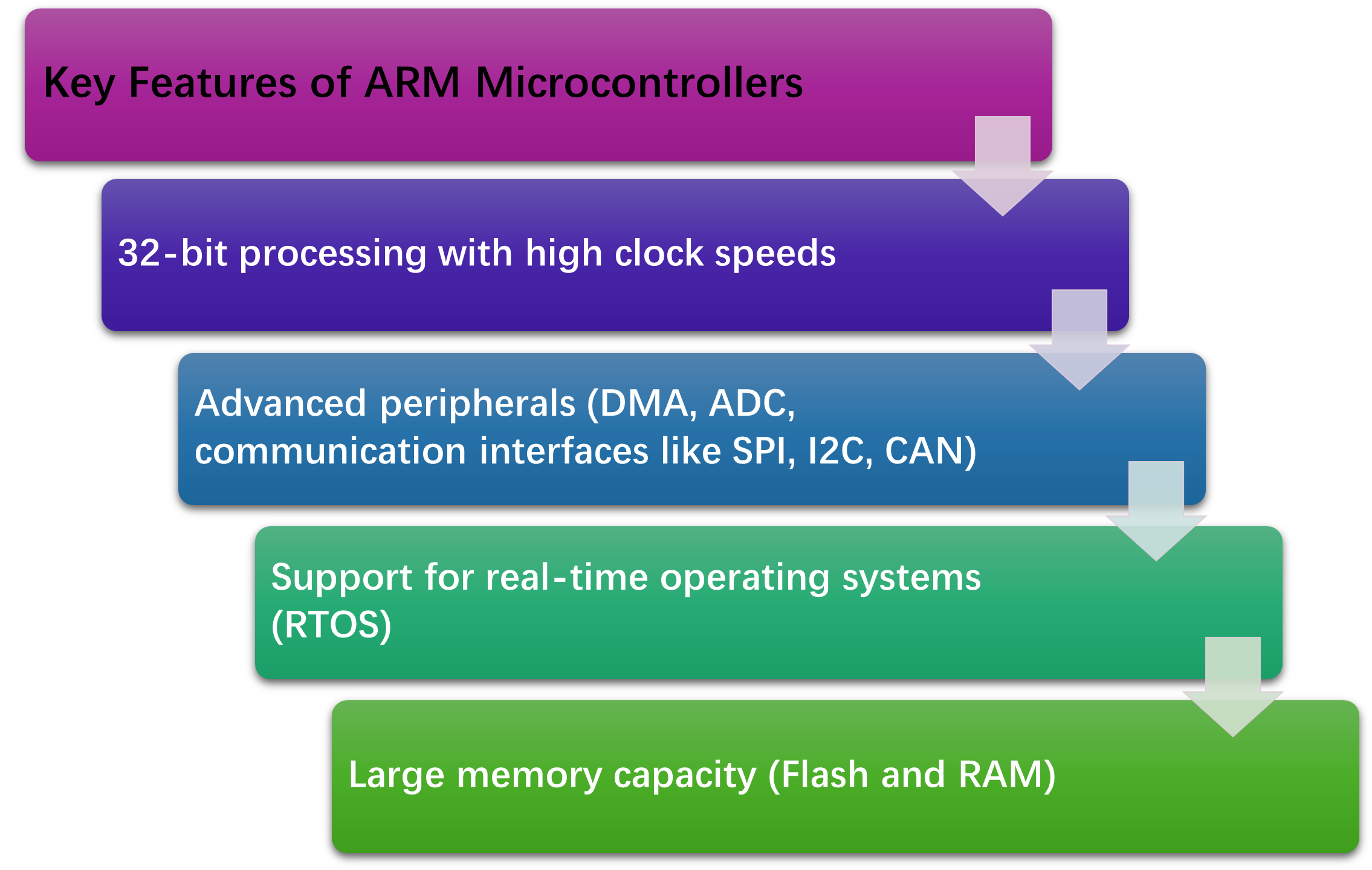
ARM microcontrollers follows RISC based architecture and are designed for high performance, energy efficiency, and scalability. This makes them ideal for design engineers and companies that are working on product development, including IoT, consumer electronics, and automotive systems.
Best Suited Applications of ARM Microcontrollers
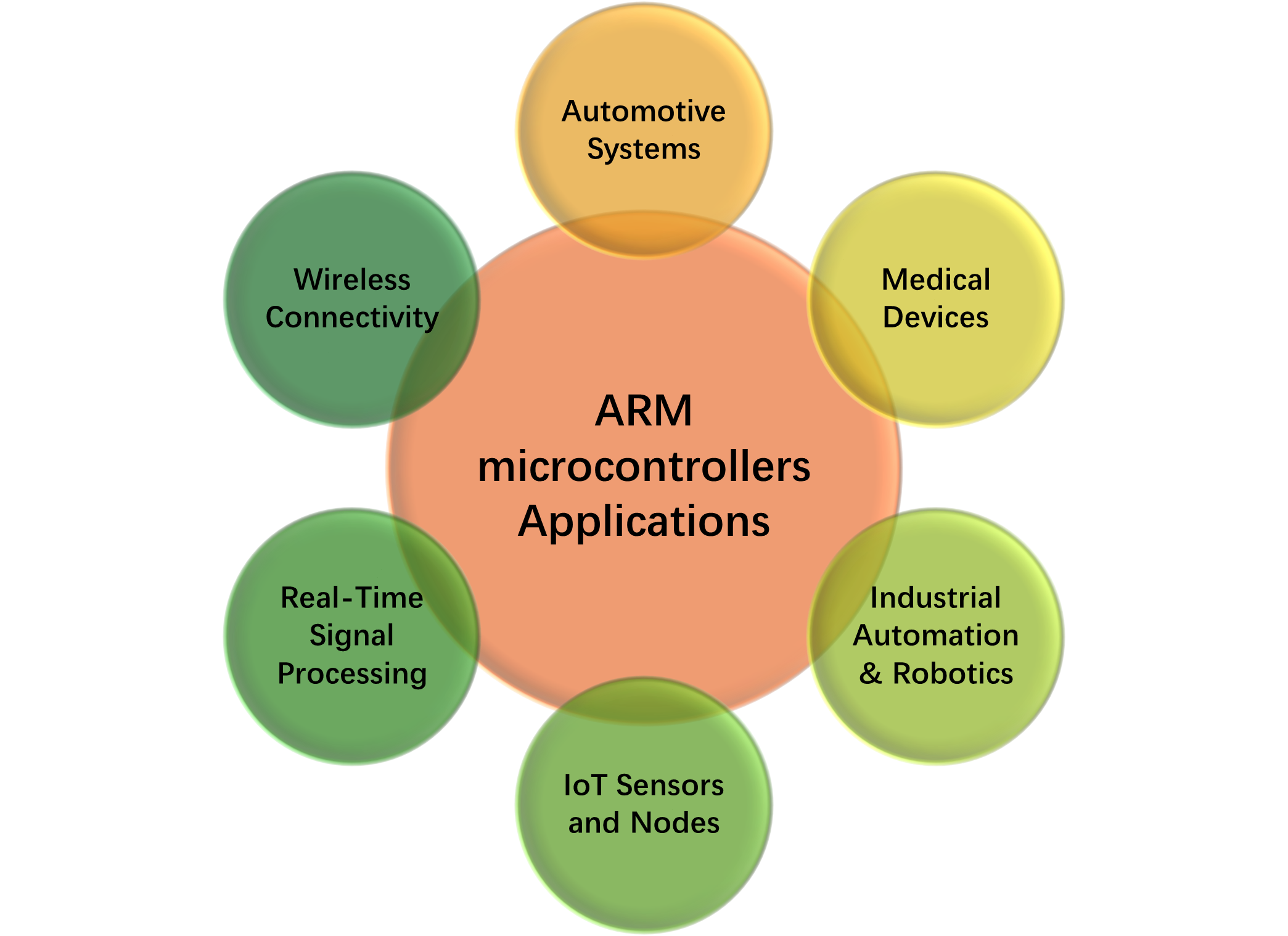
The ARM microcontrollers are designed to achieve high performance, reliability, high efficiency, and scalability. Therefore, widely used in automotive devices, medical devices, IoT sensors and applications, and real-time processing applications.
RISC V Microcontrollers
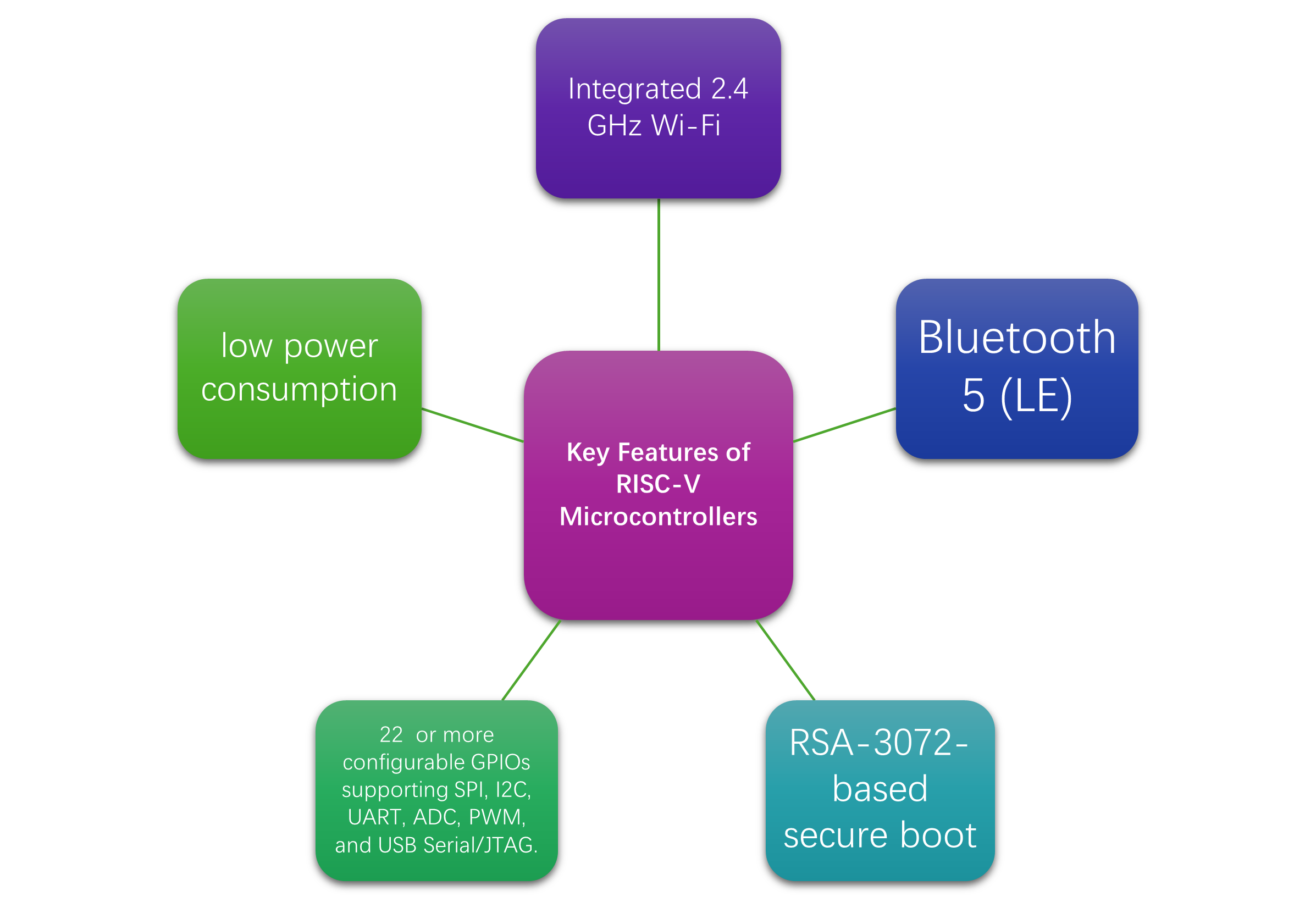
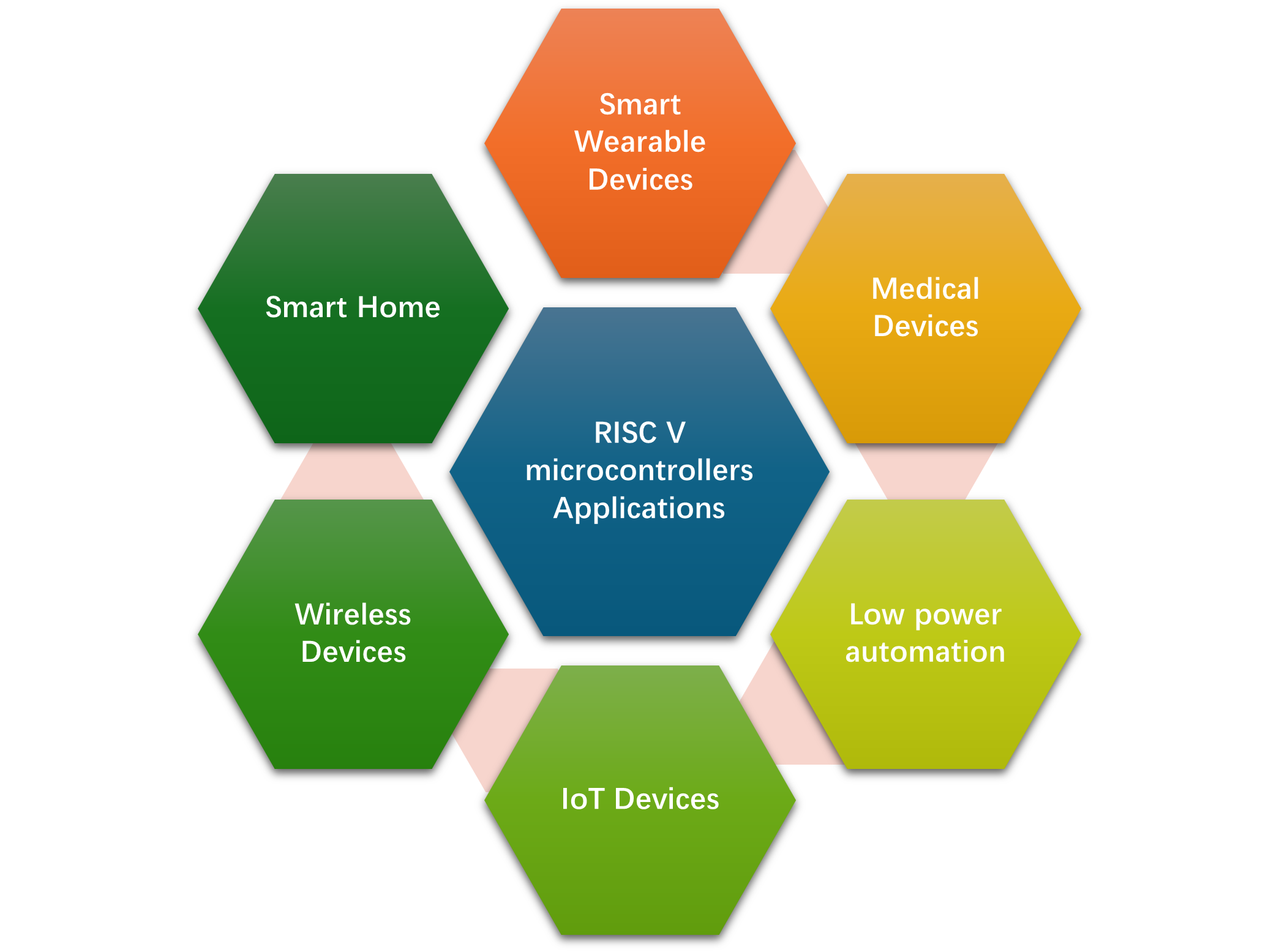
Modern embedded applications like IoT, wireless, and smart wearable devices extensively use RISC-V-based microcontrollers due to their flexibility, scalability, and zero licensing cost. The widely used RISC-V-based microcontrollers, which are used in IoT, medical devices, and smart wearables, are the ESP32-C3 and ESP32-WROOM-32.
These microcontrollers are widely adopted by various industries because these micrcontrollers offers Wi-Fi, bluetooth which are highly beneficial for IoT, smart electronic devices, smart home, wireless communication systems, and smart wearable devices.
Key Features of ARM Microcontrollers
Applications of ARM Microcontrollers
AVR Microcontrollers
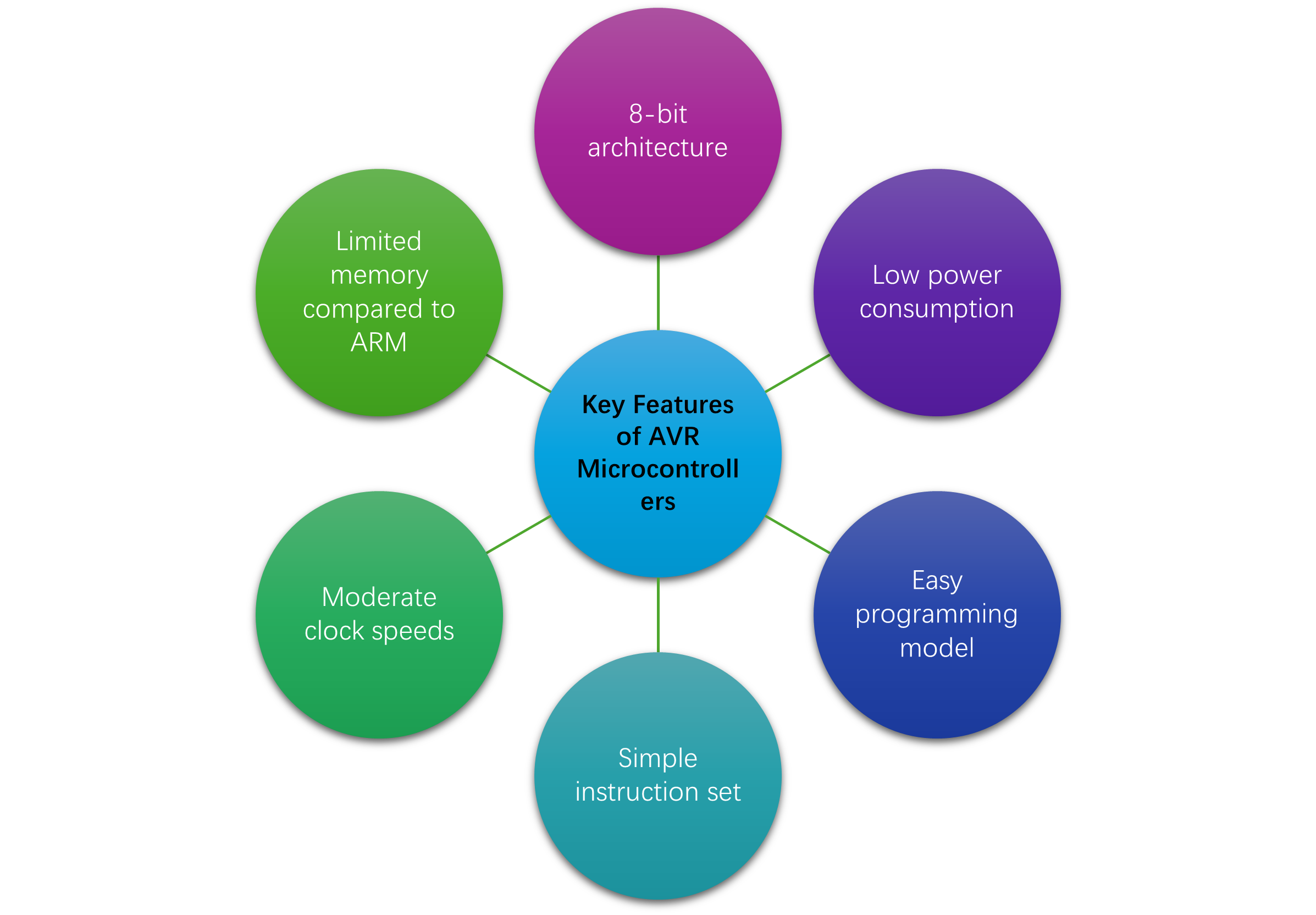
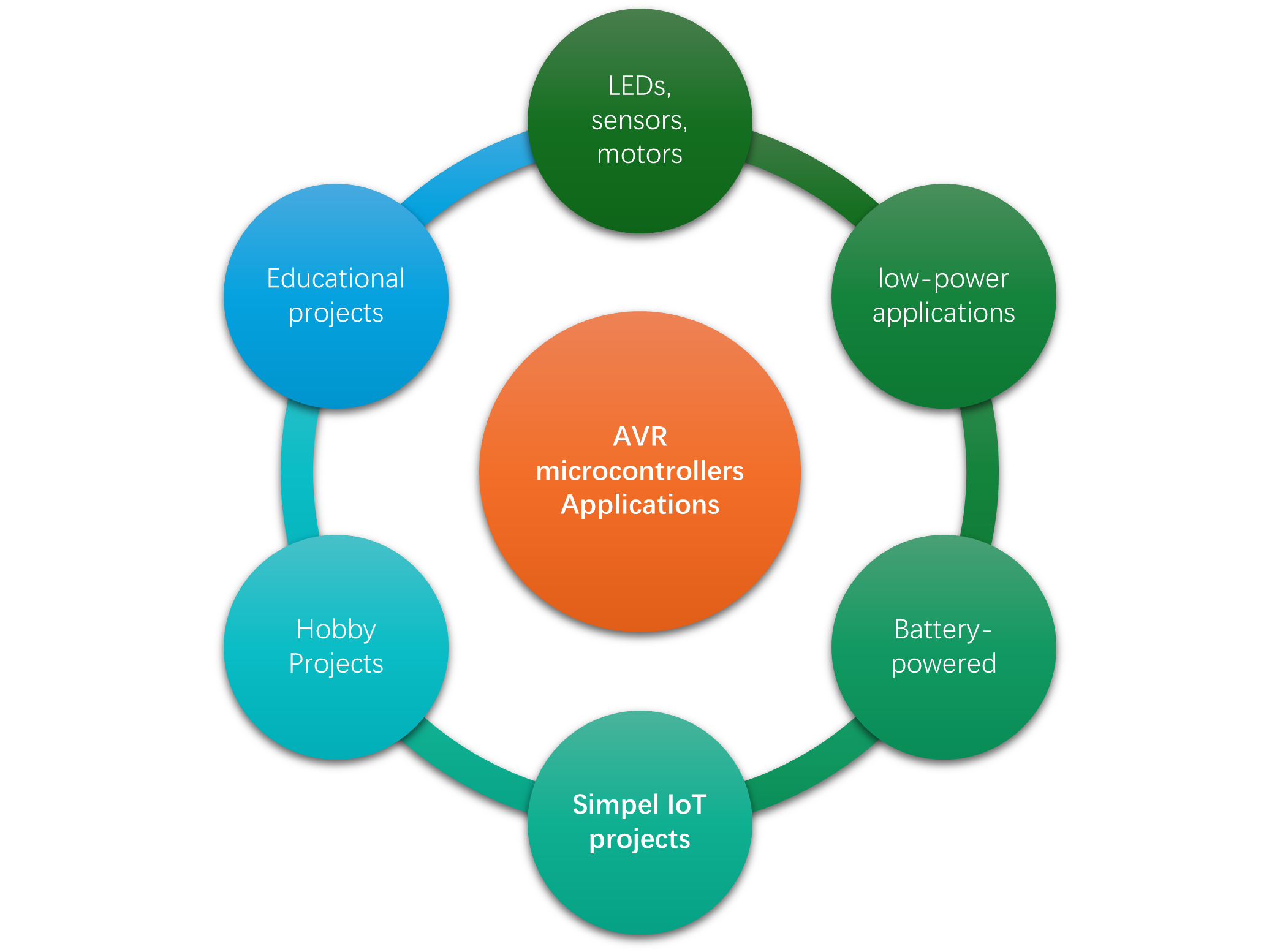
The AVR microcontrollers are 8 bit RISC based architecture and best known for their simplicity, low cost, and ease of use, making it a popular choice for beginners and low-complexity applications.
Common AVR microcontrollers include the ATmega328P, ATmega32, and ATtiny85, widely used in Arduino platforms and small embedded projects.
Key Features of AVR Microcontroller
AVR Microcontroller Applications
Key Specifications Comparison Table
Choosing between ARM, AVR, and RISC-V microcontrollers often comes down to understanding their core specifications, performance limits, power behavior, and ecosystem support. The table below provides a comprehensive, all-in-one comparison that engineers typically search for—covering everything from architecture and clock speed to development tools and real-world usability. The specifications are based on popular MCUs such as STM32F103C8T6, Atmega32P, and ESP32-C6.
| Parameter | ARM (Cortex-M) | AVR (8-bit) | RISC-V |
|---|---|---|---|
| Architecture Type | 32-bit RISC | 8-bit RISC | 32/64-bit RISC |
| Popular MCUs | STM32F103C8T6, STM32F407VG | ATmega328P, ATtiny85 | ESP32-C3, ESP32-C6 |
| Clock Speed | 16 MHz → 480 MHz+ | 1 MHz → 20 MHz | 16 MHz → 160+ MHz |
| Processing Power | High (DSP, FPU) | Low–Moderate | Moderate–High |
| Flash Memory | 32 KB → several MB | 1 KB → 256 KB | 128 KB → several MB |
| RAM | 4 KB → 1 MB+ | Bytes → 8 KB | 16 KB → 512 KB+ |
| Power Consumption | Medium–Low | Very Low | Low–Medium |
| Low Power Modes | Sleep, Stop, Standby | Idle, Power-down | Sleep, Deep Sleep |
| Peripherals | ADC, DAC, DMA, CAN, USB, Ethernet | ADC, Timers, UART, SPI, I2C | ADC, SPI, I2C, Wi-Fi, BLE |
| Connectivity | External modules | External modules | Built-in Wi-Fi/BLE |
| Instruction Set | ARM ISA | AVR ISA | Open RISC-V ISA |
| Toolchains | Keil, STM32CubeIDE, GCC | Arduino IDE, AVR-GCC | GCC, PlatformIO, ESP-IDF |
| Complexity | Moderate–High | Beginner-friendly | Moderate |
| Cost | Medium–High | Low | Low–Medium |
| Scalability | Very High | Limited | High |
| Real-Time | Excellent (RTOS) | Limited | Good (RTOS) |
| Bootloader | Secure boot, OTA | Basic | OTA, wireless updates |
| Applications | Industrial, IoT, robotics | Hobby, simple control | IoT, wireless systems |
Performance Comparison (Speed, Processing Power, Efficiency)
Design and application engineers are often looking for speed, processing power, and efficiency, which is sometimes very tiresome. Therefore, this section covers the detailed comparison between ARM, RISC-V, and AVR-based microcontroller architectures. This provides a quick, all-in-one reference for selecting the right MCU based on speed, processing capability, and efficiency.
| Parameter | ARM (Cortex-M) | AVR (8-bit) | RISC-V |
|---|---|---|---|
| Typical Clock Speed | 16 MHz → 480+ MHz (STM32F407VG) | 1 MHz → 20 MHz (ATmega328P) | 16 MHz → 160+ MHz (ESP32-C3/C6) |
| Processing Power | High (32-bit, DSP, FPU) | Low–Moderate (8-bit) | Moderate–High (implementation-based) |
| Instruction Efficiency | Pipeline + optimized ISA | Simple, predictable execution | Modular, customizable ISA |
| Real-Time Performance | Excellent (NVIC, RTOS) | Good for simple tasks | Good, improving |
| Interrupt Handling | Nested + priority levels | Basic interrupts | Moderate (MCU-dependent) |
| Hardware Acceleration | DMA, DSP, FPU, crypto | Limited | Increasing (vendor-based) |
| Peripheral Efficiency | Very high (DMA offload) | Low (CPU-driven) | Medium–High |
| Execution Capability | Complex algorithms, real-time control | Simple logic/control tasks | Modern embedded & IoT workloads |
| Performance per Watt | Balanced performance/power | Very high efficiency | High efficiency design |
| Scalability | Very high (M0 → M7) | Limited | High (custom cores) |
Power Consumption and Low-Power Performance
Power efficiency is a critical factor when selecting between ARM, AVR, and RISC-V microcontrollers, especially for battery-powered, portable, and IoT devices. The right MCU architecture can significantly extend battery life, reduce thermal issues, and improve overall system reliability.
| Parameter | ARM (Cortex-M) | AVR (8-bit) | RISC-V |
|---|---|---|---|
| Active Power Consumption | Medium (performance optimized) | Very Low | Low to Medium |
| Typical Operating Current | 5–50 mA (STM32F103) | 1–15 mA (ATmega328P) | 5–80 mA (ESP32-C3) |
| Sleep Modes | Sleep, Stop, Standby, Shutdown | Idle, Power-down, Standby | Sleep, Deep Sleep, Hibernate |
| Deep Sleep Current | Very Low (µA range) | Extremely Low (µA range) | Low (µA–mA depending on features) |
| Wake-Up Time | Fast (real-time optimized) | Very Fast | Moderate |
| Peripheral Efficiency | High (DMA offloads CPU) | Low (CPU-driven) | Medium to High |
| Wireless Power Use | External modules required | External modules required | High (Wi-Fi/BLE integrated) |
| Power Optimization | Dynamic scaling, advanced modes | Simple but effective modes | Advanced + configurable |
| Battery Suitability | Good (optimized design needed) | Excellent (ultra-low-power) | Good (depends on wireless usage) |
Development Ecosystem
The development ecosystem plays a crucial role when choosing between ARM, AVR, and RISC-V microcontrollers. A strong ecosystem can significantly reduce development time, simplify debugging, and improve overall productivity. It includes IDEs, compilers, debugging tools, libraries, community support, and documentation. These tools will directly impact how quickly and efficiently you can build your embedded system.
| Parameter | ARM (Cortex-M) | AVR (8-bit) | RISC-V |
|---|---|---|---|
| Popular IDEs | Keil, STM32CubeIDE, IAR, PlatformIO | Arduino IDE, Atmel Studio, PlatformIO | PlatformIO, VS Code, ESP-IDF |
| Compiler Support | ARM-GCC, Keil ARMCC | AVR-GCC | GCC (RISC-V), LLVM |
| Debugging Tools | Advanced (JTAG, SWD, trace) | Basic (ISP, limited debug) | Moderate (JTAG, OpenOCD) |
| Ease of Development | Moderate to Complex | Very Easy (beginner-friendly) | Moderate |
| Community Support | Very Large (pro + open-source) | Huge (Arduino ecosystem) | Growing rapidly |
| Code Portability | High across ARM devices | Limited | High (open ISA advantage) |
| Documentation Quality | Professional and detailed | Simple and accessible | Improving (vendor-dependent) |
How to Choose the Right MCU Architecture for Your Project
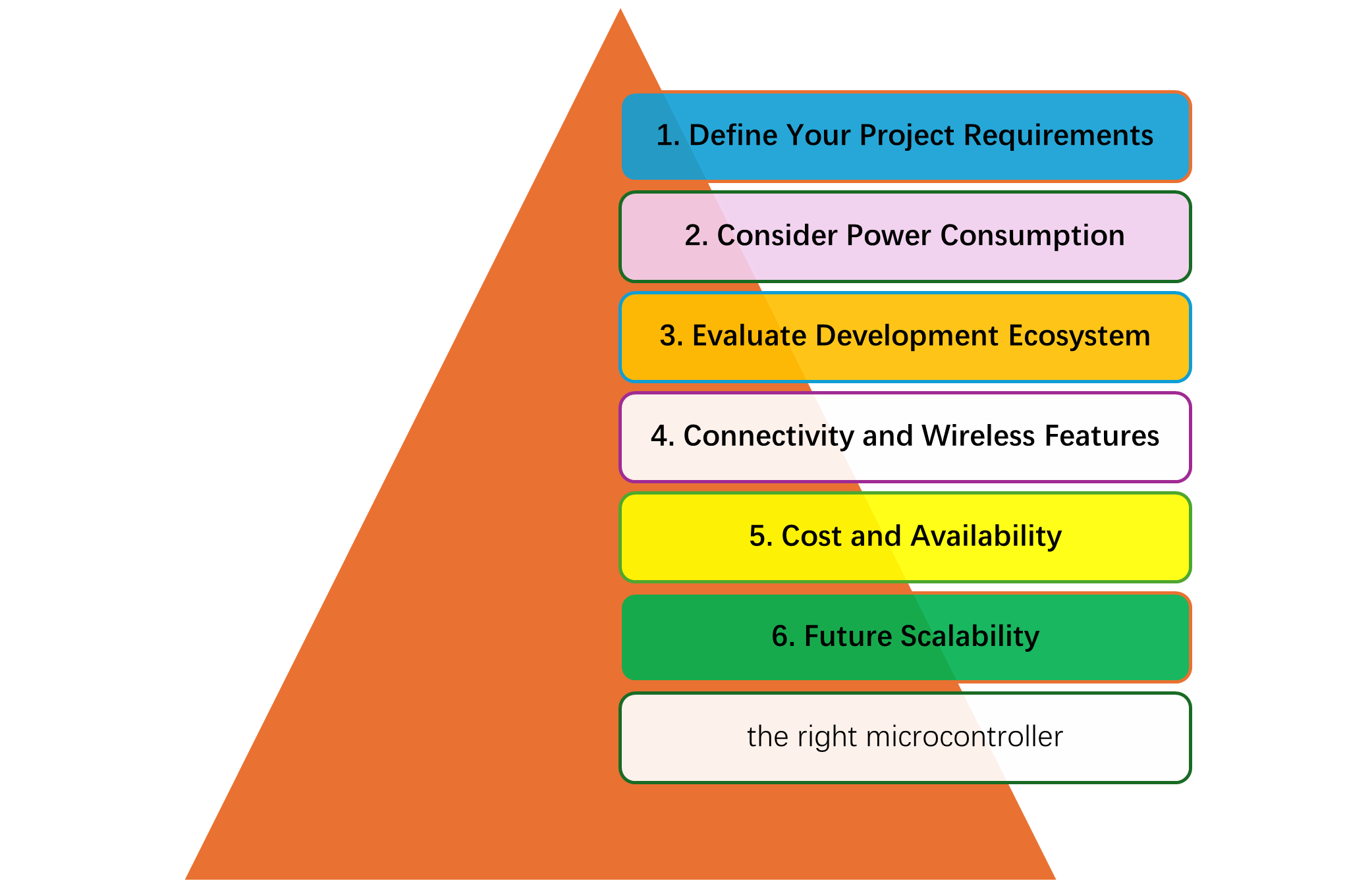
Selecting the best microcontroller architecture is one of the most critical decisions in embedded system design. The right choice depends on your project requirements, performance needs, power constraints, connectivity, and development ecosystem. In this section, a step-by-step guide is provided for the engineers to choose the right microcontroller for their design application.
Define Your Project Requirements
Start by clearly defining your project requirements. Determine your project processing needs: for high-performance applications like robotics, industrial automation, or real-time control, ARM MCUs such as the STM32F407VG or STM32F103C8T6 are ideal.
For moderate processing with wireless connectivity, RISC-V MCUs like the ESP32-C3 or ESP32-C6 strike a balance, while simple control or sensor tasks are well-suited for AVR MCUs such as the ATmega328P or ATtiny85.
Consider Power Consumption
Now, consider the power consumption of your design application. Battery-powered or portable projects require low-power operation. AVR microcontrollers excel in ultra-low-power scenarios, making them perfect for long-life sensor nodes. ARM MCUs offer a good balance of performance and power efficiency, suitable for industrial and portable IoT systems. RISC-V MCUs, especially wireless-enabled devices like the ESP32-C6, are efficient but may consume more power during active Wi-Fi or BLE communication, so careful power management is required.
Evaluate Development Ecosystem
The development ecosystem of your chosen microcontroller also plays a pivotal role. ARM MCUs consist of advanced IDEs, debugging tools, RTOS support, and extensive libraries, making them ideal for complex and industrial-grade applications. AVR microcontrollers are beginner-friendly with platforms like Arduino, which makes prototyping and simple embedded projects extremely accessible. RISC-V MCUs have a growing open-source ecosystem, with toolchains like ESP-IDF for the ESP32-C3 and ESP32-C6, offering modern development flexibility.
Connectivity and Wireless Features
This feature is application-dependent, as some projects require wireless connectivity while others may not. Projects without wireless needs can use AVR or ARM microcontrollers with external modules if required. For applications needing Wi-Fi, BLE, or Zigbee, RISC-V MCUs like the ESP32-C3, ESP32-C6, or ESP32-H2 with integrated wireless modules provide a compact and efficient solution.
Cost and Availability
For product development, cost and availability are one of the project’s most important parameters. Low-budget, simple projects can rely on AVR MCUs for their affordability, while moderate-cost applications requiring higher performance may benefit from ARM MCUs such as the STM32 series. For modern wireless IoT projects with integrated features, RISC-V MCUs provide a cost-effective and high-value solution.
Future Scalability
Products with future scalability should consider a microcontroller with future scalability options. ty. ARM MCUs are highly scalable, ranging from low-end Cortex-M0 to high-end Cortex-M7, allowing projects to grow without changing the architecture. AVR MCUs offer limited scalability, suitable only for simple projects, whereas RISC-V MCUs are flexible and open-source, making it easier to upgrade to newer variants as project requirements evolve.
Alternatives to MCU Architectures
Although, ARM, RISC V, and AVR microcontrollers are widely used due to their high performance, scalability, efficiency, and low cost but there are other alternatives are also widely used in embedded systems. These architectures are discussed in this section.
| Alternative Architecture | Key Features | Popular Examples / ICs | Primary Use Cases | Advantages (✔) | Considerations (✖) |
|---|---|---|---|---|---|
| FPGA-Based Soft Microcontrollers | Customizable cores, parallel processing, flexible peripherals | MicroBlaze (Xilinx), Nios II (Intel/Altera) | High-performance, specialized embedded systems |
✔ Fully customizable instruction set and peripherals ✔ Parallel processing for compute-intensive tasks ✔ Multiple soft-core MCUs on a single FPGA |
✖ High development complexity ✖ Requires VHDL/Verilog knowledge ✖ Typically more expensive than traditional MCUs |
| System-on-Chip (SoC) Solutions | Integrated MCU, wireless modules, memory, specialized peripherals | ESP32-C3, ESP32-C6, Nordic nRF52 | IoT devices, smart home products, connected sensors |
✔ Reduced PCB complexity and BOM cost ✔ Integrated Wi-Fi, BLE, Zigbee, LoRa ✔ Optimized for low-power IoT applications |
✖ Less flexibility than standalone MCU + peripherals ✖ May be overkill for simple projects |
| MCU + Coprocessor Combinations | Main MCU paired with AI/DSP/sensor fusion coprocessor | STM32F4 + STM32 AI accelerator, Raspberry Pi Pico + FPGA | AI inference, DSP tasks, robotics, motor control |
✔ Offloads heavy computation ✔ Enables AI/advanced processing ✔ Improves system efficiency and responsiveness |
✖ Adds system complexity ✖ Requires additional power and careful board design |
| Ultra-Low-Power Sensor Nodes | Minimal active/sleep current, optimized for battery life | Ambiq Apollo3 (ARM Cortex-M4), Silicon Labs EFM32 | Battery-powered IoT sensors, wearable devices |
✔ Extremely low power consumption ✔ Integrated energy-saving peripherals (RTC, ADC, timers) ✔ Ideal for long-life sensor applications |
✖ Limited processing power ✖ May lack complex peripheral interfaces |
Conclusion
To conclude, choosing the right microcontroller architecture for your design application is one of the foundational decisions because it determines your project’s performance, flexibility, scalability, efficiency, and reliability. Therefore, it is important for the engineers to better understand the project requirements and, based on these requirements, choose the best suitable microcontroller for their application.
ARM, AVR, and RISC-V MCUs each offer unique strengths: ARM provides high performance and a professional ecosystem suitable for industrial and complex applications; AVR is beginner-friendly, cost-effective, and ideal for simple control or prototyping; RISC-V is modern, flexible, and perfect for wireless IoT projects with open-source toolchains.
Frequently Asked Questions(FAQ)
1. ARM MCUs are high-performance 32-bit controllers with advanced peripherals and RTOS support, suitable for industrial and complex projects.
2. AVR MCUs are 8-bit, beginner-friendly, low-cost, and ideal for hobbyist and prototyping projects.
3. RISC-V MCUs are modern, open-source 32-bit controllers offering flexibility, wireless integration (Wi-Fi, BLE/Zigbee), and a growing development ecosystem for IoT applications.
For IoT and wireless-enabled devices, RISC-V MCUs like the ESP32-C3, ESP32-C6, or ESP32-H2 are ideal. They integrate Wi-Fi, BLE, or Zigbee, reducing PCB complexity and power consumption while providing modern development tools like ESP-IDF.
Yes. FPGA soft-core microcontrollers like MicroBlaze (Xilinx) or Nios II (Intel/Altera) allow full customization of cores and peripherals. They are ideal for high-performance, parallel, or specialized tasks. However, they are more complex to design, require FPGA programming skills (VHDL/Verilog)
For ultra-low-power applications, consider:
1. AVR MCUs (e.g., ATtiny85) for simple sensor nodes
2. ARM low-power MCUs (e.g., STM32L0 series) for more complex tasks
3. RISC-V ultra-low-power MCUs (e.g., ESP32-C3 with sleep modes) for IoT devices requiring wireless connectivity