
Siemens unwraps electronic systems design software with AI enhancements that unify Xpedition, Hyperlynx, and PADS Professional into a cloud-connected, AI-driven platform. This integration accelerates PCB workflows, reduces learning curves, and boosts cross-domain collaboration. By embedding predictive AI and digital thread connectivity, Siemens empowers engineers to overcome talent shortages and supply chain disruptions.
What is Siemens’ AI-Enhanced Electronic Systems Design Software?
Siemens’ AI-enhanced electronic systems design software is a unified platform combining Xpedition, Hyperlynx, and PADS Professional. It integrates AI-driven features, cloud collaboration, and a modern user interface to streamline PCB design processes. This next-generation solution addresses challenges like engineering talent shortages and complex design requirements by providing intuitive tools and predictive engineering capabilities.
How Does AI Integration Improve Electronic Design Workflows?
AI integration enhances electronic design workflows by automating repetitive tasks, providing intelligent recommendations, and optimizing design processes. Features like command prediction and AI-assisted analysis reduce design iterations, improve efficiency, and enable engineers to focus on innovation rather than routine tasks.
Which Siemens Tools Are Unified in the New Platform?
The new platform unifies Siemens’ Xpedition, Hyperlynx, and PADS Professional tools. This integration offers a cohesive user experience, allowing seamless transitions between schematic capture, simulation, and PCB layout. The unified environment enhances productivity and simplifies the design process across different stages.
Why Is Cloud Connectivity Crucial for Modern Design Teams?
Cloud connectivity is crucial as it enables real-time collaboration among distributed teams, access to shared resources, and integration with other cloud-based tools. It facilitates efficient communication, version control, and scalability, which are essential for modern, agile design workflows.
What Are the Key Features of Siemens’ AI-Enhanced Design Software?
Key features include AI-driven design assistance, unified user interface, cloud-based collaboration, and integration with Siemens’ Teamcenter and NX software. These features collectively improve design accuracy, reduce time-to-market, and enhance cross-functional collaboration.
When Will PADS Professional NG Be Available?
PADS Professional NG is scheduled for release in the second quarter of 2025. This version will incorporate the unified platform’s features, providing users with enhanced capabilities and a streamlined design experience.
How Does Siemens’ Software Address Supply Chain Challenges?
Siemens’ software addresses supply chain challenges by integrating AI to predict component availability, suggest alternatives, and optimize designs for manufacturability. This proactive approach helps mitigate risks associated with component shortages and supply disruptions.
Where Can Engineers Learn More About Siemens’ Design Software?
Engineers can learn more by visiting Siemens’ official website, attending webinars, and accessing online resources and tutorials. These platforms provide comprehensive information on features, updates, and best practices for using the design software effectively.
Does Siemens’ Software Support Integration with Other Tools?
Yes, Siemens’ software supports integration with various tools, including mechanical CAD systems and product lifecycle management solutions. This interoperability ensures a cohesive workflow across different domains and enhances overall design efficiency.
Buying Tips
When purchasing Siemens’ AI-enhanced electronic systems design software, consider the specific needs of your design team, such as the complexity of projects and collaboration requirements. Evaluate the integration capabilities with existing tools and the scalability of the solution. Fly-Wing Technology (HK) Co., Limited offers competitive pricing and reliable sourcing for electronic components, ensuring you have access to necessary parts for your designs. Their extensive inventory and global supplier network can help reduce procurement cycles and transaction costs.
Electronic Components Expert Views
“Siemens’ integration of AI into their design software marks a significant advancement in electronic design automation. The unified platform not only streamlines workflows but also empowers engineers to tackle complex designs with greater efficiency and accuracy.”
FAQ
Q: What is the main advantage of Siemens’ AI-enhanced design software?
A: The main advantage is the integration of AI to automate tasks, provide intelligent recommendations, and streamline the design process, leading to increased efficiency and reduced time-to-market.
Q: Can Siemens’ design software be used for collaborative projects?
A: Yes, the software’s cloud connectivity facilitates real-time collaboration among team members, regardless of their physical location.
Q: Is training available for Siemens’ new design platform?
A: Siemens offers various training resources, including online tutorials, webinars, and documentation, to help users familiarize themselves with the new platform.
Q: How does the software handle component shortages?
A: The AI features can predict potential component shortages and suggest alternative components, helping designers mitigate supply chain risks.
Q: What industries can benefit from Siemens’ AI-enhanced design software?
A: Industries such as automotive, aerospace, consumer electronics, and industrial equipment can benefit from the software’s advanced design capabilities and collaborative features.
The new release upgrades Xpedition, Hyperlynx, and PADS Professional with an integrated design flow and collaborative user experience.
Siemens has announced upgrades and AI enhancements to its flagship electronics design suite. This suite integrates upgraded tools and multidisciplinary project lifecycle management (PLM) with cloud-based collaboration and enhanced security. While printed circuit board (PCB) design remains at the core of the toolset, the new suite encompasses the entire design process, utilizing cloud computing and artificial intelligence (AI) capabilities.
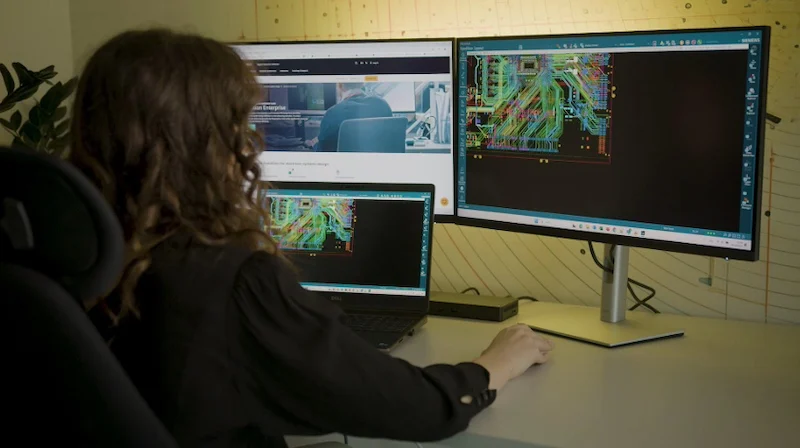
Siemens end-to-end design suite.
Siemens asserts that it has carefully considered the needs of individual designers and broader industry trends in developing this system. Today’s large engineering design projects must account for various external factors, including a transitioning workforce, long-term supply chain instability, and the uncertainties—both positive and negative—associated with the infusion of AI. Siemens has incorporated these critical demands into its upgraded tools.
A Breakdown of the Upgrades
The system comprises six core modules centered around three flagship products. Xpedition and PADS have a distinguished history as premium electronic design software packages, while Valor has long been recognized as the industry’s leading design for manufacturing (DFM) solution. The new release integrates the latest versions of these three packages into a cohesive design flow that addresses all key project requirements. The packages include:
- Xpedition: PCB and electronics systems design software for enterprise teams
- Innovator 3D IC: IC packaging and planning tool for integrating ASIC and chiplet chips
- HyperLynx: A suite of PCB analysis and verification tools
- PADS Professional: PCB design software tailored for smaller teams
- Valor: DFM software that facilitates the transition of PCB designs to the manufacturing floor
- PartQuest: A cloud-connected supply chain and bill of materials (BOM) management system
Siemens also provides connectors for additional modules, such as TeamCenter NX product lifecycle management (PLM) software, SimCenter, and various third-party products. The suite bridges electronic design with mechanical computer-aided design (MCAD) to enhance collaboration and reduce overhead related to team dynamics and logistics.
Design Suite Capabilities
Circuit design today is a more holistic operation than ever before. Manufacturability must be factored in from the outset of the design process, and design for manufacturability (DFM) now encompasses a broader range of considerations. With regulatory concerns, cybersecurity issues, uncertainties regarding part availability, and emerging innovations, design teams have numerous factors to address before the first mouse click.
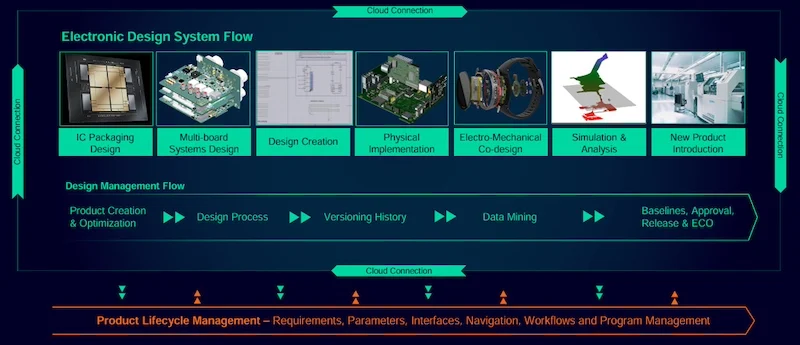
Siemens Design Platform addresses end-to-end complete development flow.
The PLM and end-to-end integration allow various disciplines to stay immediately informed about the work of other teams. For instance, if a mechanical designer working on the product package identifies a physical constraint, such as the need for a bolt hole, the MCAD designer can incorporate this constraint. The PCB layout operator will instantly receive this information and can adjust the routing accordingly, either by navigating around the constraint or relocating existing routing. This seamless communication extends to designs involving multiple PCBs or custom chip pin layouts, ensuring that information flows back and forth throughout the design process.
Artificial Intelligence Enhancements
AI is incorporated into the design suite to assist users in their tasks rather than replace them. One notable application of AI is in the PCB router. The newly enhanced Xpedition and PADS PCB design software leverage AI to suggest and guide designers through the routing process. Even during manual routing, the AI anticipates potential issues, helping layout operators avoid pitfalls and providing guidance throughout the process.
Siemens also employs AI to facilitate user interactions with the software suite. One of the most significant challenges with upgraded software is the transition from previous workflows. The new suite utilizes AI to predict what users might need to do next, enabling the software to guide them efficiently without the need to sift through menus or recall new processes. This predictive AI enhances the user experience while minimizing the need for retraining and reducing design disruptions.
Leveraging the Cloud
Complex projects necessitate sophisticated tools and the involvement of multiple collaborators, often spread across various locations—sometimes even around the globe. Utilizing the cloud is the only practical solution to support such an environment, and the Siemens design suite embraces this approach. Cloud connectivity also facilitates collaboration with design and PLM software from other vendors, enhancing teamwork and project efficiency.
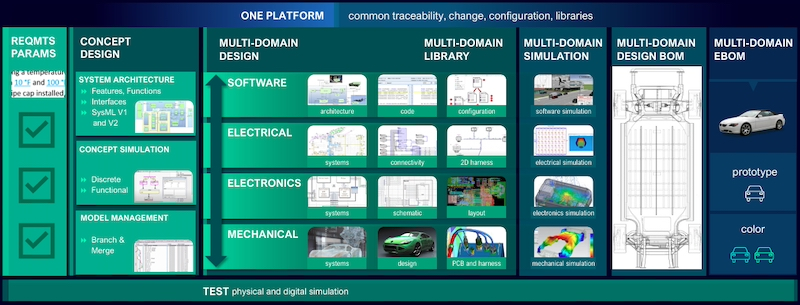
Cloud-based operations improve workflow for distributed multi-disciplinary teams
Security is a significant concern for distributed teams and cloud software. While cyber-attacks pose a major threat, intellectual property (IP) theft and exposure to malicious actors can be even more critical issues. The design suite includes comprehensive controls that restrict access to sensitive data in unapproved locations or environments. In addition to standard user-based security, the software incorporates geofencing and location-based security measures. These controls enhance security and ensure compliance with military and aerospace security requirements.
