
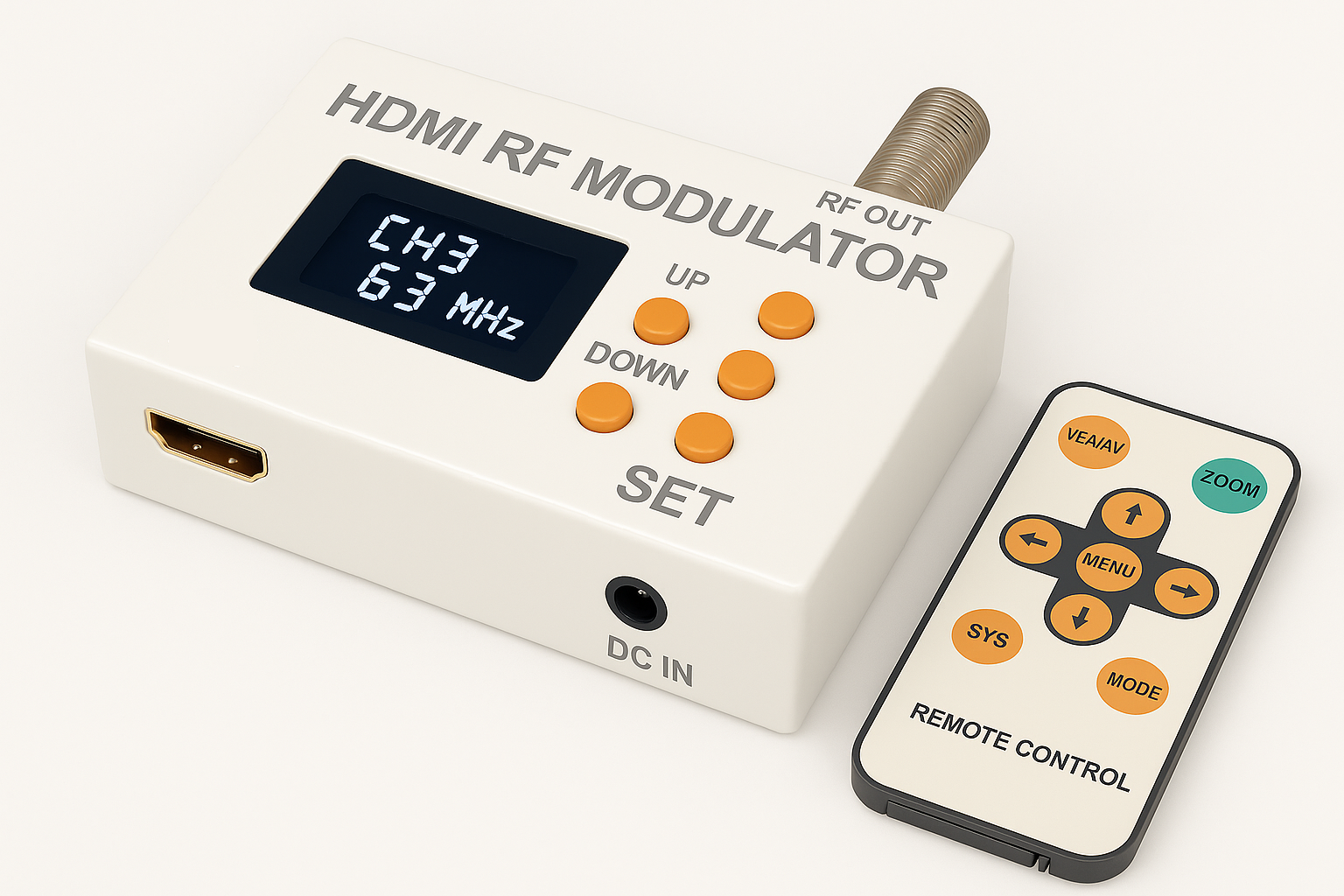
TL;DR: An HDMI RF modulator converts HDMI signals into RF format so that they can be transmitted over coaxial cables. HDMI rf modulators solve compatibility issues, and are widely used in homes, hotels, and commercial setups. By monitoring performance metrics like MER, SNR, and BER, you can ensure stable and high-quality reception over coaxial cable.
Introduction
HDMI RD modulator has (also called HDMI tv modulator) gained special attention due to HDMI becoming a de facto interface for digital audio and video in wide range of applications. Gaming consoles, Blu-ray players to cameras and streaming boxes all take advantage of HDMI outputs. However, the coaxial cable networks which once dominated television and video distribution, are still present widely.
Engineers and builders often equip schools, multistory hotels, large hospitals, and apartment complexes with coaxial cable infrastructures to distribute content to multiple displays. Since modern devices output through HDMI while the existing infrastructure relies on coaxial networks, the need for an interface to connect both becomes critical.
HDMI TV modulator is the answer to this middle interface joining both technologies seamlessly. HDMI RF modulator takes HDMI signal as input, processes it and converts it to RF signal that can be fed to coaxial cable for distribution. On the receiving end, devices decode those RF signals as if they were traditional broadcast channels. In this way, an HDMI RF modulator bridges the technological gap between HDMI sources and traditional coaxial transmission system.
Manufacturers build every HDMI RF modulator using RF modulator ICs, phase-locked loops (PLLs), and power regulators that receive and process audio and video codes to optimally convert signals for HDMI-to-coax for transmission. The selection of these ICs further determines the performance, reliability, and compliance of the HDMI RF modulator.
In this article we’ll explore HDMI rf modulators in depth, with focus on the ICs that enable their functionality. We’ll also explore the difference between analog vs HDMI to digital rf modulator, their setup, and buying guidelines.
What Does HDMI RF Modulator Do and Why It Matters
HDMI RF modulator acts as a bridge between modern digital devices and traditional television systems. They take a high-definition HDMI signal from sources like DVRs, or Blu-ray players and convert it into a radio frequency (RF) signal that can travel over standard coaxial cables. This simple conversion enables digital content distribution across multiple TVs without needing complex cabling or expensive upgrades.
By understanding the problem they solve and the key use cases where they excel, it becomes clear why HDMI RF modulators continue to play an important role in home entertainment and commercial installations.
Problems They Solve
Organizations with coaxial cable infrastructure would face immense financial, operational, and labor-intensive cable replacements as well as equipment upgrades burden if they want to implement HDMI based content distribution system. With the HDMI rf modulator, that task becomes unnecessary with mere addition of an HDMI rf modulator device that can feed the coaxial cable network with rf modulated analog signal to distribute the content.
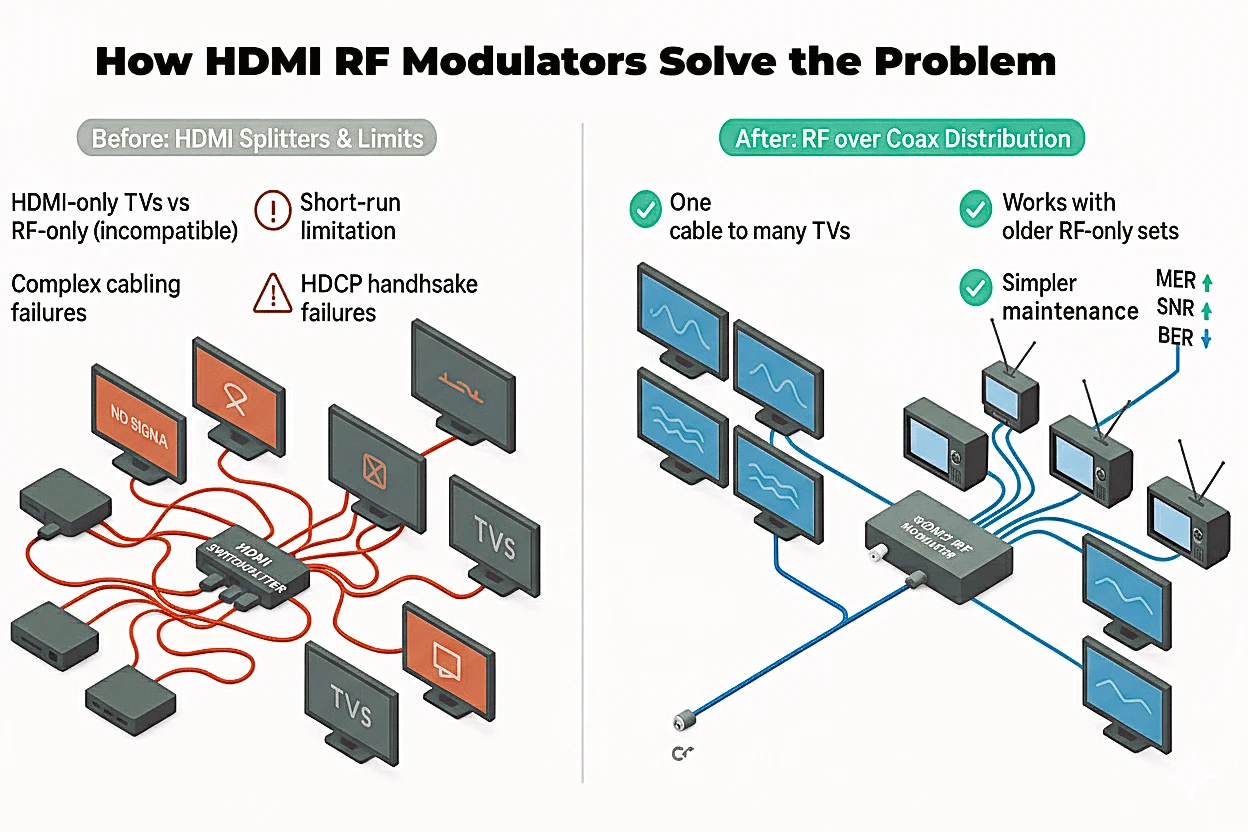
The old school RF modulated signals are analog in coaxial cable transmission. Whereas the HDMI signals are digital in nature. The coaxial cables cannot directly carry the HDMI digital signal. Therefore, proper digital to analogue RF signal conversion is crucial.
An HDMI RF modulator behaves as a converter that accepts HDMI’s TMDS (Transition Minimized Differential Signaling) signals. It then decodes the signal, reformats it, and modulates it onto an RF carrier that coax can transmit.
Key Use Cases of HDMI RF modulator
Hospitals often rely on coaxial television systems, but modern medical imaging equipment, and display devices only support HDMI.
Schools use HDMI projectors but still have coax wiring network in classrooms. For content distribution across classrooms, an optimal solution like HDMI rf modulator is needed.
Security operation centers run coax-based distribution networks yet depend on HDMI outputs from modern NVRs. Even households may need to connect gaming consoles or streaming devices to older TVs with RF-only inputs.
How Does HDMI Modulation Work
HDMI RF modulators involve many steps for HDMI to RF signal conversion. Each step involves either a dedicated circuitry or an IC which we explain below:
Step by Step HDMI to RF Modulation
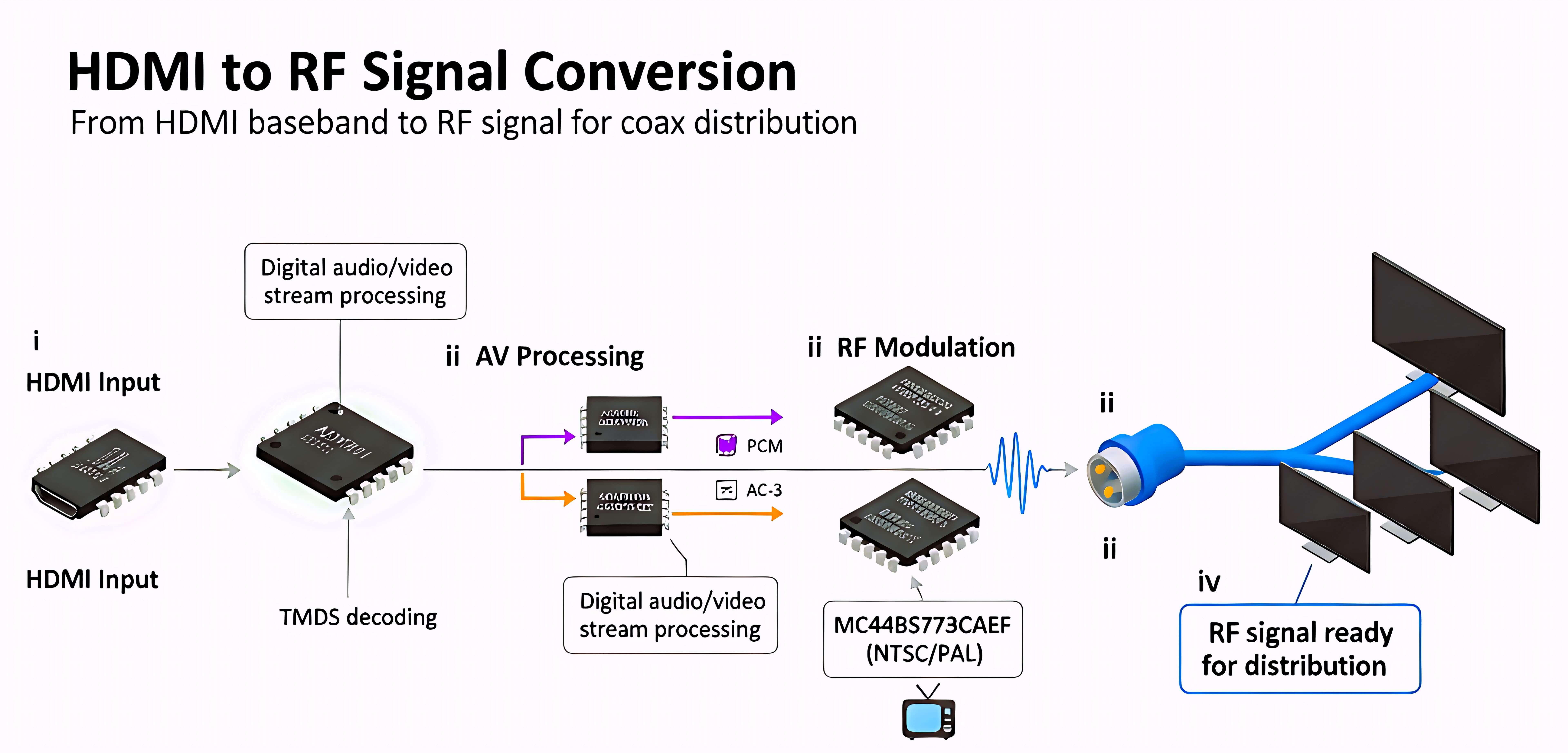
HDMI carries an uncompressed digital AV (audio/video) signal. It utilizes TMDS to minimize EMI (electromagnetic interference) and makes sure of the integrity across short data transmission cables. On the other hand, coaxial cables carry modulated RF signals over longer distances. To connect the two types of signal carriers, following steps are used in HDMI TV modulator:
Receiving & Decrypting HDMI Signal
In HDMI modulation, the first step is receiving the HDMI signal. In this step, the received digital signal from HDMI is received and decoded by the receiver IC (for example, ADV7611 such as used in NHD-10.1-HDMI-A-RSXV display module). This IC handles TMDS decoding as well as HDCP (High-bandwidth Digital Content Protection) decryption.
AV Signal Processing
The HDMI rf modulator then processes the audio and video streams for HDMI modulation. The codec ICs such as AK4950EN and CS4270-CZZ codec process the AV streams. These ICs can handle digital audio streams, supporting formats like PCM and AC-3.
RF Modulation
The rf modulation of processed AV streams is carried out by specialized rf ICs. Examples of these ICs may include LM3290TME/NOPB and quadrature modulator IC ADRF6720-27ACPZ-R7. However, for legacy analog NTSC/PAL distribution, the MC44BS373CAEF modulator remains cost effective IC solution in HDMI rf modulator.
This step-by-step processing of HDMI digital signal to rf modulated signal through codec, to RF modulator describes HDMI modulation: turning HDMI baseband into a modulated RF signal for coax distribution.
HDMI RF Modulator: Analog vs Digital
In HDMI modulation, an optimization step requires analysis of output type. The legacy modulators provide analogue rf output such as NTSC, or PAL as previously mentioned. These formats were sufficient for CRT (Cathode-Ray Tube) televisions, which were limited in resolution. However, modern digital modulators provide signals using hdmi to digital rf modulator which are compatible with ATSC (North America), DVB-T/T2 (in Europe), or QAM in cable systems.
A digital HDMI rf modulator provides output of high-definition content, and Error Correction (EC) capability for reliable performance. Compared to applications using HDMI to digital rf modulators, mostly low-cost or legacy installations use analog modulators.
HDMI to RF Converter vs HDMI to Coax Modulator
We have seen the analog and digital functionality of an HDMI rf modulator above. However, the HDMI rf modulator (HDMI to coax modulator here) is sometimes confused with HDMI to rf converter. Let’s inspect the difference between these two devices now.
The difference between HDMI to coax modulator vs HDMI to rf converter lies in their capability. A simple HDMI to rf converter outputs analog NTSC or PAL signals only, which are sufficient for traditional old school TVs. The hdmi to digital rf modulator has much better capability in output type.
An HDMI to coax modulator (also called hdmi to digital rf modulator) provides wide support. It can generate digital ATSC, DVB-T, or QAM signals with multiple channels and features such as program information tables.
Pros and Cons
Following is a brief pros and cons tabulation of both devices:
| Feature | HDMI to RF Converter | HDMI to Coax Modulator |
|---|---|---|
| Resolution Support | 480p–720p | 1080p Full HD |
| Channel Support | Single | Multiple |
| Modulation Standards | PAL/NTSC only | ATSC, DVB-T, QAM |
| Distance over Coax | Limited | Extended (100m+) |
| Price Point | Low | Medium–High |
Setup Guide for HDMI RF Modulator
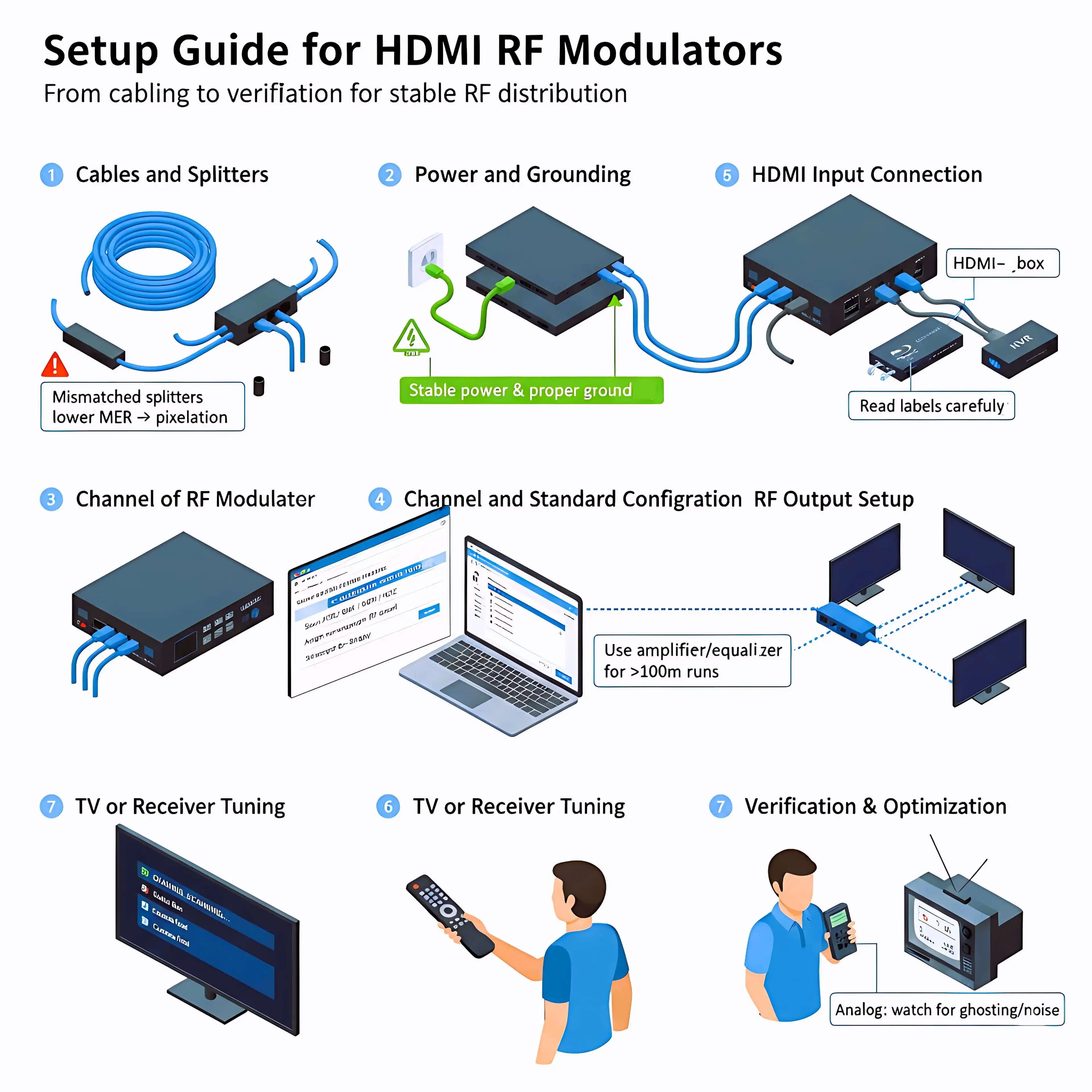
Cable and Splitters
For properly optimized setup, use 75Ω RG-6 or RG-59 coaxial cable for all runs at tailend of HDMI TV modulator. Make sure that every unused output is capped with a terminator to void signal reflections. Note that mismatched or cheap splitters reduce Modulation Error Ratio (MER) causing digital signal degradation issues like pixelation.
Power and Grounding
Place the HDMI RF modulator on a clean power line with proper grounding. Use an ESD protector, especially in shared AV racks, to protect sensitive ICs and maintain stable RF output.
HDMI Input Connection
Connect the source device (Blu-ray player, NVR, streaming box, etc.) to the HDMI rf modulator’s HDMI input by reading the label properly, since both input and output HDMI ports are placed near each other. Appropriately use a high-speed HDMI cable rated for 1080p/4K. If the source enforces HDCP, confirm that you have the right HDMI rf modulator which supports the required version.
RF Output Setup
Attach the coaxial cable to the modulator’s RF output. Ensure that the cable is plugged into the RF output port of the HDMI rf modulator. For distribution across multiple TVs, feed the output into a splitter. For stable output, a reasonable running length is necessary. If the run length goes above 100–150 meters, use amplifier or equalizer as needed.
Channel & Standard Configuration
After the hardware setup is completed appropriately, set the software settings through HDMI rf modulator’s control interface.
Select the output standard from ATSC, QAM, DVB-T, PAL, or NTSC depending on region. Assign an RF channel which does not overlap with local OTA broadcasts. Now, adjust output power so that it matches the network’s distribution level (usually 60–80 dBµV).
TV or Receiver Tuning
On each connected television or tuner, perform a channel scan. The HDMI source should now appear as a digital or analog channel, depending on the setup. Label it for easy access (e.g., “Media Box,” “Camera Feed” etc.)
Verification and Optimization
This step is for professional level setup often skipped at home setup. Use a spectrum analyzer to check carrier level, MER, and SNR. If MER drops below 32–35 dB in digital systems, inspect and re-evaluate splitters, and cabling. For analog system, keep an eye on ghosting or noise as signs of reflection.
What are different HDMI RF Modulator Configurations?
HDMI rf modulators are diverse tools with wide range of applications in their niche. They enable modern HDMI-only sources to connect with existing coaxial networks.
Following are the three most common scenarios where HDMI RF modulators deliver immediate benefits:
Hotels
Historically, hotels have implemented coaxial networks because of their cost-effectiveness and, at the time, as the only available solution. Consequently, it doesn’t make much sense to heavily invest in HDMI cable networks, especially since they are costly, and lose signals over longer distances. An hdmi to coax modulator often deployed at the headend to take the HDMI output from a satellite receiver, or media server and distribute it over the existing coax networks.
With this setup, hotels can distribute the same channel to every television in guest rooms without the need for a separate set-top box in each room. Furthermore, this method not only cuts down on hardware expenses but also enables easy upkeep and, most importantly, ensures guests have the same channel selection throughout the entire hotel property.
Surveliance and Security Systems
Security control centers usually rely on existing coaxial cabling rather than newer HDMI infrastructure. Modern Network Video Recorders (NVRs) output HDMI signals, which can be connected to HDMI RF modulators. These modulators convert the HDMI feed for distribution over coax, allowing multiple monitoring stations to access camera feed on standard televisions or control room monitors.
This approach maximizes the utility of the old school monitoring system and provides a reliable backup, as coaxial networks are less susceptible to network congestion.
Educational Institutes
Educational facilities, especially older building classrooms, often rely on coaxial wiring for video distribution. In such situation, an hdmi rf modulator can interface a modern laptop, or HDMI-enabled projector to the existing coaxial network. This makes sure that teachers can display digital content without the school investing in extensive HDMI rewiring.
This solution is budget-friendly, straightforward to install, and highly effective in maintaining compatibility between new teaching equipment and older building systems.
Which Specs Are Crucial for HDMI RF Modulator?
An optimal selection of HDMI rf modulator isn’t just about basic functionality. Before purchasing an HDMI RF modulator, first identify your TVs and confirm the required broadcast standard (ATSC, DVB-T/T2, QAM, or analog PAL/NTSC). Additionally, you should assess your coax network, including splitters and cable lengths as well.
Must Haves
At a minimum, make sure the device supports HDCP 1.4/2.2 on the HDMI input. Many media boxes and NVRs enforce HDCP. So, if your modulator can’t handshake properly, you’ll get black screens or intermittent signal drops ruining the experience.
If your target device is an old legacy television, verify PAL/NTSC capability or pair the system with a suitable analog modulator.
Video and audio processing matter just as much. Look for H.264/AVC video and AAC or AC-3 audio capability in HDMI rf modulator at bitrates suitable for your application. For video handling, check whether HDMI rf modulator can scale and re-frame inputs (e.g., 1080p60 to 1080i/720p) to match tuner expectations without artifacts.
Finally, don’t overlook RF output control. Adjustable output level (e.g., 60–80 dBµV typical) to match your splitters without overdriving TVs is also essential.
How to Check Performance of HDMI RF Modulator?
When buying an HDMI rf modulator, you can only rely on key metrics that demonstrate the performance of the device. Following are some key metrics that will indicate how good your HDMI rf modulator is. There are three critical indicators that demonstrate the performance level of HDMI rf modulator:
Modulation Error Ratio (MER)
MER indicates how accurately the modulator can represent a digital constellation in the presence of noise and distortion. Higher MER is better for the performance of the modulator. It indicates cleaner modulation, leading to more stable TV reception across multiple endpoints.
Signal to Noise Ratio (SNR)
SNR indicates the ratio of cleaner signal compared to background noise. Even the slightest drop in SNR will cause pixelated output or even complete signal loss.
Bit Error Rate (BER)
Bit Error Rate directly measures the error rate in data bits that are transmitted. Lower BER indicates better signal with lesser error bits. Although forward Error Correction (FEC) can mask some errors, constant high BER values point to issues in the signal processing or input signal chain.
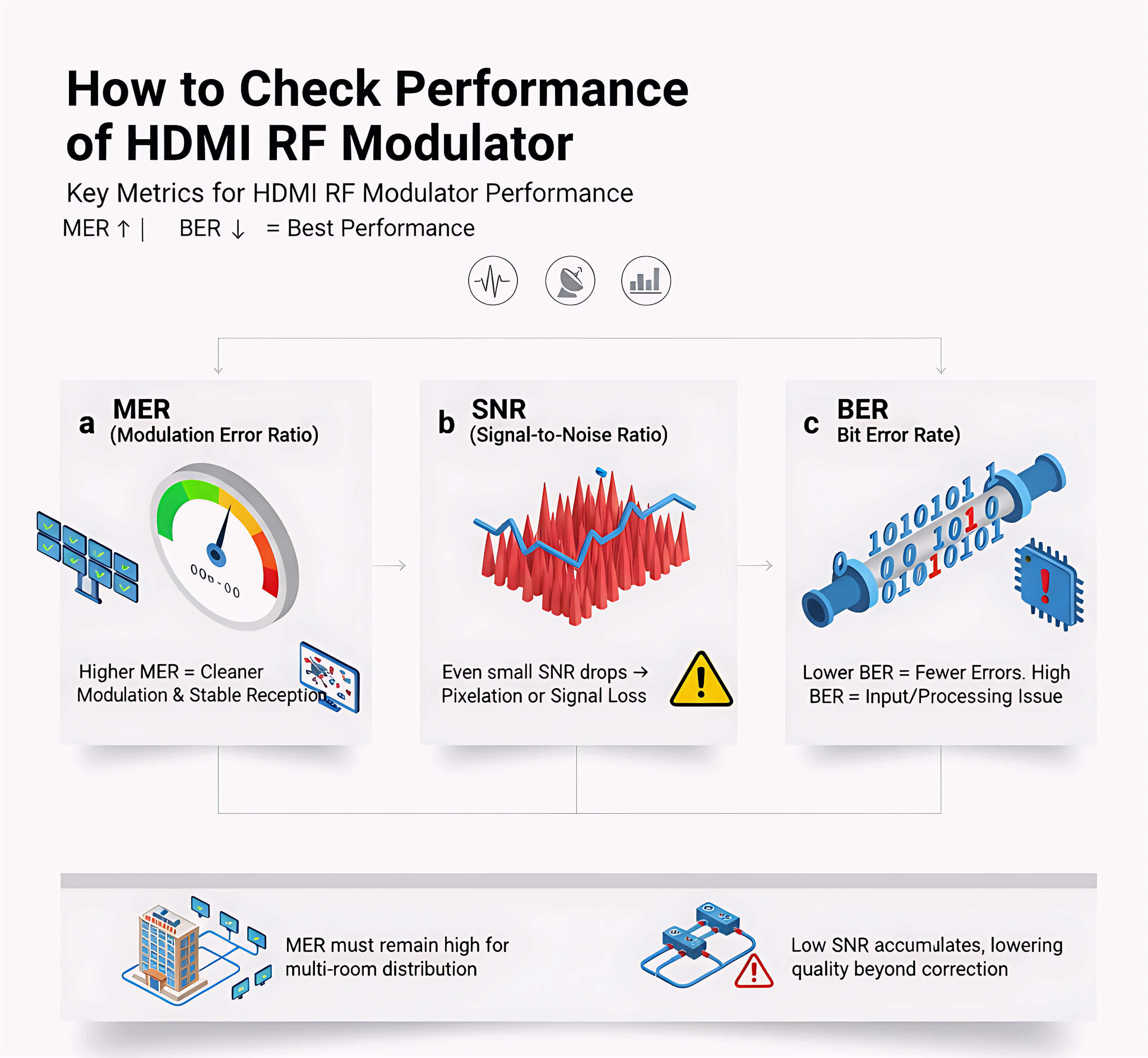
These performance metrics are not mere theoretical representation of signal quality. They practically impact the viewing experience of transmitted signal. For example, for data transmission split across multiple rooms (as in hotel building), the modulator must maintain a specific MER to ensure channels remain watchable. Likewise, a low SNR might not affect a single endpoint, however a cascaded distribution will further degrade the signal lowering the SNR beyond correctable range.
Conclusion
HDMI RF modulator is a key device in bridging the divide between HDMI-only sources and coaxial infrastructures and their value lies in adaptability. Whether in hotels, schools, hospitals, or entertainment networks, they minimize financial burden while enabling access to modern HDMI content. At the core of these devices are ICs such as HDMI receivers, codecs, modulators, PLLs, and power regulators which define their performance.
FlyWing-Tech’s catalogue provides components like the Analog Devices AD9361 RF transceiver, audio codec ICs AK4950EN and CS4270-CZZ, RF modulator ICs LM3290TME/NOPB, and quadrature modulator IC ADRF6720-27ACPZ-R7. Collectively , these ICs provide the building blocks that manufacturers can use to design robust, and scalable HDMI RF modulators. With these chips, HDMI-to-coax conversion remains not just possible, but seamless.

Glossary
| Terminology and Explanation |
|---|
| HDMI – High-Definition Multimedia Interface: a digital interface used to transmit uncompressed video and audio signals. |
| RF – Radio Frequency: the range of electromagnetic frequencies used for transmitting signals through coaxial cables. |
| Coax – Coaxial Cable: a type of shielded cable commonly used for TV. |
| PLL – Phase-Locked Loop: an electronic control system that locks onto an input frequency and matches its phase. |
| NTSC – National Television System Committee: an analog TV broadcasting standard primarily used in North America and parts of Asia. |
| PAL – Phase Alternating Line: An analog TV standard widely used in Europe, Africa, and parts of Asia. |
| SECAM – Séquentiel Couleur à Mémoire: an analog TV standard used mainly in France, Eastern Europe, and parts of Africa. |
| ATSC – Advanced Television Systems Committee: A digital television broadcasting standard used in North America and South Korea. |
| DVBT/T2 – Digital Video Broadcasting – Terrestrial: European digital TV broadcast standards. |
| QAM – Quadrature Amplitude Modulation: A modulation technique used in digital TV and cable systems. |
| AC-3 – Audio Codec 3, Dolby Digital, A surround sound audio compression format widely used in DVDs & digital TV. |
| AAC – Advanced Audio Coding: A high-efficiency audio codec commonly used in streaming and iPhones. |
| Splitter: A passive or active device used to divide one coax signal into multiple outputs. |
| Pixelation: A visible distortion in digital video where the picture breaks into blocks (pixels). |
| H.264 – Advanced Video Coding: A widely used video compression standard that delivers high-quality video at lower bitrates. |
| ESD – Electrostatic Discharge: A sudden flow of electricity between two objects with different charges. |
| OTA – Over-The-Air, Refers to free-to-air television signals broadcast wirelessly. |
| RS32 – Recommended Standard 232: A standard communication protocol for serial connections. |
| GUI – Graphical User Interface: A user-friendly interface with visual elements (buttons, icons, menus). |
Frequently Asked Questions (FAQs)
An HDMI rf modulator converts signals from one format, like HDMI, into RF so they can be transmitted via coaxial cables.
Use an HDMI amplifier to boost signal strength for longer cable runs.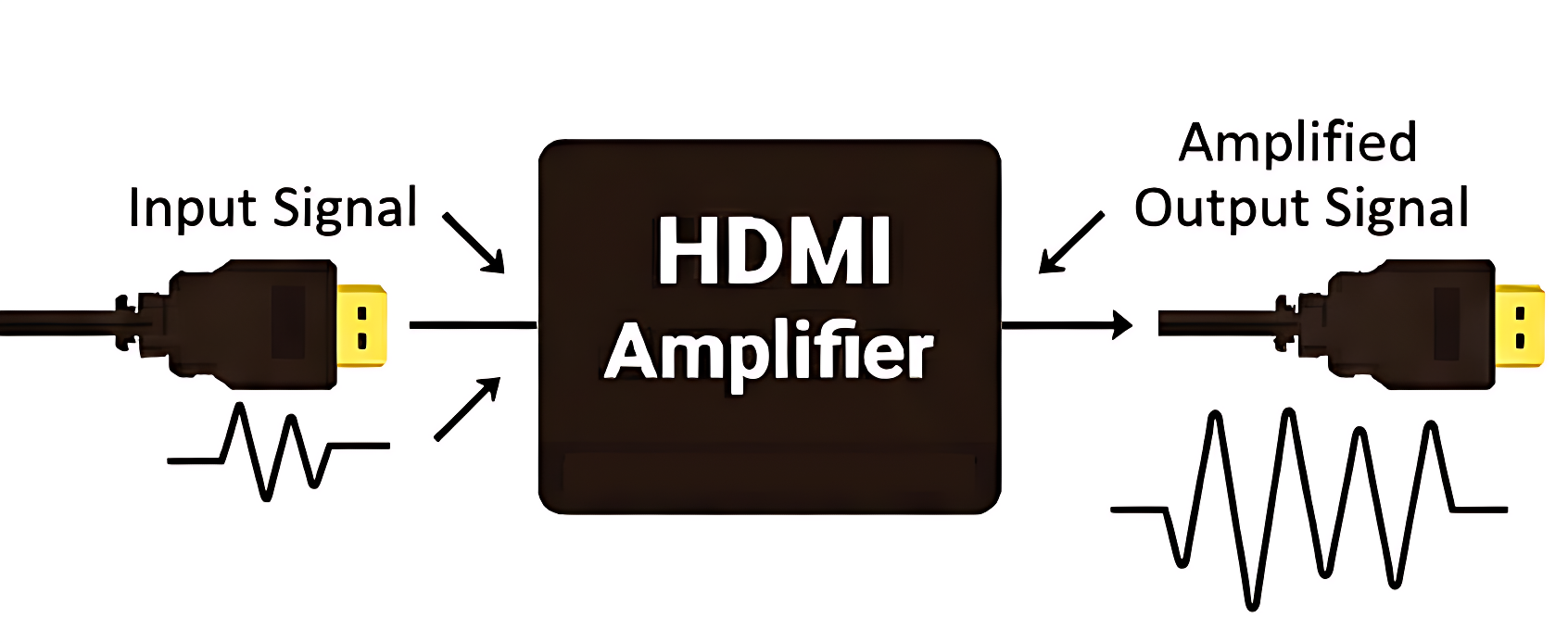
Use an HDMI audio extractor to split the audio from the HDMI stream into analog or digital outputs.
It distributes digital or analog video sources over coaxial cable so multiple TVs can receive the same signal.
It provides a standardized interface for connecting coaxial cables carrying TV signals.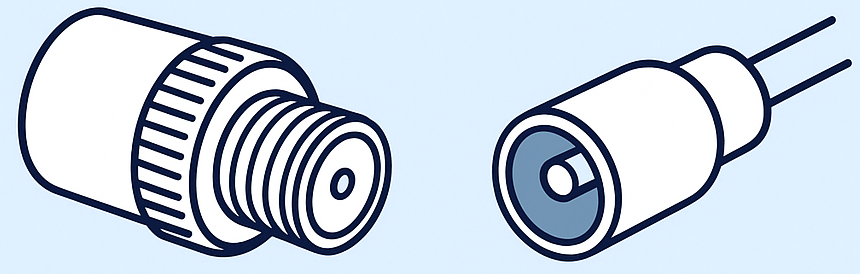
Yes, with an HDMI RF modulator, you can convert HDMI signals to coax for older TVs.
Simply connect a coaxial cable carrying RF signals to the TV’s RF input and scan for channels.
RF refers to “Radio Frequency,” that is the input used for coaxial signals.
Plug the HDMI source into the modulator, connect coax to the TV’s RF input, and tune to the modulator’s channel.
Install an RF amplifier or distribution amplifier to strengthen weak signals before splitting.
No, HDMI is a digital interface, while RF uses analog or modulated signals over coax.
An RF channel is the frequency slot your TV tunes to when receiving signals via coaxial input.
